

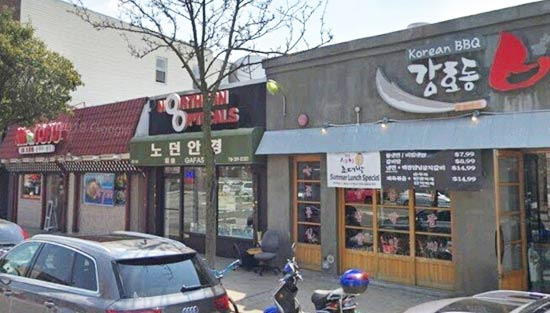
It has already been over 15 years since I settled in Flushing, New York. When I first came here, the streets were filled with Korean signs, and I could buy everything from seasonal vegetables to freshly made kimchi at the large supermarkets. From churches to academies, hair salons, and hospitals... I remember feeling a sense of relief rather than loneliness in a small city that seemed to have transported Korea almost intact.
But these days, I often find myself thinking, "Where have all our neighbors gone?"
In the past, while walking down Flushing Main Street, I would run into familiar faces several times a day. The connections that naturally formed at schools and supermarkets began to disappear one by one.
I heard that young couples are moving to New Jersey or Long Island, and retirees are relocating to southern areas like Texas or Georgia. I have also seen statistics showing that the Korean population in Flushing has been steadily decreasing since 2010. The main reasons are rising housing prices and living costs, and the migration of younger generations seeking better education and environment.
Flushing still has good public transportation and a vibrant Korean food culture, but the congested urban atmosphere, parking hell, and outdated infrastructure are no longer attractive to the younger generation. Especially after COVID, many small business owners have closed their doors, and vacant stores have noticeably increased on the streets. It has become all too familiar to see 'For Lease' signs in front of the restaurants, hair salons, and traditional medicine clinics that used to be bustling with customers.
Another factor that cannot be ignored is the generational gap. Many first-generation Koreans in Flushing still maintain their community centered around the Korean language, but their children have become accustomed to an English-centered lifestyle. As cultural distances grow in churches, schools, and homes, the younger generation is naturally blending into the broader American society rather than the Korean community in Flushing.
Even now, I go to the supermarket, visit the traditional medicine clinic, and attend church every week, but I always feel a bittersweet sense that 'it's not like it used to be.' During holidays, it's not as bustling as before, and fresh Korean products often arrive late or are out of stock on the supermarket shelves. During the church's new member introduction time, almost all the newcomers are from other ethnic groups, and the number of Korean congregants has noticeably decreased.
Perhaps this is a natural flow. As time passes, communities disperse and are restructured in different forms. However, I still find comfort in seeing Korean signs in Flushing and greeting the elderly I encounter with "Hello."
Is that why I often worry these days?
"Will the church, barbershop, and restaurant I used to frequent still be open?"
As someone who remains in this city and considers Flushing the 'hometown of the 1.5 generation of Korean immigrants,' I do not want this change to be dismissed as just the passage of time.
I quietly hope that one day, new generations of Koreans will return to Flushing, and that this city will regain its vitality once again.
Until then, I must remain as one of the people who protect this place.



 fortbliss |
 Folding Instructions |
 yentra |
 Cali M Law Group |
 quanta7 |
 Whisper |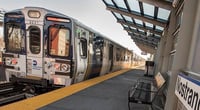
 MintO |
 nova nova |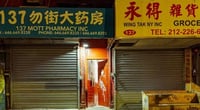
 TwinBee |
 Living in the Eastern United States |
  vibranto |
  Tora Tora |
  yellowbutter |
  Dolly |
  US Embassy |
  NYC saladbar |
  Finding Superfoods |
  lightyear |
  song bang |
  vexomo |
  Indiana Jones |
  meloncat |
  novapixel |
  mortrix |
  Esther 1983 |
  Moscow Kim |
  My Two Way |
  toastyfox |
  FLORIDA Acus |