
One of the biggest concerns for those considering moving to or planning a long stay in Fort Worth is the weather. While housing prices and jobs are important, the climate is what you actually experience every day. When I first came to Texas, the summer heat was what surprised me the most.
Fort Worth has a typical North Texas climate. While there are four distinct seasons, it is more characterized by a long summer and a short winter than the clear-cut seasons found in Korea.
The most challenging season is undoubtedly summer. The average high temperature in August is 95.7°F (about 35.4°C). However, this is just an average, and in reality, you will often experience days exceeding 100°F (37.8°C) every summer. Especially in July and August, it is common to have consecutive heat advisories issued.
The issue is not just the temperature. As humidity rises, the perceived temperature feels much higher than the actual temperature. Opening the door of a parked car in the afternoon feels like opening the door of a hot oven. This is why newcomers to Texas often say, "I knew it would be hot, but I didn't expect it to be this bad."
Therefore, in Fort Worth, air conditioning is not a luxury but a necessity. During the summer, it is not an exaggeration to say that you look for air-conditioned spaces every time you move between home, car, and office. Electricity bills also make up a significant portion of summer living expenses.
In contrast, winters are quite mild. From December to February, the average high temperature ranges from 55.4°F to 58.6°F (about 13 to 14°C), and the average low temperature ranges from 38.7°F to 42.3°F (about 4 to 6°C). Compared to winters in Korea or the northeastern United States, it feels much gentler.
Snow is virtually nonexistent. The average annual snowfall is about 1 inch. There are many years when you won't see snow at all during the winter. Occasionally, when an Arctic cold front comes through, roads may freeze, causing traffic disruptions, but this is more of an exception.
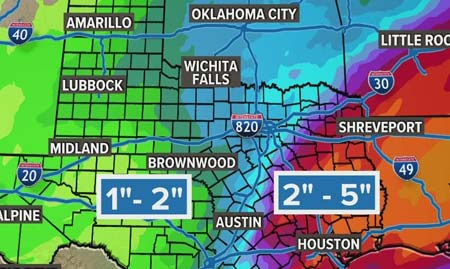
Rain falls more often than expected. The average annual precipitation is about 37 inches, making it a more humid environment than many people anticipate. Rain is particularly concentrated in the spring and early summer. May is a time when thunderstorms and heavy downpours frequently occur, and you can also experience the rapid weather changes typical of North Texas.
Another point to note is tornado season. Fort Worth is located in North Texas, which is commonly classified as part of "Tornado Alley." In fact, tornado watches and warnings are issued several times every spring. Of course, it's not like houses are blown away every year as seen in movies, but keeping your smartphone weather alerts on has become a habit.
Personally, I would sum up Fort Worth's weather as "summers are harsh, but the other seasons are pleasant." Spring and fall are great for outdoor activities, and winter brings little worry about shoveling snow. However, you should be prepared for strong sunlight and heat during the three months of summer.
Ultimately, the key to adapting to life in Fort Worth lies in how well you embrace the summer. If you understand and prepare for Texas's hot summers in advance, you can also enjoy the advantages of relatively mild winters, spacious living areas, and a convenient living environment.








 Helpful Life Stories |
 prixon74 |
 Balancework |
 Make My Day |
 viroma |
 horse |
 jaxter |
 mariashin |
 MBTI Detective Agency |
 Coco Chanel |
  Pronunciation Yo |
  nuvex11 |
  Living in Florida |
  axelon47 |
  lumbus |
  Texas Migration Story |
  Scade Studio |
  love ya |
  biscuit90 |
  chicpo |
  Kitchen Ideas |
  Diana Blues |
  Agenda Center |
  Community Cross |
  journey |
  heeve |
  leman |
  corner kick |