

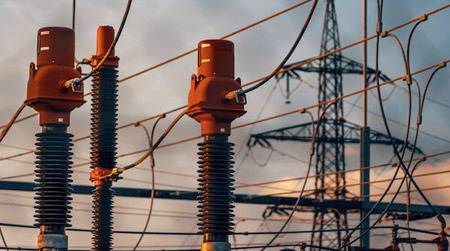
The reason America still uses 110V voltage (specifically 120V) is quite complex, involving historical background + infrastructure replacement costs + safety considerations.
And the question of "When will America switch to 220V?" is an old topic, but the reality is that it remains firmly at 110V.
America's electrical system began with Thomas Edison's direct current (DC) electrical system. The voltage used at that time was about 110V, which became the standard for early home installations and appliances.
Later, Nikola Tesla and George Westinghouse introduced the alternating current (AC) electrical system, and at that time, they also maintained 110V to ensure compatibility with existing systems.
Although the actual voltage has slightly increased to 120V, the term "110V" is still commonly used.
Major appliances like refrigerators, washing machines, and microwaves have all been developed based on the 110-120V standard, so suddenly switching to 220V would mean replacing all appliances.
This incurs huge costs for individual consumers, as well as for the government and businesses, making it difficult to transition.
110V has a lower risk of electric shock to the human body compared to 220V. Of course, electric shock is always dangerous, but the lower potential for serious harm compared to 220V makes safety an advantage for household power.
So will America ever switch to 220V?
Currently, America has no nationwide voltage upgrade plans. For reference, Japan also uses 110V.
Higher voltage means lower current, which has the advantage of allowing for thinner wires and less energy loss. This was very advantageous in areas like Europe, where population density is high and wire lengths are short.
South Korea switched from 110V to 220V in the 1960s and 70s. At the time of Korea's voltage upgrade, the spread of appliances was less, and it was an early stage of economic development, making the transition easier. If it had been after the infrastructure became as complex as in America, it would not have been easy.
It's not that America insists on 110V, but rather that it has already spread too widely to change easily. Considering safety, consumer costs, and the fact that 240V is already in use...
It is seen as a system that doesn't need to be changed.
While technology may bring about other alternatives in the future, it seems likely to remain as it is for the time being.






 Korean Mom |
 novapixel |
 Peter Pan Pet |
 horse |
 Sunset Oregon |
 neroyo |
 Say IT Now |
 celion78 |
 Folding Instructions |
 US Legal Consultation on Trials |
  Atlanta Mama |
  Baguette Blog |
  US Embassy |
  My NYC |
  moo moo |
  Mr Oh |
  forevergee |
  festival |
  manchester |
  constant |
  Leapfrog Move |
  vibranto |
  Tora Tora |
  yellowbutter |
  Dolly |
  NYC saladbar |
  Finding Superfoods |
  lightyear |
  song bang |