

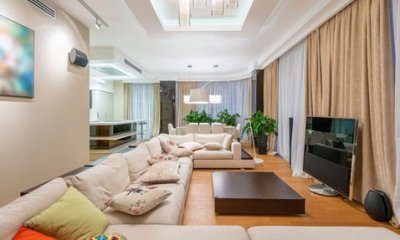
Having observed the Fort Worth market for over 30 years, I get the impression that this city has been overshadowed by Dallas and has only recently begun to gain recognition for its true value. True to its nickname, Cowtown, it maintains its traditions while showing distinct investment characteristics in different neighborhoods over the past few years.
The Fairmount district in Near Southside is an old residential area designated as a historic preservation district, with home prices ranging from $350,000 to $480,000. Its proximity to the medical district and downtown has led to a steady influx of young professionals, and it has shown a gradual upward trend in prices in recent years.
The area near West 7th Street and the Cultural District has prices between $400,000 and $550,000, and as a region dense with museums and commercial facilities, there is consistent demand for condos and townhouses. Given the steady influx of tourists and visitors, it also appears to be a viable area for short-term rental opportunities.
The Alliance area in the north is experiencing rapid population growth due to the expansion of logistics and industrial facilities. Home prices are in the range of $350,000 to $450,000, and with active new construction, it seems likely that development will continue in the future. However, the risk of price adjustments due to oversupply should also be considered.
The Westcliff area near TCU has prices ranging from $400,000 to $550,000, with a good reputation for schools and stable rental demand due to its college-town characteristics. It has maintained a steady price trend without significant fluctuations for a long time.
Fort Worth has long been regarded as a satellite city to Dallas, but I get the impression that it is now being evaluated as a city with its own industrial base and cultural infrastructure. The balanced presence of aerospace, logistics, and healthcare industries contributes to a stable employment structure that does not rely on any single industry, which is a positive aspect.
Compared to Dallas and Plano within the same Metroplex, Fort Worth still has a relatively lower average home price. This price gap has led to a noticeable increase in buyer demand coming from the Dallas area in recent years.
- Fairmount (Near Southside): $350,000–$480,000, gradual increase
- West 7th/Cultural District: $400,000–$550,000, strong commercial infrastructure
- Alliance: $350,000–$450,000, benefits from industrial expansion
- Westcliff (near TCU): $400,000–$550,000, long-term stability
From a rental yield perspective, Westcliff, being near the university, and Alliance, benefiting from industrial expansion, appear to have relatively stable rental demand. Fairmount and the Cultural District can be considered areas for both short-term and long-term rentals.
As a risk factor, in areas like Alliance where development is active, continued new construction may lead to a slowdown in price increases at some point. Additionally, as Fort Worth's relative undervaluation compared to Dallas becomes more apparent, external investment demand is increasing, so it is also important to monitor for any signs of short-term overheating.
Having observed this market for a long time, I would recommend that Korean households looking for school district stability and college-town characteristics consider Westcliff, while those aiming for growth potential in the early stages of development should look into the Alliance area. However, in either case, it is essential to visit the site in person before making any purchases. Factors such as neighborhood atmosphere, noise, and maintenance conditions are difficult to gauge from maps and statistics alone and must be experienced firsthand.
Once again, I emphasize that the price ranges discussed here are approximate based on recent market trends. Actual transaction prices may vary depending on individual property conditions, so I recommend checking recent contract cases separately once you have identified areas of interest.
 VibeReader
 SilverCore73



 garlic bread |

 urbanmint |
 |
| 
 Premium Gas Camp |
 horse |
 MBTI Detective Agency |
 kevin Kim |
 Dala Dala |
 jaxter |
  novapixel |
  mortrix |
  Esther 1983 |
  fortbliss |
  Moscow Kim |
  My Two Way |
  toastyfox |
  FLORIDA Acus |
  tracker |
  TONTON COFFEE |
  sunrise |
  ultron78 |
  uplifted |
  Folding Instructions |
  same same life |
  USA Hyundai Kia |
  morvex37 |
  BOL SA RAM |
  TOUCHE NEWS |
  Small Business Information USA |