


Hello. Recently, there have been many inquiries from Koreans moving to Texas (Dallas, Austin, etc.) from other states like California and New York, or planning to buy their first home in Texas.
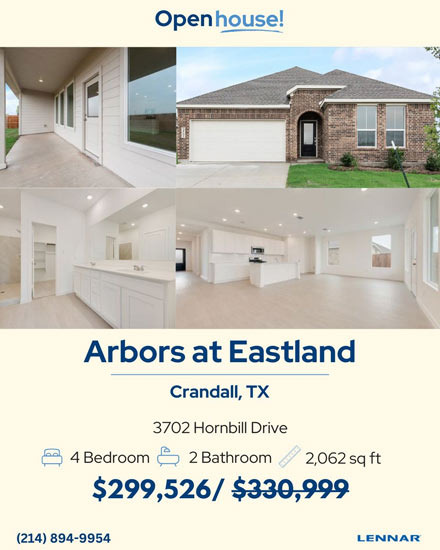
In particular, Texas is home to large builders who are constantly constructing new homes on spacious lots, which has generated significant interest in new construction home sales.
Buying a new home in the U.S. is as exciting as purchasing a new car! I will summarize the advantages, disadvantages, and important points to watch out for during the contract process from the perspective of Korean residents.
Clear Advantages of New Construction Homes
When you buy an existing home, it's common to face unexpected expenses right after moving in, such as a new roof or a broken HVAC system, costing thousands of dollars. In contrast, new homes come with strong warranties provided by the builder. Typically, there is a one-year warranty for the entire house (structure and finishes), a two-year warranty for electrical/plumbing systems, and a ten-year warranty for major structural components, allowing you to live comfortably for several years without worrying about repair costs.
Additionally, in today's high mortgage rate environment, there are significant benefits. Builders often offer to cover thousands of dollars in closing costs if you use their financing company or provide promotional interest rates that are 1-2% lower than market rates. This is a tremendous financial advantage that is hard to find in typical existing home transactions.
New constructions are built with open concept layouts, high ceilings, and clean interiors that are preferred by many Koreans. Moreover, they boast high energy efficiency (Energy Star) by using the latest insulation and window materials, which can significantly reduce electricity bills even during the scorching Texas summers.
Bittersweet Disadvantages of New Construction Homes
Most new construction developments in Texas are located in suburban areas. This can lead to longer commute times, and initially, you may find that grocery stores, hospitals, and, most importantly for Koreans, H-Mart or Korean businesses are far away. If you have children, you should also consider that schools may still be under construction or assigned far away.
While existing home communities have large, mature trees that provide privacy, new developments often have only newly planted saplings, giving a somewhat barren feel. Additionally, builders are increasingly building homes closer together to increase profitability, which can compromise privacy.
Even after you move in, there's a high likelihood that neighboring homes will still be under construction for at least 1-2 years.
You will have to endure construction noise and dust every morning, as well as large trucks passing through the community. Community facilities like pools or fitness centers will also take time to complete.
Important Considerations for Koreans in Texas
Texas is one of the few states, along with Alaska, Florida, and Nevada, that has no state income tax.
To compensate for the lack of tax revenue, the state government shifts that burden onto property taxes.
As a result, Texas has one of the highest property tax rates in the U.S.
Additionally, new construction developments often incur extra taxes for infrastructure like roads and utilities through MUD (Municipal Utility District) or PID (Public Improvement District) assessments.
"Don't just trust the "estimated taxes"; make sure to verify the final tax rate. If the tax rate for a $500,000 home is 3.2%, that means an annual tax of $16,000.
Be cautious when signing a contract after being dazzled by a fancy model home. Model homes often feature thousands of dollars in 'upgrade' options. The base price home you buy may come with cheap carpets and basic countertops. You need to carefully assess what is considered standard and what incurs additional costs to avoid going over budget.
Having a Buyer's Real Estate Agent is Essential!
Many people mistakenly believe that if they go directly to the builder's sales office, they will get a discount equal to the agent's commission. This is absolutely not true. The builder's staff works solely for the builder's profit. Instead of offering discounts, they may lead buyers into contracts with unfavorable terms that they are unaware of.
When signing a new construction contract, you must bring or register your real estate agent during your first visit. This way, your agent can negotiate inspections, price adjustments, and compensation for delays on your behalf. (There is no commission paid by the buyer.)
Even for New Homes, Three Stages of Inspection are Essential
Thinking that you don't need to conduct inspections just because it's a new home is a mistake. Nowadays, builders often rush construction, leading to frequent quality issues.
Pre-pour (before concrete foundation is poured)
Pre-drywall (before drywall is installed, in the framing stage)
Final (just before completion) You should hire a private inspector to thoroughly inspect at least three times and demand corrections from the builder to ensure your home lasts without warping in Texas's rough soil.
New construction homes in Texas can be the best choice for first-time homebuyers or those seeking low-maintenance living. However, it is crucial to carefully calculate the high property tax rates and option costs, and to ensure you work with a trustworthy agent to avoid being swayed by the builder's flashy sales tactics."

Finally, I want to emphasize that one of the biggest regrets after purchasing a new construction home in Texas is often the issue of 'resale value and depreciation.'
In Korea, new apartments tend to appreciate and command a premium, but the market for single-family homes in the U.S., especially in Texas where land is abundant, operates under a completely different mechanism.
The price of new homes in the U.S. includes the builder's marketing costs, model home operating expenses, and the emotional premium of being a 'new home.'
Just like a car loses value the moment you drive it off the lot, a new home becomes an 'existing home' the moment you receive the keys and move in.
If you have to sell your home after 2-3 years due to personal circumstances (like a job transfer), you may have to sell it for less than what you paid or incur a loss when considering closing costs (negative equity). If you don't plan to live there for at least 5-7 years, new construction may not be favorable in terms of resale value.
The basic principle of real estate price appreciation is 'scarcity.' However, in Texas (suburbs of Dallas, Houston, etc.), land is plentiful. Even if you buy a new home and move in, the builder will continue to construct newer and trendier homes in the adjacent areas (Phase 2, Phase 3).
When you try to sell your home a few years later, buyers will compare as follows:
A (my home): a 3-year-old existing home, priced at $550,000
B (builder's new home): a brand new home just built, priced at $560,000 + builder's promotional interest rate applied
From the buyer's perspective, it's natural to choose the builder's new home (B), which has much greater appeal.
This means that until the development is fully sold out and the infrastructure is completely established (usually 5-10 years), it will be difficult for your home's price to appreciate and defend its value.
Moreover, you may have spent thousands of dollars upgrading countertops and flooring to your taste when you signed the contract, but when it comes time to sell, appraisers or buyers may not recognize the value of those upgrades. Therefore, excessive upgrades are not advisable. Choose options that align with the neighborhood average. Overly extravagant upgrades are likely to end up as 'personal satisfaction' without any return when you resell.
Thus, the process of finding a new home in Texas involves many considerations beyond the glamorous exterior, including high property taxes, detailed options, and resale value risks. It is certainly not an easy and straightforward journey.
However, the right answer can vary greatly depending on each family's financial situation, commute distance, and school districts for children. Since tax rates and HOA regulations can change frequently by area, it is advisable to consult with experts and double-check everything thoroughly before signing a contract.
 RobNeighbor
 blueseabuilder2023
 BrightSummit70
 Have4Vibes






 Premium Gas Camp |
 CA Real Estate |
 cheesepup |
 breezem |
 yentra |
 Giant Squid and Sweet Potato Soup |
 Best Frozen Yogurt |
 Aura-Infused WACAM |
 Gupabal MissKorea |
 Heart Ticker |
  Way to easy |
  intact |
  Always Dreaming of Big Success |
  happy 9 |
  Park M.Y. |
  tredon |
  Poppin News |
  metsoo |
  dewyo |
  Casa Mia |
  Asparagus Blog |
  dorange |
  hiddenkong |
  some fame |
  Godory Life |
  Lime Juice |
  French fries |
  Rynex |
  Caribbean |
  Let's Be Like a Salt-like City Person |