

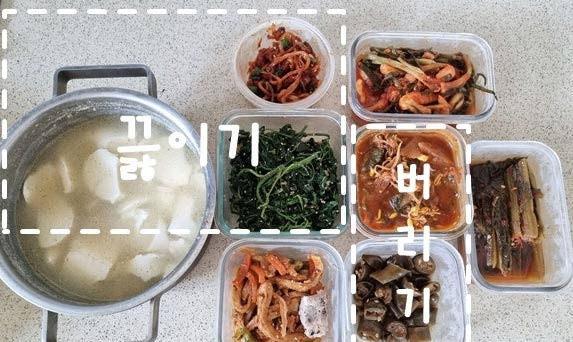
People who cook well tend to develop a strange symptom, almost like a kind of illness.
The refrigerator gradually becomes a "gallery for their creations."
The problem is that they don't revisit those creations.
After putting in the effort to make something, they eat it just once.
By the time the next meal comes around, that food has already become "yesterday's dish."
It's not a matter of taste; it's a matter of the heart rejecting it.
Humans are fundamentally drawn to 'newness.' This is especially true for those who cook.
Choosing ingredients, thinking of recipes, controlling the heat, and finally plating... this entire process is already an event in itself.
So, food is not just a product; it's the "ending of a project."
Once you've seen the ending, the desire to immediately continue the same game doesn't arise.
What's even funnier is that the better someone cooks, the more pronounced this tendency becomes. This is because they have more options.
When they open the fridge and see "yesterday's braised short ribs," their mind simultaneously thinks, "Should I try making pasta today?"
From that moment on, yesterday's food is already losing the competition. It's not because it doesn't taste good; it's because it's lost to 'boredom.'
Another important point is the 'obsession with perfection.'
Good cooks know the "best state" of the food they've made.
The temperature, texture, and aroma when it was just finished. That standard is ingrained in their minds.
However, food that has gone in and out of the fridge is not in that state anymore.
No matter how much you reheat it, that subtle difference is noticeable. Then they think, "This doesn't taste like it did back then." That's where their interest starts to wane.
And there's also a significant aspect of "self-reward psychology." Cooking is a tedious task.
Chopping, washing dishes, spending time. Accomplishing this means they have a reason to reward themselves.
So, they want to make something new for the next meal. Eating what they made yesterday feels like receiving less of a reward.
"I cooked again today, so why should I eat yesterday's food?" This feeling subtly arises.
There's also a slightly twisted psychology at play: "decreased interest in flavors already experienced."
When eating for the first time, the brain is busy analyzing flavors, feeling satisfied, and storing memories.
But when eating it a second time, it's already known information.
There's no surprise. When humans experience less surprise, their satisfaction also decreases.
So even if it's the same food, the second time is less impactful. They instinctively avoid that.
So what happens to the refrigerator? It gradually fills up with "vaguely leftover containers."
A spoonful of stew left, half a serving of stir-fry, and some unidentifiable sauce. It feels wasteful to throw it away, but they don't want to eat it.
When this accumulates, they end up cleaning it all out at once. The thought that arises then is simply, "Why did I keep this?"
Good cooks often cook not just to eat, but to create.
So their obsession with the end product is weaker than one might think. They've already exhausted their satisfaction in the making process.
Eating is a bonus, and eating it a second time isn't even a bonus anymore.
Ultimately, the essence of this issue isn't about taste. It's the result of 'addiction to newness + standards of perfection + self-reward.'
So the solution is simple. They should intentionally reduce the quantity or decide on a "menu for the next meal" from the start.
Otherwise, they'll need time to either reheat the accumulating side dishes or throw away what needs to be discarded.
 USAToday







 Giant Squid and Sweet Potato Soup |
 Lol Life |
 lavender |
 logger |
 Conflite Teacher |
 Best Frozen Yogurt |
 Heart Ticker |
 American Blog Forge |
 Panorama Kstar |
  HVAC will prosper |
  Automation Logic User |
  MAX009 BLOG |
  K-POP TV News |
  mortrix |
  My Beloved Hometown Hwagae Market |
  yorvik12 |
  Tart Tart |
  Min's blog |
  Tora Tora |
  pixel77 |
  cuteasducks |
  Lemon Kim |
  What can make money? |
  An ant castle |
  Haha and Bomi Blog |
  glenview 89 |
  Valley Hong |
  novapixel |