
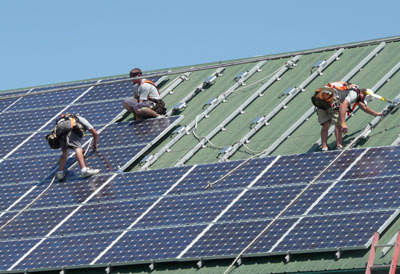
Dallas has a structure where federal tax credit benefits are layered with state tax benefits from Texas and programs from local utility companies.
There is a 'Federal Solar Tax Credit (ITC)' applicable nationwide, which allows a direct deduction of 30% of the solar installation costs from taxes. Thanks to the IRA bill passed in 2022, this benefit has been extended until 2032, and Dallas residents can naturally receive the same.
Next is the support from the state of Texas. A notable benefit is the 'property tax exemption'; typically, installing a solar system increases the value of a home, right? However, there is no property tax imposed on that increase. Additionally, the Texas sales tax (6.25%) on solar equipment purchases is also exempt. This significantly helps reduce installation costs.
Locally, the key program in Dallas is the rebate program offered by Oncor Electric Company. You can receive about $0.35 to $0.50 back per watt of installed capacity, meaning if you install a 6kW system, you could get a refund of between $2,100 and $3,000. However, there is a budget limit, so applying early is advantageous.
Net Metering is not mandated in Texas, but retail electric companies contracted with Oncor, such as Green Mountain or TXU Energy, operate similar credit systems. In other words, if you send excess electricity back to the grid, you can receive credits, but the price varies depending on real-time electricity market conditions.
There are additional benefits as well. CoServ Electric, which covers the northern part of Dallas, offers additional grants of $500 to $1,000, and the Dallas Solarize program occasionally holds projects where residents can participate as a group to lower installation costs.
In terms of financing, there is a program called PACE, but it is not yet operational in Dallas County. Instead, you can utilize home equity loans like HELOCs to secure funds at low interest rates.
There are also a few points to be cautious about. Texas has a deregulated electricity market, so electricity rates are generally lower than in other states, meaning the economic benefits of solar installation vary based on household electricity usage and installation size. Additionally, some HOAs (Homeowners Associations) may impose restrictions on panel installations for aesthetic reasons, so it's good to check in advance.
Ultimately, the solar policies in Dallas can be seen as a combination of federal tax credits, Texas state tax exemptions, and Oncor rebates. While there is a lack of large-scale municipal support like in California or New York, the abundant sunlight means that the payback period for investments typically takes about 8 to 10 years.
If you are considering solar installation, it would be wise to check for the latest information at Dallas City Hall or the Texas Solar Energy Society.







 xylora |
 wendra |
 Aura-Infused WACAM |
 Texas Migration Story |
 There Are Such Things in the World |
  Tonky |
  viroma |
  cookie |
  Live and that's it |
  Alright Twain |
  eatontown blog |
  HAWAII Korean Church News |
  Amore |
  linex |
  Balancework |
  laro90 |
  MEDBIO American Doctor Blog |
  SWAT TEAM BLK |
  DREAM BIG |
  frostbite |
  330 Forever My Love |
  El Dorado |
  dralix58 |
  Gorama Round |
  Skydiving |