
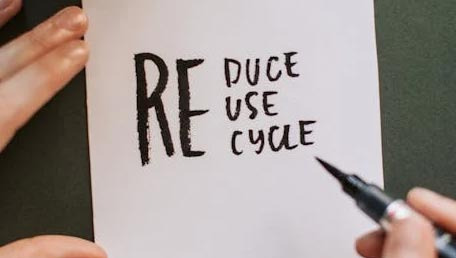
California is recognized as a leading region in the recycling industry within the United States, aiming not only for waste management but also for environmental protection, resource efficiency, and the establishment of a circular economy.
Thanks to strong laws and systems pushed by the California state government, the recycling system is well established, and its impact spans the economy, environment, and society.
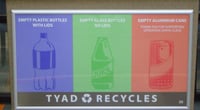
First, looking at the programs, the most famous is the bottle and can deposit system, known as CRV (California Refund Value). When purchasing beverages, an additional fee is paid, and after consumption, returning the bottle or can allows for a refund of that money.
This has significantly increased the recycling rates of plastic, glass, and aluminum containers. Additionally, California's waste management law has set a goal to recycle or reuse 75% of the state's total waste, providing a framework for businesses and communities to align with this goal.
Moreover, a law has been passed to gradually ban single-use plastics, with plans to completely prohibit their use by 2025.
The impact of the recycling industry on the economy is also substantial. Many jobs are created in recycling centers, collection and processing facilities, and processing plants, with active investment in related technologies. Recently, technologies for more efficient plastic recycling and extracting energy from waste have been developed. All of this leads to the growth of the green industry.
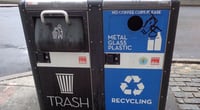
Of course, there are challenges. The biggest issue is plastic. With many types and various processing methods, not all can be recycled. Additionally, differences in recycling facilities and collection systems across regions can lead to inefficiencies. If consumers do not properly separate their waste or participate sufficiently, the recycling process can become more difficult and costly. Therefore, it is important to engage citizens through education and campaigns.
Looking ahead, California is likely to push the circular economy model even more strongly. The goal is to maximize resource reuse and reduce waste, with continued policy strengthening and technological advancement. Businesses will be encouraged to participate in recycling, and a structure will be created that naturally encourages consumer participation.
In summary, California's recycling industry can be considered the most progressive and systematic model in the United States, operating within a larger vision of creating a "new resource circular economy" rather than merely "reducing waste." Thus, it can be said that this region holds great promise for the growth of the green industry and increased sustainability in the future.






 Weekend Movie Blog |
 Beauty, Health, Lifestyle Blog |
 coloradoman |
 Superman Cat Blog |
 novapixel |
  US Embassy |
  Korean Mom |
  My NYC |
  moo moo |
  Mr Oh |
  forevergee |
  festival |
  manchester |
  constant |
  Leapfrog Move |
  vibranto |
  Tora Tora |
  yellowbutter |
  Dolly |
  NYC saladbar |
  Finding Superfoods |
  lightyear |
  song bang |
  vexomo |
  Indiana Jones |