

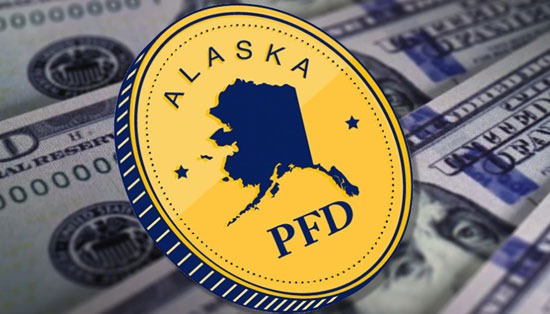
As we take care of our families in the harsh winter winds of Anchorage, Alaska, our Korean community's biggest concern around this time of year is undoubtedly the 'Permanent Fund Dividend (PFD)'.
As you may know, the Alaska Permanent Fund Dividend for 2024 was $1,702. However, the amount for 2025 has been confirmed at $1,000 per person.
This amount is the standard payment for the 2025 dividend year, and actual payments began in early October 2025 and were distributed in several installments, with some continuing into December. While it is not an insignificant amount when considering living expenses for the year, it is considerably disappointing compared to previous years.
The main reason for the reduced dividend is said to be budget conflicts within the state legislature. The governor believed that residents should receive more dividends, but the legislature prioritized essential public service budgets such as education, public safety, and road maintenance, leading to the decision to cut dividends. This is somewhat similar to a head of household reducing personal spending to manage rent. However, in a reality where prices continue to rise, $1,000 remains a tight figure for many families.
Below are the amounts of the Alaska Permanent Fund Dividend (PFD) paid over the last five years (2021-2025). The data is based on official state government announcements and credible web information, organized by year:
2021: Dividend approximately $1,114 (2021 PFD)
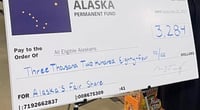
2022: Dividend $3,284 (highest level)
2023: Dividend $1,312
2024: Dividend $1,702 (including basic dividend + energy relief)
2025: Dividend $1,000 (2025 payment)
This is... quite disheartening. Back in 2022, I was thrilled to see the amount exceed $3,000 per person, and everyone was so happy then. But since that time, the amount has consistently been in the low thousands, and now for 2025, it is at the lowest level in the last five years at $1,000.
In 2023, it dropped to around $1,300, but then it rose again to $1,702 in 2024, which made people happy, but it has now dropped significantly again. Many expected that oil revenues would decline, but seeing the actual results is frustrating.
In reality, the foundation of the Alaska dividend is the oil revenue from Alaska. However, due to the aging oil fields, production has decreased, and globally, the dependence on oil is also declining. As the oil-dependent region loses its oil revenue, the money returned to residents naturally decreases.
Additionally, changes in the management of the permanent fund have also had an impact. Currently, the POMV method restricts the use of only about 5 percent of the total fund value. Within this 5 percent, both government operating costs and dividends must be covered, so as government spending increases, the residents' share inevitably decreases. The volatility of the financial markets in 2024 and 2025 has also put pressure on the fund's returns.
In this situation, many Alaskan families are shifting their focus from relying solely on dividend numbers to investing in themselves. Learning new skills, improving English proficiency, and managing health are seen as realistic judgments that will yield much greater assets in the long run.
While the size of the 2025 dividend was disappointing, I hope this year will be more about focusing on family health and stability, as well as enhancing individual competitiveness, rather than fixating on the Alaska dividend figures.



 Make My Day |
 viroma |
 eatontown blog |
 Toaster Pizza Magic Show |
 US Embassy |
 AL ALASKA |
 Information on Area Codes in the Americas |

 Sunny's Travel in America |
 phoenixia |
  viewtop |
  loverun |
  Kim Do Sun |
  SEVEN SEVEN |
  yentra |
  Victory 1988 |
  Tonky |
  cookie |
  Live and that's it |
  Alright Twain |
  HAWAII Korean Church News |
  Amore |
  linex |
  Balancework |
  laro90 |
  MEDBIO American Doctor Blog |