

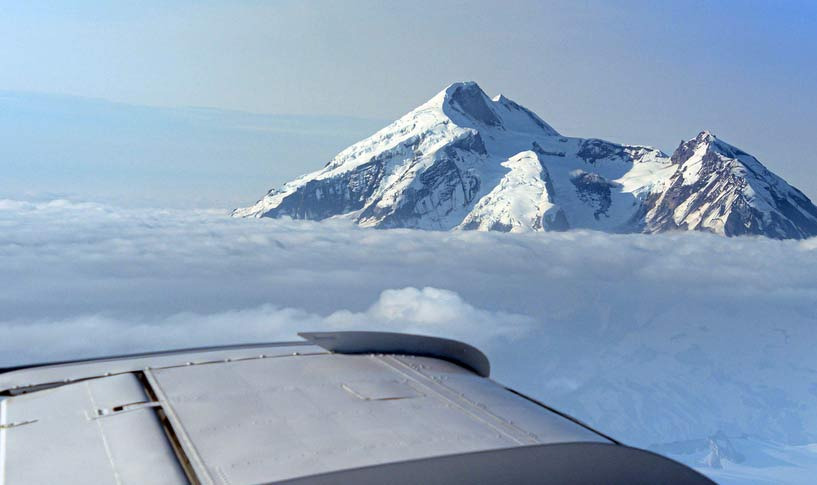
Living in Anchorage, Alaska is a special experience where the city meets nature.
Waking up in the morning to the snowy mountains filling your view and starting the day by looking at those mountains, which change colors and expressions with the seasons, gives you the feeling of having a companion in life rather than just a decorative landscape.
Winter in Anchorage is long and harsh, but within it, people naturally learn perseverance and patience.
Even on days when snow is pouring down, you have to drive to work, and sometimes you have to grab a shovel to clear the snow in front of your house, yet amidst this repetitive daily life, the snowy mountains always quietly hold their place, making life strangely solid.
From late October to early June, you can see the snowy mountains as a backdrop just by looking up anywhere in the city, and a 20-30 minute drive will bring you right to the Chugach Mountains.
Even when you arrive at the airport, the white shining mountains can be seen behind the runway, so living here is not an exaggeration to say that it is a life that breathes with the mountains.
In the Anchorage area, snow begins to accumulate on the mountain peaks around mid-October.
By November, people start living with the snowy mountains as a backdrop throughout Anchorage. Thick snow covers the ground all winter, and during the short days of December and January, the gray sky and snow-covered mountains create a calm yet heavy atmosphere over the entire city.
Even in April, the upper parts of the mountains are still covered in snow, and it is not until May that the lower mountains begin to melt little by little. However, the high peaks still retain their snow even in the middle of summer in June and July.
Therefore, it is natural for the people of Anchorage to see snow-covered mountains in summer, while tourists are often surprised. Generally, by August, the lower mountains turn into green forests, but the snow in the highlands remains until September, meaning you can encounter snowy mountains practically all year round.
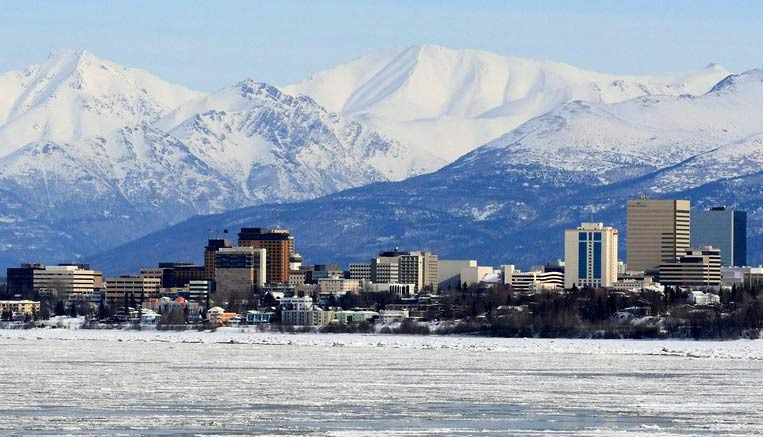
Three particularly impressive high mountains represent this region.
First, Denali (6,190m), the highest peak in North America, is not visible directly from Anchorage, but on clear days, you can see its dazzling silhouette from the city. Its grandeur is literally a 'massive presence' and symbolizes that Alaska is not just land but showcases the true nature of the great outdoors.
The second is Mount Susitna (1,280m), which is close to Anchorage. Known as Sleeping Lady, it is a mountain familiar to locals because it resembles a woman lying down. When viewed at sunset with the red glow, it truly looks like a human silhouette, making you stop in your tracks.
The third includes Mount Mugar and the peaks of the Chugach Mountains located east of Anchorage. These mountains, around 2,000m high, are very close to the city, making them popular spots for hiking and climbing. Even in summer, ice and snow remain near the summit, showcasing the charm of a 'four-season snowy mountain.'
Ultimately, living in Anchorage while gazing at the snowy mountains is not just about having a beautiful landscape nearby; it is a process of feeling the flow of the seasons and learning humility in the face of great nature.
If you live here, the heavy presence of the mountains resembles the weight of life. As they gradually melt in spring while still holding their heights, and as you see the peaks that retain their white traces even in summer, you learn that people, too, should stand firm and quietly hold their place without easily collapsing.
Thus, the snowy mountains of Anchorage can be said to be not just a backdrop but a companion that shares life with you.





 AL ALASKA |
 Information on Area Codes in the Americas |
 Alaska Kim |
 Omelet Rice for Strength |
  US Embassy |
  Korean Mom |
  My NYC |
  moo moo |
  Mr Oh |
  forevergee |
  festival |
  manchester |
  constant |
  Leapfrog Move |
  vibranto |
  Tora Tora |
  yellowbutter |
  Dolly |
  NYC saladbar |
  Finding Superfoods |
  lightyear |
  song bang |
  vexomo |
  Indiana Jones |