
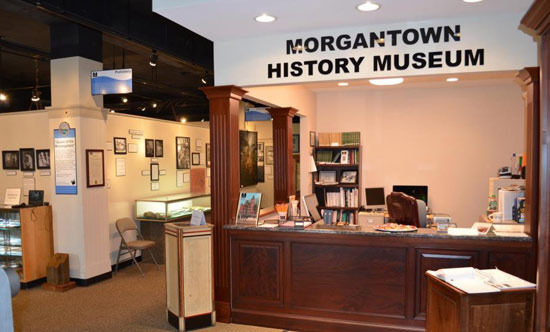
Living in Morgantown, I realized it took me longer than expected to truly explore the cultural facilities here.
Perhaps because of its strong image as a college town, I vaguely thought there wouldn't be many places like museums or galleries. Honestly, if you just stick around the university campus, it's easy to miss the other sides of this city.
However, upon looking into it, I found that there is a surprisingly solid cultural infrastructure. It's not that a small town lacks culture. In fact, having a university helps maintain a certain level of cultural richness. The real charm of this city lies in the aspects that aren't immediately visible. If you explore cleverly like a fox, you'll start to see another side of Morgantown.
The Morgantown History Museum was established in 2000 and moved to its current location at 175 Kirk Street in 2006, coinciding with West Virginia Day. The building itself is a historic structure that was completed in 1914 as a former annex of the Morgantown Post Office and expanded in 1931.
The exhibits are intriguing, and I learned from this museum that the famous actor Don Knotts is from Morgantown.
It covers a wide range of the social, cultural, and commercial history of the Morgantown area, including a vintage printing workshop and local glass and pottery collections. Many visitors are surprised by how much there is to see. Just this one museum greatly deepens the understanding of Morgantown's history.
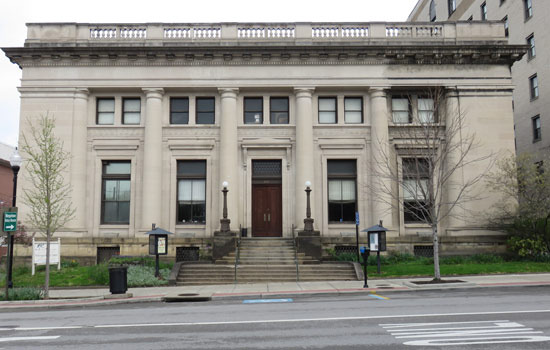
The Monongalia Arts Center is located in a historic post office building built in 1913, showcasing a striking Beaux-Arts classic style.
Operated by a nonprofit community arts organization, it features two galleries and a small historic theater. The WVU Art Museum, located on the Evansdale campus on Fine Arts Drive, houses over 4,000 works, including paintings, prints, paper works, ceramics, and clay pieces. As a museum that promotes education and research, it offers various programs in addition to exhibitions. It's particularly nice that it's open to both students and general visitors. The admission policy is relatively open, making it easy to drop by. If you love art, I highly recommend visiting these two places.
The Metropolitan Theatre is a historic performance venue operated directly by the city of Morgantown. Known as the most beautiful theater in West Virginia, it regularly hosts dramas, dances, and various performances. The Ruby Amphitheater at Hazel Ruby McQuain Park, also operated by the city, serves as an outdoor performance space and is part of the city's cultural infrastructure alongside the Morgantown History Museum.
Due to its nature as a college town, various cultural events are held year-round both on and off the WVU campus, so if you're interested, you can enjoy a rich cultural life in Morgantown. I only realized after exploring that this city has much more depth than my initial impression. One of the true charms of Morgantown is the diverse cultural resources hidden behind the label of a college town. It's another face of Morgantown that is visible only to those who explore freely.
The Morgantown History Museum operates from Tuesday to Saturday, from 10 AM to 4 PM, with an admission fee of $5 for adults. The WVU Art Museum is located on campus and is free to enter. If you want to fill a day with culture, visiting these two places together makes for a meaningful day. Morgantown's culture may not be heavily advertised, but it is generously open to those who seek it.
 Cream gelato





 Anjollinya Blog |
 Taco Seattle |
 Mr Song Song |
 Living Economy Information Blog |
 Blog Korea |
 Gomex Korea |
 Bridgo |
 silver |
 diamondo |
  Rolling Joy Life |
  lidus |
  French Macarons |
  Central Intelligence Agency Deputy Director |
  ATL Power 1 |
  MP Forever |
  Soy Angelino |
  San Jose Pop |
  Pronunciation Yo |
  hamooo |
  Entip |
  Yavrix 92 |
  cherry cherry |
  Coastal city |
  There Are Such Things in the World |
  Mazinger Z Rocket Punch |
  celtics |
  shinee cho |
  Kondae Garusong Blog |
  quiet river |