

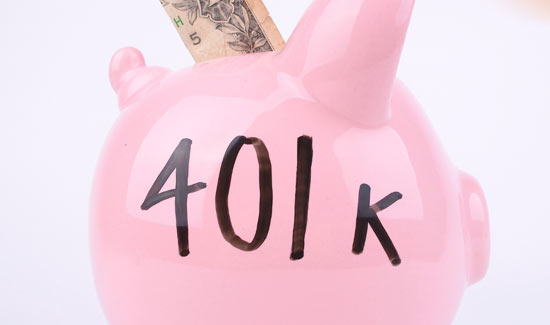
These days, as we hear about the U.S. economy, it seems that polarization is increasing, and the financial situation for ordinary people is becoming more difficult.
Similar sentiments are echoed in the Beige Book published by the Federal Reserve.
The analysis indicates that the number of regions experiencing reduced economic activity is growing, particularly among low-income consumers whose spending has significantly decreased.
As the burden of living expenses increases, people have started to tap into their last resort: their retirement funds, such as 401K accounts.
In fact, data from Vanguard, one of the largest retirement fund managers in the U.S., shows that the rate of early withdrawals from 401K accounts has risen to 6% recently.
Considering it was around 2% before the pandemic, this is a significant change.
Many people are withdrawing retirement funds to avoid losing their homes or to cover medical expenses.
To better understand this situation, let's consider the case of a 60-year-old Korean American named Sangcheol Kim.
Sangcheol Kim has worked in the U.S. for a long time and has saved about $300,000 in his 401K account.
Although he has a few more years until retirement, he is currently struggling with rising living costs.
Almost all expenses, including his mortgage, car insurance, and grocery prices, have gone up.
On top of that, unexpected family medical expenses have created an urgent need for cash.
Ultimately, after much deliberation, Sangcheol Kim decided to withdraw $50,000 from his 401K.
The problem starts here.
The 401K system in the U.S. is designed for use after retirement.
Therefore, generally, if you withdraw money before the age of 59 and a half, a 10% penalty applies. Since Sangcheol Kim is 60, he can avoid this 10% penalty. Many people feel relieved at this point. However, there is another issue to consider.
That issue is income tax.
The 401K is a tax-deferred account. You receive a tax deduction when you contribute, but you must pay taxes on withdrawals as ordinary income.
If Sangcheol Kim withdraws $50,000, that amount will be counted as income for that year. If his other income is around $70,000, his total income for the year would become $120,000.
This could potentially push him into a higher tax bracket.
The money he withdrew for living expenses could end up increasing his tax burden.
Another issue that many people are unaware of is the loss of future compounding benefits.
For example, if Sangcheol Kim's $50,000 were to continue to be invested at an average annual return of 6%, it could grow to about $90,000 in 10 years. However, by withdrawing it now, he forfeits that growth opportunity. This means he will have less money available for retirement.
Therefore, many financial experts advise that withdrawing from a 401K should be a last resort.
Instead, they suggest exploring a few other options first.
The first option is a 401K loan. This allows you to borrow money from your 401K up to a certain limit. You can use it without taxes or penalties and pay it back later. However, there is a risk that you must repay it immediately if you leave your job.
The second option is to restructure your spending. In the U.S., reducing fixed costs like car payments, subscription services, and insurance premiums can often lead to significant improvements in cash flow.
The third option is to consult a tax professional about Roth conversions or partial withdrawal strategies. Even if you withdraw the same $50,000, the tax implications can vary greatly depending on how you do it.
Given the current economic situation, it's understandable why early withdrawals from 401Ks are increasing. The simultaneous rise in prices and interest rates has increased household burdens. However, retirement funds are literally the last safety net supporting one's later years in life.
Using retirement funds to solve temporary living expense issues, like Sangcheol Kim, may provide immediate relief. However, it could also lead to increased tax burdens and a decrease in future assets.
Therefore, before withdrawing from a 401K, it's wise to consider this question:
Is this money needed now, or is it money borrowed from my future self?
This one question could significantly change the quality of life after retirement.







 Burbank Lee |
 vibranto |
 sparkling |
 oh my salami |
 saffronroute |
 Weekend Movie Blog |
 Superman Cat Blog |
 Victory 1988 |
 Beauty, Health, Lifestyle Blog |
 coloradoman |
  California Information News |
  chilli chilli |
  Moon Su San |
  vanilla |
  norvexi |
  Lunch and Dinner Mexican Taco |
  skykong |
  My Circle |
  novapixel |
  urban legend |
  coolriver |
  Good Neighborhood, Wealthy District Information |
  Ro Ro Car |
  Amber H |
  new sugar |
  Palm 1000 |
  loran |
  donutfield |
  Tennis City |
  sunny7 |