

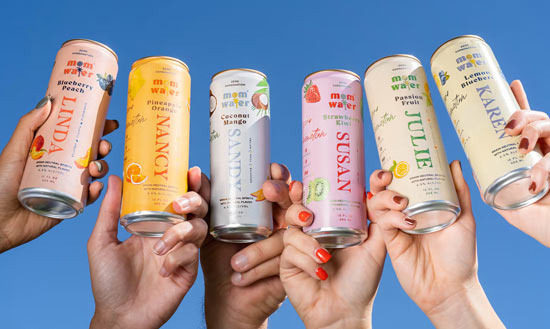
Do you know what RTD (Ready to Drink) means?
It refers to products that are ready to drink without the need for preparation.
For example, iced tea in a can is a typical example. Coffee in cans or bottles is also considered RTD.
In the alcoholic beverage sector, it refers to products that come in cans already prepared, like highballs or cocktails.
So, the highball cans that are commonly seen these days all fall into this category. The taste is often closer to soft drinks than traditional alcohol, giving it more of an "alcoholic beverage" feel.
The reason I bring this up is that RTD is trending in drinking settings, whether in the U.S. or Korea.
These days, talking about alcohol seems to create a bit of a tense atmosphere.
In the past, there was a saying that "when the economy is bad, alcohol sales go up," but now it seems that this isn't entirely true.
While alcohol is indeed resilient during downturns, it feels different now.
From a Korean perspective, this is even more palpable. In the past, it seemed like everyone gathered on Friday nights.
Having a few bottles of soju with samgyeopsal was the norm, and it was natural to continue on to a second round.
But these days, it seems like gatherings have decreased. And even when they do happen, the atmosphere is different.
It seems more common to just have one drink and call it a night.
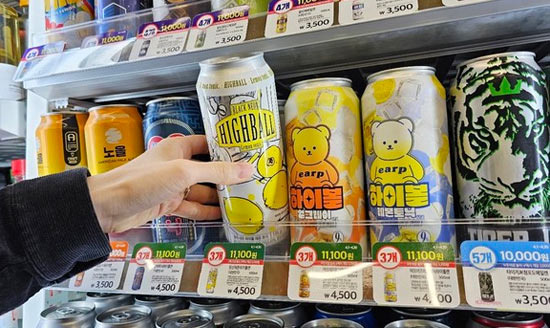
This doesn't seem to be simply because Gen Z is drinking less. Rather, it seems that Gen Z is drinking in different ways.
Young people are said to be drinking RTD highballs more often. It seems a similar trend is visible in the U.S. as well.
The key issue seems to be money. More specifically, it's about cash flow. People still don't seem to give up their favorite drinks.
Instead, the way they drink has changed. Rather than buying large bottles to drink over time, they are opting for smaller sizes.
Even if the unit price is higher, the immediate cash outlay is lower. This seems to be the point of consumption these days.
That's why RTD seems to be gaining popularity. You can just grab one from the fridge and be done, and the cost is fixed, making it less of a burden.
In fact, if you calculate it, buying vodka and mixing it is much cheaper. Yet, the reason people choose canned highballs is that "how much you spend right now" has become more important.
The prices at bars also play a role. In LA, a cocktail can cost nearly $20.
With tips, it feels like $25. In the past, it was natural to have a pre-game, order a bottle of wine at a restaurant, and then have one more drink at the end, but now it seems more common to just have one drink with dinner.
Looking at the current situation in the U.S., with economic uncertainty, policy changes, and international issues, there seems to be a general trend of reducing consumption. In such situations, alcohol seems to be one of the first items to be cut.
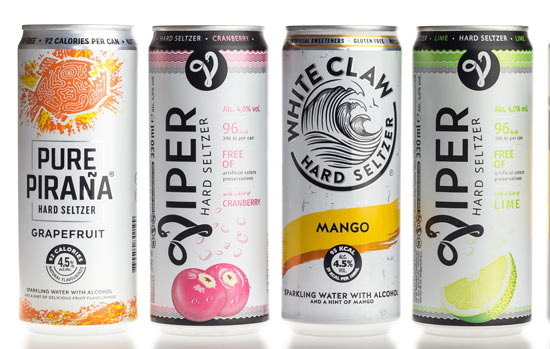
Data seems to reflect this as well. Overall alcohol consumption has decreased, but RTD consumption has increased.
This is not just a trend but a realistic compromise. So, it seems that a similar atmosphere exists in the Korean community as well.
Dining out has decreased, gatherings have decreased, and naturally, alcohol consumption has also decreased. Certain establishments are reportedly struggling.
On top of this, the issue of raw material prices has made alcohol prices burdensome.
So, these days, the atmosphere at drinking gatherings feels definitely different. People aren't completely giving up alcohol, but it feels like they are drinking with an eye on the budget.It seems like instead of drinking to get drunk as before, there's a vibe of setting a limit of "this is enough" and calling it a night.
The conclusion is that alcohol is still being sold, but the way it is consumed seems to be changing completely.
And I feel that RTD is at the center of this change.






 Khan Film Blog Production |
 dermoon |
 hoosierdaddy |
 sun walker |
 Let's Be Like a Salt-like City Person |
 Weekend Movie Blog |
 Beauty, Health, Lifestyle Blog |
 coloradoman |
 Superman Cat Blog |
 Awesome Blog |
  novapixel |
  mortrix |
  ollege Mom |
  Esther 1983 |
  Arizona AZ Cowboy |
  fortbliss |
  Moscow Kim |
  My Two Way |
  toastyfox |
  FLORIDA Acus |
  tracker |
  TONTON COFFEE |
  sunrise |
  ultron78 |
  uplifted |
  Folding Instructions |
  same same life |
  USA Hyundai Kia |
  morvex37 |
  BOL SA RAM |