

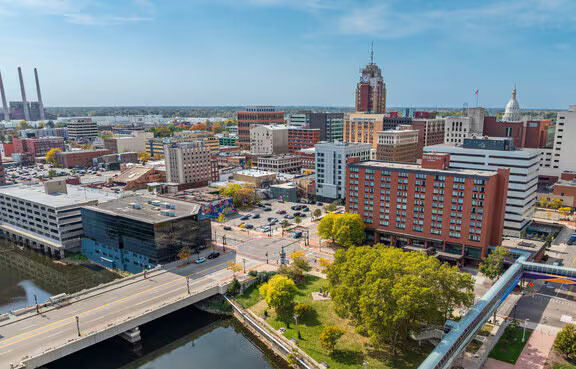
Lansing, as the capital of Michigan, has a significant economic foundation in government and public administration, but it is also supported by various industries such as automotive manufacturing, healthcare, education, and financial services.
The population of the Lansing Metropolitan Statistical Area is around 500,000, and the economic structure of this region has gradually diversified from a manufacturing focus to service and knowledge-based industries over the past few decades.
The automotive industry is the historical backbone of Lansing's economy. GM (General Motors) operates two major assembly plants in Lansing: the Lansing Grand River Assembly and the Lansing Delta Township Assembly, which together employ thousands of people directly.
In particular, the Delta Township plant has been producing popular SUV models such as the GMC Acadia, Buick Enclave, and Chevrolet Traverse since it opened in 2001. GM's operations in Lansing significantly impact not only direct employment but also indirect employment in parts suppliers, logistics, and service industries.
The state government and public administration sector is one of the most stable sources of employment in Lansing. With the Michigan State Capitol and various state government agencies concentrated in Lansing, there are tens of thousands of state government employees alone. The Michigan state government is considered one of the largest single employers in the Lansing metropolitan area, with jobs distributed across various fields including administration, legal, IT, and social services. State government employment is relatively less affected by economic fluctuations, serving as a safety net for the local economy.
The healthcare industry is also becoming increasingly significant in Lansing's economy. Major healthcare institutions such as Sparrow Health System, McLaren Greater Lansing, and MSU Health Care have established themselves as large employers in the region.
With the aging population, the demand for healthcare services continues to rise, making the healthcare sector a key growth industry for Lansing in the future.
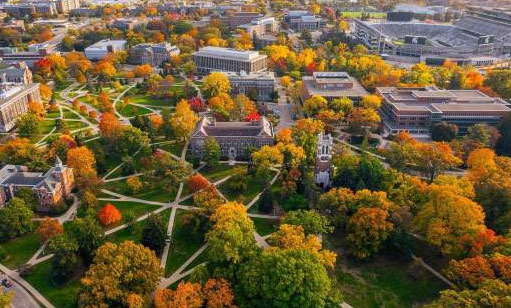
The collaboration with the MSU College of Human Medicine also contributes to the development of the healthcare industry.
In the education sector, Michigan State University (MSU) has a tremendous impact on the Lansing/East Lansing regional economy. MSU is one of the largest universities in the United States, with over 50,000 students and thousands of staff. The employment, consumption, real estate, and service demand generated by the university itself creates an economic ripple effect worth billions of dollars annually for both East Lansing and the entire Lansing economy. Additionally, MSU's research sector leads to the attraction of research and development institutions and startups in various fields such as agricultural science, biotechnology, and physics.
The financial services and insurance industry is also a crucial economic pillar for Lansing. As the state capital and the center of state government-related financial activities in Michigan, Lansing is home to banks, credit unions, and insurance companies. Notably, many insurance and pension management institutions related to state employees and public agencies are located in Lansing, creating a significant number of professional jobs.
Technology (IT) startups and the innovation economy have also been showing growth in Lansing recently. Spin-off companies based on MSU's advanced research achievements and startups related to agricultural technology and clean energy are establishing themselves in the Lansing area. The Lansing Economic Area Partnership (LEAP) operates various programs to attract businesses and support startups, contributing to the development of the local innovation ecosystem.
Overall, Lansing's economy stands on four pillars: automotive manufacturing, public administration, healthcare and education, and financial services, with the addition of technology startups as a new growth driver. Efforts to reduce dependence on a single industry and build a diversified industrial portfolio are ongoing, positioning Lansing as a resilient central city in Michigan's economy.
 RubyDreamer
 TofuGymKing
 AliAluAlo







 moo moo |
 ultron78 |
 garlic bread |
 Sugar Cream Door Bulletproof Noodles |
 urbanmint |
 sugartrail |
 vibranto |
 raspberry7 |
 bloom |
 starline |
  Where is a really nice neighborhood? |
  Real Estate |
  Forest Gump |
  Real Estate Investment Korean American |
  Dollydori, Lover of Movies |
  dmzline |
  travelo |
  American Food Information & Calories |
  Splendid Mission |
  sparklingo |
  Watch Walker |
  Soy Angelino |
  autumn |
  K-POP TV News |
  cortiva6 |
  Nevada Teppanyaki |
  aerion99 |
  Golado |
  Maximum Pro |