

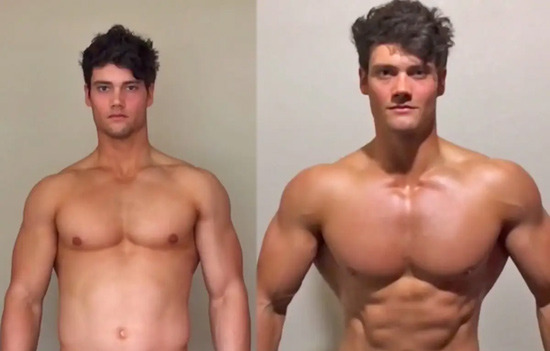
The world is constantly changing. In the past, children worried about gaining weight, but now the opposite concern of "not having enough muscle" has become a new issue.
A term frequently mentioned in psychology lately is 'Bigorexia.' Simply put, it is a type of body image disorder where individuals feel small and frail despite having a sufficiently large and muscular body. Previously thought to be an issue only among some bodybuilders, it is now increasingly common among general adolescents and those in their twenties.
There is a clear change behind this phenomenon. The biggest cause is social media. On platforms like Instagram and TikTok, people see perfectly sculpted bodies dozens of times a day. Naturally, comparisons begin. The problem is that the standard for comparison is not reality. The results, which involve lighting, angles, editing, and even drugs, are accepted as everyday standards. When children still in their growth process are constantly exposed to these images, they start to think, "Why can't I look like that?"
The danger of Bigorexia is that it appears healthy on the surface. When someone works out diligently, manages their diet, and takes care of their body, they seem disciplined and good at self-management. However, underlying this can be an obsession. If they miss even one day of exercise, they feel anxious, cannot enjoy meals, and remain unsatisfied despite having improved their physique. In severe cases, this can lead to excessive use of supplements or drugs.
Especially nowadays, this issue is rapidly increasing among boys. In the past, appearance-related stress was mainly seen as a problem for girls, but the situation has completely changed. The image that "a thin body is weak" combined with the culture that "men should be big" has intensified the pressure regarding muscle. It is not uncommon to see middle and high school students working out with the same intensity as adults at the gym.
From a parent's perspective, it is not about discouraging exercise itself. Exercise is undoubtedly a good habit. The issue lies in the purpose. It is necessary to distinguish whether the exercise is for health or to alleviate anxiety. If a child frequently checks their reflection, becomes overly sensitive about their body, or experiences increased stress around meals, it may be time for a conversation.
Another important factor is the words and attitudes of parents. Casual comments like "You seem to have gained some weight" or "A man should have muscles" can set standards for children. Today's kids are more influenced by societal standards than by their parents' words. Therefore, it is even more crucial to create a balanced perspective at home. Discussing health status over body size, lifestyle habits over appearance, and the process over the results can be helpful.
As the world changes, the pressure regarding appearance is also shifting. In the past, slimness was the standard, but now 'the perfect body' has become the new benchmark. The problem is that this standard is endless. The demands for bigger, clearer, and more perfect bodies ultimately make satisfaction difficult.
Parents also need to understand these changes. Just because a child is exercising diligently does not mean it is a purely positive sign. Healthy confidence and obsession stemming from anxiety may look similar on the outside but are entirely different issues. What matters is not the change in the body but the state of the mind.
The world continues to change. Parents raising children now need to pay attention not only to academics and grades but also to their children's body image and mental health. Parents must be aware of these societal changes and make an effort to understand them ahead of time.
 CheolYoungmi







 Moscow Kim |
 coloradoman |
 Montgomery Mom |
 GOGO SING |
 Hajiwon Blog Hair Salon |
 Cali M Law Group |

 U.S. Weather Bureau News |
 Various Knowledge and Information in the USA |
 Korean Mom |
  My NYC |
  moo moo |
  Mr Oh |
  forevergee |
  festival |
  manchester |
  constant |
  Leapfrog Move |
  vibranto |
  Tora Tora |
  yellowbutter |
  Dolly |
  US Embassy |
  NYC saladbar |
  Finding Superfoods |
  lightyear |
  song bang |
  vexomo |
  Indiana Jones |