

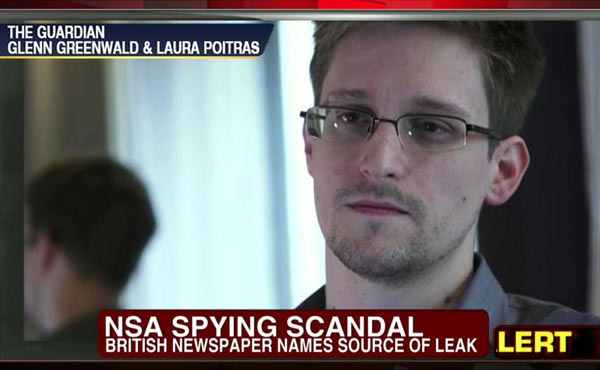
On June 6, 2013, former CIA employee and NSA contractor Edward Snowden revealed the 'PRISM Project', shocking the world. It was disclosed that the National Security Agency (NSA) had implanted backdoors in the servers of internet companies, collecting user information without court warrants or permissions.
Almost all global platforms we use daily, such as Google, Facebook, Apple, Twitter, Instagram, Yahoo, and Skype, were targeted. Not only was it a simple level of surveillance, but the NSA had direct access to internal systems of companies, allowing them to view users' emails, messages, photos, and video call records in real-time.
What was even more shocking was Snowden's identity. He was not a formal NSA agent but an employee of a defense contractor that was subcontracted to perform NSA's work. Originally, he worked at Dell on similar system security tasks, but after learning about the existence of the NSA's surveillance program, he moved to another contracting company to expose it. In other words, a civilian contractor, not a high-ranking internal official, revealed the reality of global confidential information to the world.
This revelation caused international repercussions beyond a simple domestic issue in the United States. The U.S. had previously accused adversaries like China and Russia of hacking the U.S. government and defense contractors, but this incident revealed that the U.S. had also been conducting extensive hacking against global government agencies and private networks through the NSA. In other words, the duality of the U.S. as a 'watcher without being watched' was exposed.
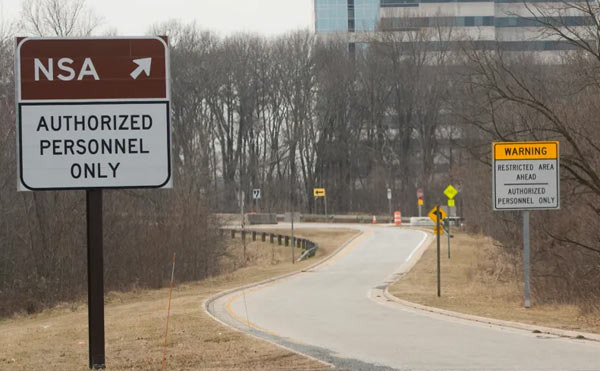
When Snowden's revelations were first made public, American society was in a state of shock. Jokes like "If the NSA is watching my internet history, I feel sorry for that employee" flooded the internet, and a fierce debate erupted between the media and citizens over "national security vs. personal freedom." Some defended the NSA, claiming it was an unavoidable measure to protect the nation, while many expressed anger, stating that the government had violated the right to privacy guaranteed by the Constitution.
The issue was not just an American story. The most controversial part of Snowden's statements was that "U.S. allies are also participating in this surveillance system." Following his revelations, secret documents from the Government Communications Headquarters (GCHQ) in the UK were released, revealing that the UK had also been involved in the PRISM project alongside the NSA.
This meant that the intelligence-sharing alliance between the U.S. and the UK, known as 'Five Eyes', had established a global surveillance system beyond mere cooperation. The British government was greatly unsettled by this news, and various European countries were horrified to learn that their citizens' information was being collected through U.S. servers.
The controversy did not end there. It was revealed that NSA employees had privately accessed the collected information. There were cases of monitoring specific individuals' emails or social media accounts, or tracking the movements of lovers or ex-partners. Internally, this was referred to as 'HUMINT' (Human Intelligence) but twisted into the slang term 'LOVEINT'. Some of these employees faced disciplinary actions or voluntarily resigned, but very few were criminally prosecuted. When this fact was made public, citizens expressed outrage, stating that surveillance for national security had devolved into spying on personal privacy.
Meanwhile, some American media outlets, like CNN and Time, seemed to adopt a tone that represented the U.S. government's position. CNN featured prominent journalist Christiane Amanpour interviewing a British intelligence expert, who quoted, "All nations spy," arguing that inter-state surveillance is a universal reality.
Then in 2015, another incident occurred. The Italian IT company 'Hacking Team', based in Milan, was hacked, and internal documents were leaked. This company had been selling remote surveillance software to government and intelligence agencies, and the client list included the NSA and various national intelligence agencies. This meant that even within the global information market where surveillance technologies were bought and sold, the watchers were also watching each other.
Ultimately, Snowden's revelations were not just a simple incident but a catalyst that raised ethical and trust issues in the age of information warfare in the 21st century. Since then, the U.S. has promised to strengthen institutional transparency, but people's suspicions have not completely disappeared.





 maplefox |
 Potato House |
 meloncat |
 mygoddess blog |
 mochibear |
  dralix58 |
  Gorama Round |
  Skydiving |
  dreamport |
  Yellow Snowman |
  Toaster Pizza Magic Show |
  velvetnom |
  Anytime Journey |
  Mrs. Duluth |
  jaxter |
  Atlanta Mama |
  Baguette Blog |
  US Embassy |
  Korean Mom |
  My NYC |
  moo moo |
  Mr Oh |
  forevergee |
  festival |
  manchester |