
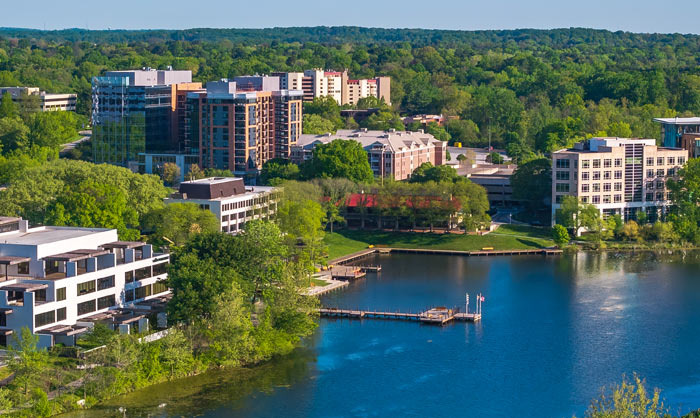
Columbia, MD, is a planned city where nature is perfectly integrated into the urban structure.
Located between Washington D.C. and Baltimore, it offers convenient transportation, while the Little Patuxent River flowing through the city and three artificial lakes create the landscape and atmosphere.
As you take a stroll around Columbia, the boundary between nature and the city is hardly noticeable. People here walk along the river every morning and enjoy picnics near the lakes on weekends. Columbia is a place where nature is not just a backdrop but a part of life.
First, the Little Patuxent River, which runs through the center of Columbia, is the backbone of the local ecosystem. This river starts in the western highlands of Howard County, flows through Columbia, and joins the main Patuxent River in the Laurel area. The green spaces and trail system developed along the river are beloved as the city's representative walking paths.
In particular, the Little Patuxent Trail stretches along the river, providing a healing course where you can feel both the forest and the sounds of water. There are wooden bridges and observation points along the trail, where you can see migratory birds in spring and mallards and beavers in summer. It's quite impressive to encounter such ecological diversity within the city.
Following the river's course, you will meet Columbia's three lakes. These artificial lakes were created for balanced water resource management and recreational spaces. Each lake has a different atmosphere and function.
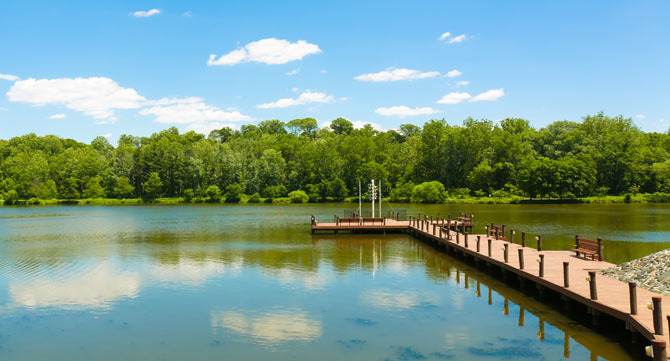
The most iconic spot is Lake Kittamaqundi. Located in the heart of downtown Columbia, this lake is like the 'heart' of the city. Its name is said to be derived from the name of a leader of the local Native American tribe. There is a walking path around the lake, and with plenty of lawns and benches, you can easily see families and couples gathering to relax on weekends.
In summer, the Lakefront Summer Festival takes place, featuring outdoor movie screenings, music performances, and flea markets, transforming the city atmosphere into a festive one. The sunset falling over the lake in the evening is truly magnificent. When the lights reflected on the water gently sway, it feels like you are on a little getaway.
The second is Wilde Lake. This was the first lake created when Columbia was initially designed, located at the center of a community called 'Wilde Lake Village.' It has a quiet and cozy feel due to its proximity to residential areas. Although the surface area is not large, the surrounding trees and lawns blend well, making it a popular spot for walking or jogging.
Lastly, Lake Elkhorn is the largest lake in Columbia. Situated in the southern part of the city, it features a 2-mile lake trail where you can enjoy jogging, cycling, and fishing. On weekends, you can see local families having barbecue parties at the pavilion by the lake or people kayaking. In the center of the lake, there is a small island with numerous bird nests. In spring, you can witness herons and ducks flying in to raise their young. This place, where only the sounds of water and birds can be heard, offers the most leisurely scenery in Columbia.
These three lakes and the Little Patuxent River hold significance beyond mere natural scenery. James Rouse, the designer of Columbia, infused the philosophy that 'nature should not be a backdrop for humans but a space to coexist with them' into the city's design. Thus, Columbia is structured around rivers and lakes, with residential areas, parks, and community centers. As a result, the sound of water can be heard from anywhere in the city, and the forest and paths connect naturally.
Interestingly, this watershed system is not just for aesthetics but is a key structure for environmental management. The lakes regulate the river's water levels, prevent flooding during heavy rains, and purify the water. In fact, Columbia is considered one of the cities in Maryland with minimal damage from natural disasters, thanks to this systematic water management system.
Ultimately, the rivers and lakes of Columbia are the breath of nature flowing through the city and the rhythm that connects people's lives. In the morning, residents practice yoga by the lakeside, in the afternoon, families ride bikes along the riverbank, and at night, the lights reflecting on the lake quietly melt away the fatigue of daily life. The waterways of Columbia tell the story of the city itself, and within that flow, people learn to rest and respect nature.







 maplefox |
 Potato House |
 mygoddess blog |
 puffpanda |
 SanAntonioNews |
  Tonky |
  viroma |
  cookie |
  Live and that's it |
  Alright Twain |
  eatontown blog |
  HAWAII Korean Church News |
  Amore |
  linex |
  Balancework |
  laro90 |
  MEDBIO American Doctor Blog |
  SWAT TEAM BLK |
  DREAM BIG |
  frostbite |
  330 Forever My Love |
  El Dorado |
  dralix58 |
  Gorama Round |
  Skydiving |