

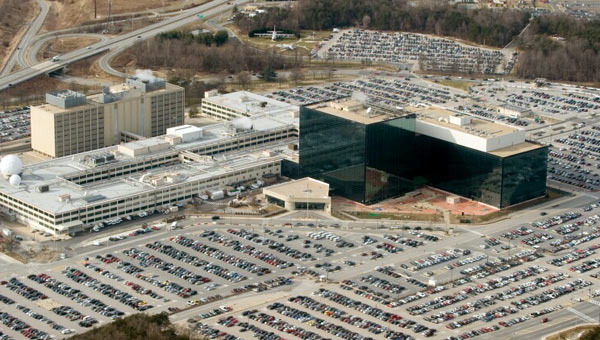
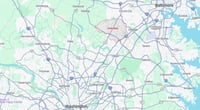
Fort George G. Meade in Maryland is home to the National Security Agency (NSA). It is administratively part of Anne Arundel County, intersected by I-95, Parkway 295, and Route 32, connecting Washington and Baltimore within 40 minutes, overseeing the U.S. cybersecurity, cryptography, and electronic intelligence.
The NSA was established in 1952, but its roots trace back to World War II. During that time, the Allies successfully decrypted Germany's encrypted communications using the 'Enigma' machine, and the individuals and organizations at the center of this effort later evolved into the NSA. This decryption is credited with hastening the end of the war by several years. Today, the NSA is not just a military intelligence agency but also America's digital shield and the world's largest electronic information collection agency.
Organizationally, the NSA falls under the U.S. Department of Defense, but its role extends far beyond the military realm. While the Central Intelligence Agency (CIA) primarily handles human intelligence (HUMINT) and the Defense Intelligence Agency (DIA) focuses on open-source intelligence (OSINT), the NSA specializes in collecting and analyzing electronic signals (SIGINT) and technical intelligence (TELINT) using advanced equipment and technology. In other words, it deals with a realm of information that is much deeper than what can be seen or heard, navigating the world of digital and cryptography. They eavesdrop and analyze global communication signals through satellites, undersea cables, radio waves, and internet traffic.
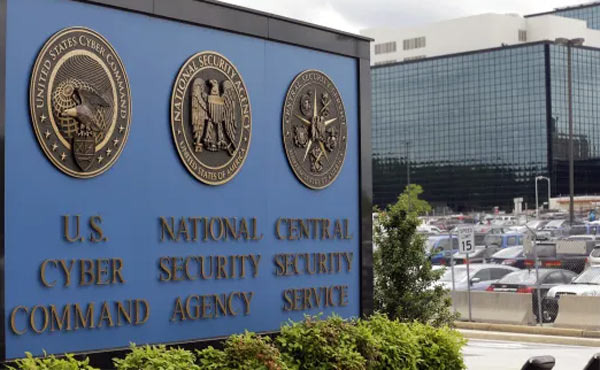
The person overseeing this massive operation is the NSA Director, who is appointed as a four-star general in the U.S. military and concurrently serves as the commander of the U.S. Cyber Command. This means one person commands all of America's cybersecurity and digital operations. This structure shows that the U.S. perceives the digital space as essentially another battlefield.
The NSA's mission goes beyond mere eavesdropping. It includes tracking terrorist communication networks, blocking cyber attacks, decrypting foreign government communications, and providing intelligence support for military operations. Thanks to these activities, the NSA is sometimes referred to as the 'master of the invisible war.' During the Cold War, it monitored Soviet and Eastern European communication networks in real-time, and now it responds to cyber attacks from China, Russia, North Korea, Iran, and others while overseeing global communication networks.
Interestingly, the NSA exerts significant influence internationally. It is a core agency of the "Five Eyes" intelligence alliance led by the U.S. This system involves the sharing and cooperation of information among five countries: the U.S., the U.K., Canada, Australia, and New Zealand, with the NSA holding the most prominent position. In particular, the NSA collaborates closely with the U.K.'s Government Communications Headquarters (GCHQ), Canada's Communications Security Establishment (CSE), and Australia's Signals Directorate (ASD) through the 'Echelon Project.' This project connects massive satellite communication eavesdropping bases installed around the globe. Major facilities are located in Pine Gap, Australia, Colorado, U.S., Yorkshire, U.K., and Ontario, Canada, with the NSA overseeing this network. It is said that this system allows for real-time monitoring and analysis of global phone, email, and satellite communication data.
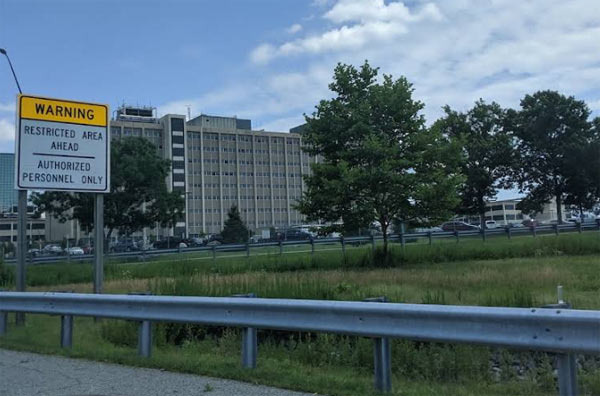
The NSA headquarters at Fort Meade operates almost like a city in itself. It employs about 30,000 personnel, including military personnel, civilian researchers, cryptanalysts, and data scientists. While the building's exterior is public, the interior is completely shrouded in secrecy. Devices like mobile phones and USB drives are prohibited, internet access is only available on a completely closed network, and one cannot move through the hallways without a security card.
Due to the presence of the NSA, the surrounding area of Fort Meade has developed into what is known as the 'Security Belt' of the U.S., with advanced industries flourishing. Nearby cities like Columbia, Laurel, and Elkridge are primarily inhabited by NSA employees and contractors, with IT companies, data analysis startups, and cybersecurity firms lining the streets. This area boasts strong military security while also having well-established educational and living infrastructures, making it one of the most preferred suburban cities for tech professionals from Washington D.C.
Interestingly, near the NSA headquarters, there is also the National Cryptologic Museum, which is open to the public. Here, the origins of the NSA and the history of cryptography are exhibited, allowing visitors to see actual Enigma machines and Cold War-era cryptographic equipment. It is like a real-life version of a spy movie set.
Ultimately, the NSA is an agency that protects national security in the invisible world. In an era where cyber attacks and information warfare have become new weapons of war, it is no coincidence that this small city of Fort Meade has become the center of global information warfare. Behind quiet roads and ordinary buildings, the NSA is constantly analyzing signals from the other side of the globe, monitoring threats, and supporting America's security in real-time.




 maplefox |
 Potato House |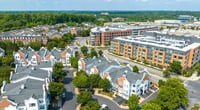
 meloncat |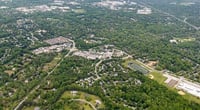
 mygoddess blog |
 mochibear |
  dralix58 |
  Gorama Round |
  Skydiving |
  dreamport |
  Yellow Snowman |
  Toaster Pizza Magic Show |
  velvetnom |
  Anytime Journey |
  Mrs. Duluth |
  jaxter |
  Atlanta Mama |
  Baguette Blog |
  US Embassy |
  Korean Mom |
  My NYC |
  moo moo |
  Mr Oh |
  forevergee |
  festival |
  manchester |