

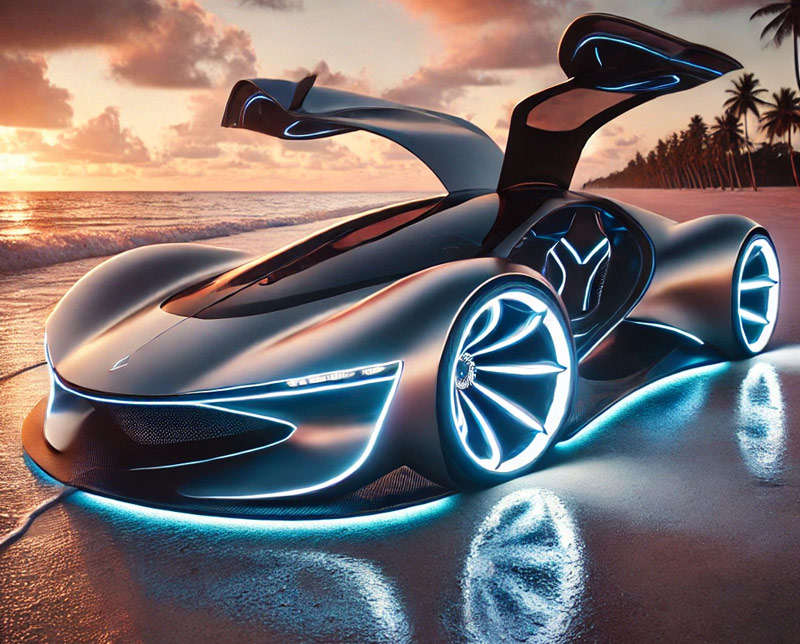
Sometimes when I imagine the future, I wonder if gasoline engine cars will really disappear in 20 years.
In fact, just looking at the last 10 years, the emergence and adoption rate of electric vehicles have exceeded expectations, and both the government and car manufacturers are implementing various environmental policies to reduce carbon dioxide emissions. This raises the question, "Will electric vehicles really become the norm in 20 years, causing gasoline engine cars to vanish from the roads?"
First of all, many countries around the world are showing movements to regulate or ban the new sales of internal combustion engine vehicles. For example, some countries have announced that they will ban the sale of internal combustion engine vehicles starting in 2035, and if such policies are actually implemented, the automotive market is likely to quickly shift its focus to alternative energy sources like electric and hydrogen vehicles.
Leading electric vehicle companies, including Tesla, have already emerged, and traditional car manufacturers are also expected to expand their electric vehicle lineups.
However, it seems unlikely that gasoline engine cars will completely disappear in 20 years. One reason is that the pace of building charging infrastructure or hydrogen-related facilities varies by region. While electric vehicle charging stations will easily increase in urban areas, the need for internal combustion engine vehicles will likely remain in areas with insufficient infrastructure or in remote rural areas.
Additionally, some car enthusiasts may want to enjoy the unique engine sound and driving experience of gasoline vehicles, so there is a possibility that a small number of people will continue to seek gasoline cars.
Nevertheless, the public's choice will gradually shift towards eco-friendly vehicles, and most gasoline engine cars are likely to fade into history over time.
Just as it is rare for households to use wood-burning stoves anymore, internal combustion engine vehicles may also remain only for specific purposes or hobbies. In the future, when purchasing a car, electric vehicles may become the default option.
We cannot overlook the story of the Texas oil industry, which, as a center of oil production and a significant pillar of the U.S. economy, will inevitably be more sensitive to the global shift towards electric vehicles. Even now, Texas's economy relies significantly on the fossil fuel industry, including oil and gas. As the electric vehicle era becomes more established, a decrease in oil demand is expected, so Texas oil companies will need to quickly diversify their businesses or move towards renewable energy.
From an investment perspective, these changes can serve as important signals. If electric vehicles become mainstream in 20 years, there will be investment opportunities not only in electric vehicle production and related parts and materials industries but also in companies building charging infrastructure and mining companies or chemical companies supplying battery raw materials.
On the other hand, traditional energy companies that have focused on oil-based businesses may gradually lose their foothold, so investors need to closely monitor market trends and companies' response strategies.
It will also be interesting to see how major oil companies based in Texas adapt to the electrification era and restructure their profit models. They are not just sticking to oil drilling and refining but are also expanding into petrochemicals and renewable energy development.
In this process, unexpected investment opportunities may arise, so investors should carefully check the financial status and long-term strategies of companies.
In summary, the shift towards electric vehicles is no longer seen as a "possibility" but rather as a "matter of time." The Texas oil industry is also expected to undergo significant changes in this trend, presenting both new opportunities and risks for investors.






 lightyear |
 Moscow Kim |
 coloradoman |
 Montgomery Mom |
 GOGO SING |
 Starbucks Reserve Roastery Closure |
 Encyclopedia of New York and Surrounding Areas |
 Softember |

 Franco Family |
  Anytime Journey |
  Mrs. Duluth |
  jaxter |
  Atlanta Mama |
  Baguette Blog |
  US Embassy |
  Korean Mom |
  My NYC |
  moo moo |
  Mr Oh |
  forevergee |
  festival |
  manchester |
  constant |
  Leapfrog Move |
  vibranto |
  Tora Tora |
  yellowbutter |
  Dolly |
  NYC saladbar |