
Have you heard the news that California will effectively ban the sale of new internal combustion engine vehicles starting in 2035 and only allow the sale of electric vehicles? California has been ramping up its plan to halt the sale of internal combustion engine vehicles in the last 2-3 years, aiming for carbon neutrality and reducing air pollution.
This is a policy announced by the California Air Resources Board (CARB), which can be seen as a bold decision for environmental protection and greenhouse gas reduction. A specific roadmap has also been established to gradually increase the proportion of zero-emission vehicles at intermediate points such as 2026 and 2030.
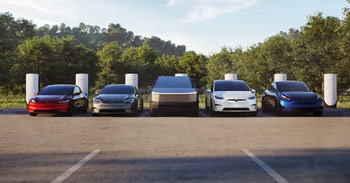
In fact, California is one of the regions in the United States that is leading in air pollution regulations and eco-friendly policies. Even now, there are well-established support systems for electric vehicles and plug-in hybrid vehicles, and the emissions regulations are stricter than in other states.
This 2035 policy is also an extension of this trend, strongly driving the market to make zero-emission vehicles like electric and hydrogen cars the mainstream instead of internal combustion engine vehicles.
Of course, it remains to be seen whether the deadline of 2035 will be strictly adhered to. The pace of technological advancement is rapid, and various interests or political variables could alter the schedule. However, since environmental protection and carbon neutrality are now an unstoppable trend, there is a significant possibility that similar policies will spread globally.
As a result, California's declaration of transitioning to electric vehicles by 2035 is likely to serve as a significant wave that moves the entire automotive industry, not just a single state's policy. It will be interesting to see how quickly electric vehicles become mainstream and how much related technology advances.
Of course, after 2035, it will not be prohibited to drive existing gasoline or diesel vehicles in California. This would be a significant issue regarding personal property rights, so it would be a big problem, haha.
The key point is that when purchasing a new car, only zero-emission vehicles like electric or hydrogen cars will be allowed. If the plan proceeds as intended, it is expected that most vehicles released in California after 2035 will be based on electric power.
In conclusion, California's declaration of transitioning to electric vehicles by 2035 appears to be an event that could literally change the landscape of the automotive market.
The news that California will ban the sale of internal combustion engine vehicles and only allow the sale of electric vehicles starting in 2035 is also a noteworthy issue from an investment perspective. It is natural to be interested in how the electric vehicle market will grow and how the future value of related companies will change. Let's take a closer look.
First, the main point of the 2035 policy is that "only zero-emission vehicles will be allowed for new car purchases." Since only vehicles with little or no emissions, such as electric and hydrogen cars, will be permitted, companies that produce existing internal combustion engine vehicles will find it increasingly difficult to survive. Therefore, automakers are already expanding their electric vehicle lineups or accelerating their electrification strategies. This trend naturally draws attention to the growth potential of electric vehicle-related companies.
As an investor, there are two main points to watch.
First, companies related to electric vehicle materials and components. As the electric vehicle market grows, the demand for batteries will inevitably increase explosively, making the acquisition of battery materials (lithium, nickel, cobalt, etc.) crucial. Therefore, interest in mining development or battery material production companies, as well as battery manufacturers, may rise. Additionally, companies that produce motors, semiconductors, and electronic components necessary for electric vehicle operation are also expected to benefit.
Second, charging infrastructure and renewable energy companies. For electric vehicles to dominate the roads after 2035, a massive charging infrastructure will be necessary. From home chargers to fast charging stations and mobile charging facilities, expansion will need to occur across the board, so companies that design and install charging stations or possess charging-related technologies may find significant opportunities in the future market. Furthermore, the renewable energy industry (solar, wind, etc.) is expected to continue growing to supply the electricity used by electric vehicles in an eco-friendly manner.
Of course, stock investments are always volatile, and policies may change or technological innovations may progress faster or slower than expected. Especially right now, even if the adoption of electric vehicles increases, there may be issues with insufficient charging infrastructure or battery raw material supply. Moreover, in a highly competitive market, certain companies may fall behind, so not all companies in the electric vehicle theme can expect a rosy future.
When developing an investment strategy, it would be good to consider the following aspects.
The company's electrification strategy and profitability
It is essential to carefully check whether the company has sufficient electric vehicle-related technology, whether its financial situation is stable, and whether it can maintain competitiveness in the long term.National and regional policy trends
Not only California but also several countries in Europe and Asia have announced similar policies. By checking how subsidies and carbon taxes and other environmental regulations change in each country, you can gauge where the electrification market will grow first or rapidly.The speed of development of charging infrastructure and battery technology
For electric vehicles to become more integrated into daily life, charging must be convenient, and driving range must increase. Observe how much the durability, charging speed, and cost reduction of batteries improve over time. This can help predict the future value of companies related to charging station construction or battery material supply.
In conclusion, the 2035 electric vehicle transition policy will significantly impact various sectors, including automotive manufacturers, materials and components companies, charging infrastructure providers, and energy companies, making it a crucial investment theme in the stock market. However, rather than expecting unconditional growth, it is necessary to analyze each company's technological capabilities, financial soundness, and changes in regulations and policies comprehensively.
As in any field, there is no guarantee that "the one who jumps in quickly will always win." Even with forward-looking policies, unexpected risks may arise. As we observe how this step taken by California will change the landscape of the entire U.S. and even the global automotive market, I hope you make wise investment decisions by referencing various information and data.








 Weekend Movie Blog |
 Beauty, Health, Lifestyle Blog |
 coloradoman |
 Superman Cat Blog |
 novapixel |
  Korean Mom |
  My NYC |
  moo moo |
  Mr Oh |
  forevergee |
  festival |
  manchester |
  constant |
  Leapfrog Move |
  vibranto |
  Tora Tora |
  yellowbutter |
  Dolly |
  US Embassy |
  NYC saladbar |
  Finding Superfoods |
  lightyear |
  song bang |
  vexomo |
  Indiana Jones |