

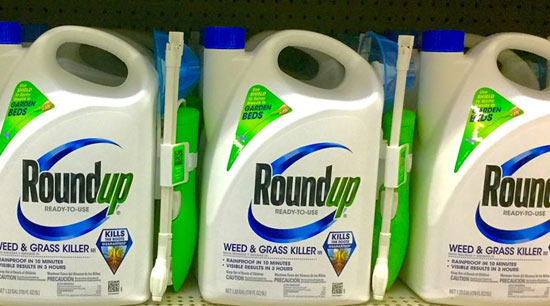
Recently, news has emerged that Bayer is pursuing an additional $7.25 billion settlement related to the herbicide Roundup.
This enormous settlement news illustrates how significant corporate risk can be in modern society.
Bayer acquired Monsanto for $63 billion.
At the time, it was seen as a strategic acquisition to secure overwhelming technology and market share in the agricultural sector.
However, the situation changed completely after the acquisition.
Monsanto's flagship product, the herbicide 'Roundup,' faced lawsuits across the United States claiming it causes cancer.
In trying to control weeds, they ended up entangled in lawsuits.
The key issue is the ingredient glyphosate, which the WHO has classified as "possibly carcinogenic," while Bayer claims it is "safe."
Scientists are still debating, but American juries have already reached a conclusion: "Pay up."
To summarize what has happened so far: 130,000 lawsuits resolved, approximately $10 billion spent.
However, there are still 65,000 lawsuits pending.
If Bayer had not purchased Monsanto, the Roundup lawsuits would not have been Bayer's problem.
That $20 billion headache would have belonged to Monsanto's shareholders.
But the key point is that Bayer knew this risk and still went ahead with the purchase.
At the time of the acquisition, the lawsuit risks were already surfacing.
The WHO classified glyphosate as a possible carcinogen in 2015, and the acquisition decision was made in 2016. The timing is remarkable.
Bayer's management calculated that "we will win the lawsuits scientifically and secure dominance in the agricultural market."
Cancer symptoms can appear years after exposure, so new lawsuits keep coming in. It's literally a zombie lawsuit.
The proposed $7.25 billion settlement is an attempt to create an 'end' to this situation.
Anyone exposed to Roundup before February 17 of this year and diagnosed with non-Hodgkin lymphoma within 16 years will be eligible for compensation.
This settlement is particularly significant as it includes not only existing lawsuits but also potential future claims.
Payments will be made over 21 years, but most of the amount is expected to be paid within the first five years.
The idea is to "settle everything with this money, whether past lawsuits or future ones."
The CEO directly stated, "Let's wrap this up," highlighting the high fatigue level in corporate risk management.
An interesting point is the shadow of mergers and acquisitions. Bayer gained market dominance in agriculture through Monsanto, but also took on a massive lawsuit risk. When combining the amounts already paid or expected to be paid, it approaches $20 billion.
The legal bomb that came with buying Monsanto is one-third of the acquisition price. It's like buying a company along with a buffet of lawsuits.
The lesson is simple. Nowadays, the most expensive thing for large corporations is not raw materials or labor costs.
It's the bills that come when trust is lost. And those bills can come in the tens of billions over decades.
 TomSawyer






 Moscow Kim |
 coloradoman |
 Montgomery Mom |
 GOGO SING |
 Hajiwon Blog Hair Salon |
 Purple Moons, |
 Kathy's Blog |
 What can make money? |

 manchester |
  constant |
  Leapfrog Move |
  vibranto |
  Tora Tora |
  yellowbutter |
  Dolly |
  US Embassy |
  NYC saladbar |
  Finding Superfoods |
  lightyear |
  song bang |
  vexomo |
  Indiana Jones |
  meloncat |
  novapixel |
  mortrix |
  Esther 1983 |
  fortbliss |