

It is common knowledge that Texas is the second largest state after Alaska and larger than France.
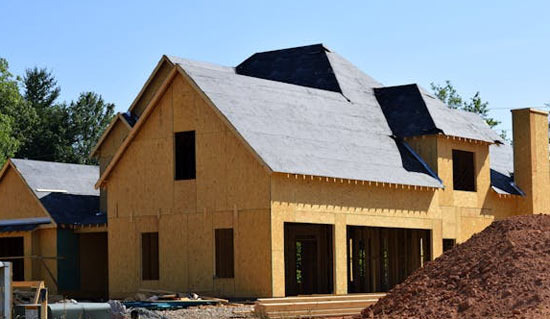
Due to the vast land in Texas, there is plenty of land available for construction, and the supply of new homes continues throughout the state. The proximity to the Mexican border provides a plentiful supply of low-cost construction labor. With almost no housing regulations, the balance of supply and demand is naturally maintained, and there is little upward pressure on home prices.
Moreover, Texas has a zero corporate tax and zero state income tax, but property taxes are relatively high, ranking sixth in the nation. By increasing property taxes, speculative demand aimed at capital gains is curtailed, encouraging purchases for actual residency purposes.
In this environment, high-value industries such as IT, pharmaceuticals, petrochemicals, aerospace, semiconductors, and electric vehicles are well-established, and with 25 of the world's top 500 companies based in Houston, there are many job opportunities. As a result, affordable housing attracts talent and capital, creating a virtuous cycle that makes Texas the fastest-growing state in the U.S.
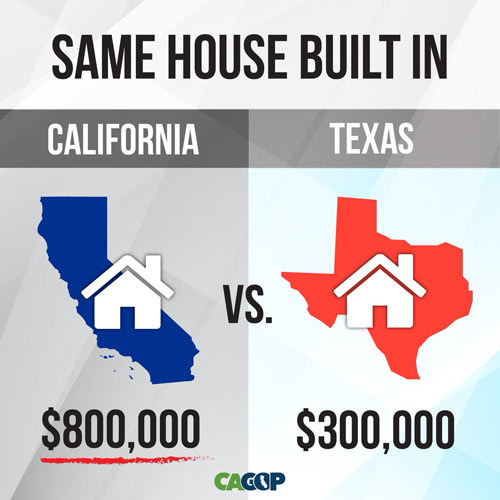
The Background of the Significant Difference in Housing Construction Costs Between California and Texas
Impact Fees
California imposes very high development impact fees on a municipal basis. According to a report, the average fee in California is about $29,000 per unit, while in Texas, it is less than $1,000. In the San Diego area, fees can reach $37,000 per unit. This difference alone has a significant impact on the total construction costs.
Permitting Processes and Regulations
California must meet various environmental, energy, and earthquake safety regulations, and the permitting process is complex, resulting in an average construction period that is nearly two years longer than in Texas. Extended project timelines lead to additional financing and management costs.
Labor Wages and Unions
California has a high minimum wage and many places mandate union labor, requiring compliance with the 'prevailing wage' law, which guarantees local average wages, making labor costs about 20% higher than in Texas. In contrast, Texas has a lower unionization rate and relatively lower wage levels.
Building Codes and Material Costs
California has strict energy efficiency (zero-energy buildings, solar support, etc.) and seismic performance standards, limiting material choices and often requiring the use of expensive eco-friendly and seismic-resistant materials. Texas has relatively relaxed regulations in this regard.
Land Costs and Development Density
Research shows that land prices in California's urban and coastal areas are over 600% higher than the national average. Additionally, many areas are developed primarily for single-family homes, resulting in lower floor area ratios and consequently higher land costs per unit.
Insurance and Other Costs
California, with its high risk of wildfires and earthquakes, has higher construction insurance premiums, and various guarantees and liability insurance for consumer protection are mandatory. Texas has a relatively lower risk of natural disasters, resulting in lower insurance burdens.
Due to differences in development impact fees, permitting regulations, labor market structures, material and land prices, and insurance costs, housing construction costs in California are 2 to 3 times higher than in Texas. Without policy changes or regulatory relaxations, it seems unlikely that this gap will be resolved anytime soon.





 Toaster Pizza Magic Show |
 US Embassy |
 fortbliss |
 Folding Instructions |
 yentra |
 Weekend Movie Blog |
 Beauty, Health, Lifestyle Blog |
 coloradoman |
 Superman Cat Blog |
 novapixel |
  DREAM BIG |
  frostbite |
  330 Forever My Love |
  El Dorado |
  dralix58 |
  Gorama Round |
  Skydiving |
  dreamport |
  Yellow Snowman |
  velvetnom |
  Anytime Journey |
  Mrs. Duluth |
  jaxter |
  Atlanta Mama |
  Baguette Blog |
  Tan Sol |
  Korean Mom |
  My NYC |