

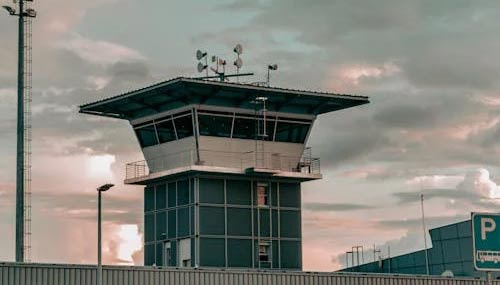
To become an air traffic controller in the United States, you must go through three main steps: meeting qualifications, selection process, and training and on-the-job training.
Qualifications and Selection Process
-
Basic Qualifications
– Must be a U.S. citizen and proficient in English.
– Must be under 31 years old as of the application deadline and have a high school diploma or equivalent experience (at least 1 year).
– Must pass the strict physical and mental health standards set by the FAA, including vision, hearing, cardiovascular, neurological, and mental health evaluations. -
Application Process (5 Steps)
– Submit an application and upload required documents on USAJobs
– Take the Air Traffic Skills Assessment (ATSA) exam
– Pass medical, drug, psychological (MMPI-2), and background checks
– Be invited to the FAA Academy (Oklahoma City)
– Complete on-the-job training for 1 to 3 years after graduating from the academy to obtain full certification
Income Structure
– During academy training, you earn about $22.61 per hour (approximately $47,000 annually), with meal and lodging assistance provided.
– After graduation, the average salary for qualified professional controllers quickly rises to over $160,000.
– According to the BLS (Bureau of Labor Statistics), the median salary for controllers in 2024 is $144,580, with the top 10% earning over $210,410 and the bottom 10% earning less than $76,090.
Retirement Age and Benefits
While regular federal employees retire after 30 years of service, controllers have special regulations considering the job's intensity and stress. – They can retire early at age 50 after 20 years of service, or at any age after 25 years of service, and the maximum retirement age is set at 56 by law. The pension calculation for early retirement is designed to be more favorable than for regular federal employees, applying a 'High-3' salary standard of 1.7% for the first 20 years and 1% for each subsequent year.
The background for the mandatory retirement of air traffic controllers at age 56 can be summarized in two main points.
First, the safety risks associated with high job intensity and stress. The federal law enacted in 1971 (Public Law 92-297) established mandatory retirement at age 56 for controllers based on research findings that "decreased physical and cognitive functions due to shift work, prolonged concentration, and stress can threaten safety." In fact, according to an FAA technical report, there is a tendency for operational errors to increase with age due to accumulated fatigue and decreased judgment and concentration, which is why a retirement age limit was established.
Second, it is a measure to balance pension distribution and workforce circulation. Controllers can retire early and receive pensions after 20 years of service at age 50, or at any age after 25 years of service, and the mandatory retirement age of 56 is designed to align with the upper limit for new hires (age 31), ensuring that they can build a stable career for a sufficient period and secure pension eligibility before retiring.
Recently, there have been calls to extend the mandatory retirement age due to a labor shortage, but the standards considering the "potential for cognitive decline" are still maintained due to the nature of the job prioritizing safety. It is a career worth considering, so please take the time to learn and prepare thoroughly!





 Victory 1988 |
 El Dorado |
 lightyear |
 Moscow Kim |
 coloradoman |
 sparkling |
 Nationally Certified Lightning Charcoal Review |
 Northeastern |
 Pennsylvania Information News |
 U.S. Weather Bureau News |
  Burbank Lee |
  Olivia's Blog |
  Bushing Around Life |
  Active |
  Cherokee Rose |
  Kor. Master |
  Holey Moley |
  Conflite Teacher |
  Hodong Prince Over Flex |
  Mist inn |
  citrus pop |
  Onion Ring |
  phoenixia |
  viewtop |
  loverun |
  Kim Do Sun |
  SEVEN SEVEN |
  yentra |
  Make My Day |