
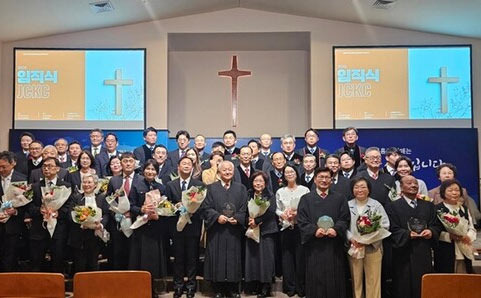
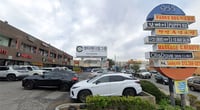
One of the first things that surprises Koreans moving to Atlanta is the number of churches. While driving, you can see signs for Korean churches everywhere.
At first, you might think, "Are there really this many Koreans?" In fact, it is reported that there are over 100 Korean churches in the Atlanta metro area.
When I first came to Atlanta, I thought of churches simply as places for worship. However, after living here for a few years, I realized that it's not just that. Especially for immigrants, churches seem to function more as information centers than just religious facilities.
When newcomers arrive, information about which neighborhoods are good, which schools are decent, who trustworthy real estate agents are, and where to find the best Korean restaurants naturally circulates within the church community. I've even seen job introductions and business connections frequently made through churches.
Large churches like Atlanta Full Gospel Church, Atlanta Korean Presbyterian Church, Onnuri Church Atlanta, and Atlanta Love Church are quite substantial. Some have thousands of attendees, and they operate almost like small community cities, with programs for children, youth, young adults, and adults.
One of the benefits for parents is that children have many opportunities to be exposed to both Korean and English. Most large churches offer both Korean and English services, allowing 1.5 and 2nd generation children to participate relatively naturally.
Of course, it's not just large churches. There are also many small churches around Atlanta. Some people actually prefer smaller churches because they can build closer relationships in a family-like atmosphere. Some find more comfort in these small communities than in large churches.
There are also non-Christian religious communities. Korean Catholic believers look for parishes like St. Andrew Kim Tae-gon Church or churches that offer Mass in Korean. There are temples for Buddhists, and they offer services and meditation programs.
Moreover, Atlanta itself is a city with a strong religious presence in the U.S. It is heavily influenced by Southern Baptists, and large American churches like North Point Church have tens of thousands of congregants. Thus, religion has naturally become a part of the cultural fabric of life here.
Of course, attending church doesn't automatically mean everything is good, and not attending doesn't mean there's a problem. However, to understand the Korean community in Atlanta, it's important to recognize that churches play a role beyond just being places of worship.
Having lived in Atlanta for a long time, I believe that what matters most is where you feel a sense of belonging. It could be a church, an alumni association, a hiking group, or a golf club. Life as an immigrant in the U.S. can often be lonelier than expected, so having at least one connection to people can be a significant source of mental strength.
 SunrayView
 silvertown







 ollege Mom |
 Helpful Life Stories |
 prixon74 |
 Balancework |
 Make My Day |
 Let's Be Like a Salt-like City Person |
 Dingho and USA News |
 Gondola IT |
 moonshine 7 |
 Gimmi207 Blog |
  urban legend |
  coolriver |
  Good Neighborhood, Wealthy District Information |
  Ro Ro Car |
  Amber H |
  new sugar |
  Palm 1000 |
  loran |
  donutfield |
  Tennis City |
  sunny7 |
  Questions about firearms while living in America |
  Shoot Me |
  mochifox |
  zucchini |
  Anna Life |
  Exciting FM Radio |
  pet dog |
  toodin |
  rosed |