
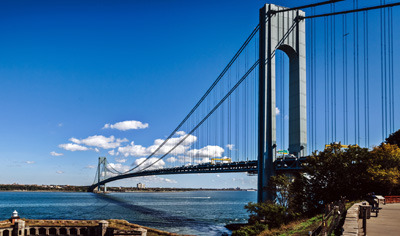
Staten Island is the smallest and least populated of New York City's five boroughs, yet it has a distinct economic structure. Once thriving in manufacturing and port logistics, the area's economic landscape has changed significantly over the past few decades. Let's take a look at the key industries and employment status driving Staten Island's economy today.
The largest sector in Staten Island's economy is the healthcare industry. Major medical institutions such as Staten Island University Hospital, Staten Island University Hospital North Campus, and Richmond University Medical Center serve as key employers in the area. They provide thousands of jobs for doctors, nurses, medical technicians, and administrative staff, making a substantial contribution to the local economy. Following the COVID-19 pandemic, the demand for healthcare workers has increased, leading to a continuous rise in employment in this field.
Retail and service industries are also vital components of Staten Island's economy. Staten Island Mall is one of the largest shopping centers in the New York metro area, housing hundreds of stores and restaurants, and is responsible for a significant number of retail jobs in the region. In recent years, traditional retail has faced challenges due to the growth of e-commerce, but Staten Island, with its high car ownership rate and strong suburban shopping patterns, has managed to maintain a relatively stable offline retail sector.
The construction industry is another essential part of Staten Island's economy. With the ongoing real estate development boom and infrastructure investments in New York City, construction workers, contractors, and building material suppliers are actively engaged in the area. Notably, large public projects like the Freshkills Park development and North Shore development plans are creating jobs in the construction sector. Additionally, Staten Island remains one of the few areas in New York City where new residential developments are still possible, leading to a steady construction of residential properties.
The port and logistics industry has historically been closely linked to Staten Island. The New York-New Jersey port is the largest on the East Coast of the United States, and logistics-related businesses operate near Staten Island. The industrial area around the Goethals Bridge is home to warehouses, logistics centers, and transportation companies, with major logistics firms like Amazon establishing facilities nearby. This contributes to maintaining jobs in the logistics and transportation sectors in the region.
The education sector is also a major source of job creation. Public schools operated by the NYC Department of Education, along with higher education institutions like St. John's University and Wagner College, provide significant employment for teachers, professors, and administrative staff. Private and religious schools also serve as important employers in the area.
Public services in New York City are another key employment sector for Staten Island residents. Staten Island has a higher proportion of public employees, such as firefighters, police officers, and city staff, compared to other boroughs. This is related to a traditionally strong public employee union culture and a local preference for stable jobs. The FDNY and NYPD have a significant number of residents from Staten Island.
While the presence of tech startups and advanced industries is smaller in Staten Island compared to Manhattan or Brooklyn, recent signs of change are emerging. There are attempts to apply innovative hub models like Industry City to Staten Island, particularly with plans to develop the North Shore as a tech hub. The affordable rent and ample space in Staten Island are also seen as favorable conditions for startups and small manufacturers.
Tourism is another area with growth potential for Staten Island's economy. The Staten Island Ferry is a popular attraction, serving millions of visitors each year, and the area boasts historical and cultural sites such as the Staten Island Museum, Snug Harbor Cultural Center, and Fort Wadsworth. The completion of Freshkills Park is expected to enhance the tourism infrastructure further. Local restaurants and retailers could also benefit from an increase in tourist traffic.
Overall, Staten Island's economy remains stable, centered around healthcare, retail, construction, and public services. However, it has not experienced the rapid economic growth seen in Manhattan or Brooklyn, and many residents continue to commute to Manhattan, maintaining its character as a bedroom community. If large-scale development projects and infrastructure investments continue, Staten Island's economic uniqueness and vitality are expected to strengthen further.
 PuddingMaker
 HoleHeartShot
 redcloudwalker1993


 quanta7 |
 Helpful Life Stories |
 wendra |
 moonshine 7 |
 golfmaster |
 crystalo |
 lavender |
 Vivid Information US News |
 Belgray Miscellany |
  Round and Round Children's Song Kingdom |
  Mia Flori |
  nova nova |
  healthy |
  leaves |
  sparkling |
  maryland park |
  persiste |
  conte |
  blueman |
  Going Once |
  Eldorado 88 |
  cherrydino |
  garlic bread |
  middlekick |
  Moscow Kim |
  nivex85 |
  Tomato Health Club blog |
  horse |