

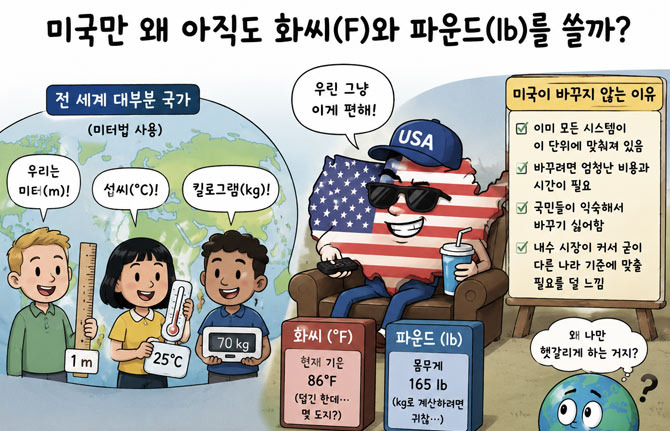
One of the Founding Fathers and then Secretary of State, Thomas Jefferson, was quite the early adopter and was completely captivated by France's new decimal-based measurement system. Jefferson hoped that a fellow decimal system enthusiast, Dozier, would persuade Congress to adopt the metric system for the U.S.
At the time of the founding of the United States, the measurement units were a complete mess. New York used the Dutch system, while New England used the British system, leading to chaos in commerce between states. Jefferson wanted to acquire the metric system, which could solve this problem in one fell swoop.
So in 1793, he requested France to send him a "standard grave and meter bar."
France gladly complied and tasked a prominent botanist and scientist named Joseph Dombey with the mission to send the precious standard items by ship. It included a bar exactly one meter long and a copper cylinder weighing exactly one kilogram, known as the "grave."
However, a movie-like event occurred. Dombey's ship encountered a fierce storm in the Caribbean, straying far off course and drifting. The damaged and lost ship was eventually captured by British privateers. Dombey was taken to the British-controlled island of Montserrat, where he died in captivity, and the standard items he was carrying were scattered.
Jefferson never received the kilogram that Dombey was supposed to bring, leaving him without evidence to persuade Congress.
With the chaos of the French Revolution, communication was disrupted, and priorities changed with the new administration. The opportunity vanished, and even after Britain switched to the metric system in the 20th century, the U.S. remained with the British imperial system. (Britain: "I'm out, you deal with it.")
As an interesting postscript, the standard item from 1793, presumed to be the grave that Dombey was supposed to bring, is currently housed in the museum of the National Institute of Standards and Technology (NIST) in the U.S. This item, which may have once been pirate treasure, finally set foot on American soil, albeit 200 years late.
"You want to change? The astronomical transition cost
By the late 19th century, the atmosphere began to shift. By the end of the American Civil War, most of Europe had completed the transition to the metric system — except for proud Britain. The U.S. legalized the use of the metric system in 1866 and even designated it as the "preferred system of weights and measures" in 1975. Yet, the reason it never took root is simple: it was too late.
Now, changing the entire U.S. system is as reckless as bulldozing an entire city in a SimCity game and starting anew.
The cost of changing millions of mile markers across the U.S. to kilometers would be in the billions of dollars. From bolts, nuts, and screw holes to massive aircraft manufacturing facilities, companies risk bankruptcy if they have to recalibrate everything to centimeters. Considering the social cost of teaching hundreds of millions of citizens new units, it's dizzying.
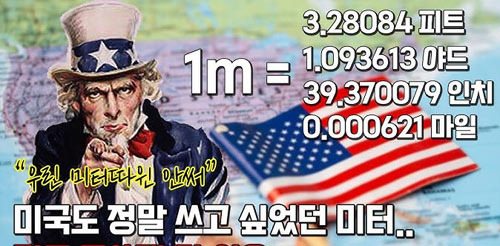
During the 1970s, under President Jimmy Carter, the U.S. seriously attempted to transition to the metric system.
When the Federal Highway Administration announced in 1977 that it would start marking road signs with kilometers, over 6,000 letters of complaint poured in. Many of these considered the metric system to be a "communist plot." A citizen from Kansas City even wrote, "This metric transition is part of a communist scheme to confuse our country."
For Americans, the metric system was not just a measurement unit but an outright 'invasion by foreign powers.' Ultimately, in 1982, President Reagan cut the budget for the U.S. Metric Board, effectively dismantling the metric transition efforts. The board was reduced to the Office of Metric Programs under the Department of Commerce, with its budget slashed to less than one-fifth of its previous amount.
For a time, a sign on Arizona's Highway 19 read "64 kilometers to Tucson," but this too was eventually removed, marking the official end of the metric system on U.S. highways.
"Fahrenheit is more human-friendly!" : American mental victory
When discussing this topic with Americans, they defend Fahrenheit and pounds with their own unique logic. They are particularly attached to temperature (Fahrenheit), arguing as follows.
Celsius (°C): It's the standard for water. At 0 degrees, water freezes, and at 100 degrees, water boils. Are you water or human?
Fahrenheit (°F): It's the standard for humans. At 0 degrees, it's really freezing cold, and at 100 degrees, it's really hot. In other words, it can express everyday weather that humans feel much more delicately in the range of 0 to 100!
Listening to this, one might think, "Oh... is that so?" but for those of us accustomed to Celsius, it simply seems like a defensive mechanism filled with mental victory. After all, whether it's minus 20 degrees or plus 40 degrees, humans will die regardless.
The most expensive and famous accident caused by this stubbornness was the 1999 NASA Mars Climate Orbiter incident. The propulsion engineers at Lockheed Martin calculated the thrust in pounds-force and sent the data. However, NASA's flight software assumed this data was in metric units, specifically Newtons, and processed it as such.
[Lockheed Martin] "Sent thrust data! (in lbf·s)"
[NASA Navigation Team] "Okay, it must be in N·s" → entered as is
The problem is that 1 lbf is approximately 4.45 N. This means the calculated value was about 4.45 times incorrect. Small orbital deviations accumulated, and ultimately the spacecraft encountered Mars at an altitude of only 57 kilometers instead of the planned 226 kilometers.
The minimum altitude for the Mars Climate Orbiter to survive was 80 kilometers, so 57 kilometers meant it was heading straight into flames. A $327 million Mars mission was obliterated due to a single unit conversion error. A single line of unit notation led to the complete destruction of the spacecraft.
After this incident, the scientific community once again strongly demanded metric unification, but the chaos of the multiverse continues, with cola sold in 2L bottles while milk is sold in gallon containers in American stores.
Interestingly, there is actually inconsistency within the U.S. itself. Wine and spirits are sold in liters, soft drinks come in 12-ounce cans and 2-liter bottles, while distances are measured in miles, yards, meters, and kilometers all mixed together.
Prescription medications are dosed in milligrams, but weight is measured in pounds. It's a strange situation where Americans themselves use the metric system daily while shouting, "No transition!"
In summary, the reason the U.S. doesn't use the metric system is not due to laziness.
1. They missed the timing for introducing standard items due to early pirates (specifically British privateers),
2. The costs of changing after becoming too large are unimaginable,
3. The domestic market is so robust that the mindset of "the one who needs it will learn the metric system" has solidified,
4. There is surprisingly deep-rooted sentiment viewing the metric system as a 'foreign conspiracy.'
What seems inconvenient to us is, for them, inches and pounds are like the DNA flowing through the unique identity of America. So, if you visit the U.S., it's beneficial for your mental health to bring a calculator app. Remember the formula to convert Fahrenheit to Celsius (°F − 32) × 5/9. Or you could just memorize that "80 degrees means short sleeves, and 50 degrees means a coat."
However, the U.S. military uses the metric system as an exception
The reason is international operations. The U.S. military often conducts operations alongside NATO allies rather than acting alone. If each country uses different units, confusion can arise, potentially leading to fatal mistakes in actual combat.
Especially in fields like artillery fire, air operations, map coordinates, and ballistic calculations, accurately matching distances and speeds is crucial. The metric system is used as a standard by militaries worldwide, so it is efficient for the U.S. military to align with this. In fact, military maps and coordinate systems are designed based on metric units to reduce errors in cooperative operations.
Ultimately, the military prioritizes "accuracy and standards" over "familiarity." Thus, the U.S. also realistically chooses the metric system in military contexts.
 AutumnMonica
 RemiCon209
 DalgonaSweet







 Tesla X |
 Another Eden Channel BLOG |
 Victory 1988 |
 Smile Face |
 Helpful Life Stories |
 Illinois Mom |
 Rice Shop Uncle BLOG |
 joyfull yang |
 Enjoyable American Life Diary |
 American General Knowledge Expert |
  horizon |
  Nanana Nanana Nanana |
  victoria jung |
  Kkikki Ppappa Shout Out Loud |
  Lululala |
  Toaster Pizza Magic Show |
  Utah, the Most Livable State |
  nortrix |
  Mau Nui |
  novapixel |
  fixed |
  AL ALASKA |
  amola |
  History Repeats Itself |
  Doori Ark |
  Rainbow Bridge to the Sky |
  Sunny Fullerton |
  U.S. Weather Bureau News |
  GOGO SING |