


The phenomenon of declining interest in attending college cannot be explained by a single reason, as multiple factors are at play. Let's examine three representative reasons.
High Tuition and Debt Burden
In recent years, the costs associated with college education have significantly increased due to rising tuition and living expenses. Many students and parents are concerned about the enormous burden of student loans, making financial pressure a crucial factor in the decision to pursue higher education.
Changes in the Job Market + Questions about the Effectiveness of College Education
There is a growing perception that a college degree does not necessarily lead to stable employment. As companies increasingly value actual job skills and practical experience, there is a rising opinion that traditional college education does not provide the competitiveness expected in the job market. Consequently, many are seeking alternative career development paths instead of pursuing a college degree.
Emergence of Various Alternative Education Paths
Options such as online courses, coding boot camps, and vocational training programs are rapidly growing as alternatives to college education. These alternative educational paths are not only efficient in terms of time and cost but also offer the advantage of acquiring practical skills and experience required in fast-changing industries. As a result, the perception that college is the only path to success is spreading.
Thus, various factors such as high costs, changes in the job market, and the emergence of diverse educational alternatives are collectively contributing to the gradual decline in the popularity of college attendance.
What is the Graduation Rate of U.S. Colleges?
The graduation rate for four-year colleges in the U.S. is commonly measured by the "6-year graduation rate," which refers to the percentage of students who earn a bachelor's degree within six years of first enrolling. Overall, the statistic is about 60%.- Public colleges: approximately 55-60%
- Private non-profit colleges: can sometimes exceed 70%.
As such, graduation rates vary by type of institution, with private colleges often providing more intensive student support and smaller class sizes, which positively impact outcomes.
Unlike four-year colleges, it is difficult to make simple comparisons for graduation rates at community colleges or two-year colleges.
- Many students start at community colleges and then transfer to four-year colleges, which means that immediate graduation rates may appear low.
- In fact, the percentage of students who go on to earn a degree (including associate degrees or transfers to four-year colleges) varies by statistics, but overall is estimated to be around 30-40%.






 Magic Cabbage School of Martial Arts |
 Vacation on Hawaii |
 morvex37 |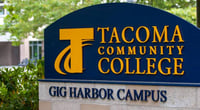
 Ari Songhan American Immigration Life |
 Bearded Strawberry Smoothie |
 Khan Film Blog Production |
 Illinois Mom |
 Rice Shop Uncle BLOG |
 allstar realty |
 Enjoyable American Life Diary |
  Burbank Lee |
  Olivia's Blog |
  Bushing Around Life |
  Active |
  Cherokee Rose |
  Kor. Master |
  Holey Moley |
  Conflite Teacher |
  Hodong Prince Over Flex |
  Mist inn |
  citrus pop |
  Onion Ring |
  phoenixia |
  viewtop |
  loverun |
  Kim Do Sun |
  SEVEN SEVEN |
  yentra |
  Make My Day |
  Victory 1988 |