

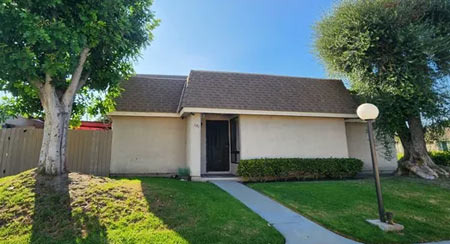
Many people consider owning a home in the U.S. as one of their life goals.
They think it's better to buy a house and keep it as an asset rather than paying rent every month.
However, once you actually buy a house, you will encounter various additional costs that are incomparable to renting.
Let's summarize the 'additional expenses' that renters do not have to worry about, but homeowners must manage.
Property Tax
The first thing that comes to mind is property tax. In the U.S., tax rates vary by state and county, but you typically have to pay about 1% to 3% of the home's value in taxes each year. For example, if you own a $500,000 home, you could be paying at least $5,000 to as much as $15,000 or more annually. Renters don't feel this burden because the landlord pays this tax, but as a homeowner, it becomes a fixed expense that you must pay every year.
Homeowners Insurance
When renting, you only need to get renter's insurance, which is usually inexpensive at around $20 to $30 a month. However, owning a home changes the situation. You need to insure the home itself, and to cover risks like fire, theft, and natural disasters, you will spend thousands of dollars annually. Especially in areas prone to hurricanes, wildfires, and tornadoes, insurance premiums can be higher. In high-risk areas like the Florida or California coasts, private insurers may refuse coverage, requiring you to obtain special insurance from the state government.
Mortgage Interest
It's rare to buy a home with cash. Most people take out a bank loan and pay a mortgage. In this case, you not only pay the principal but also the interest, and the higher the interest rate, the more you pay each month. In recent years, interest rates have risen, causing many people to bear an additional burden of several hundred dollars a month. While renting only requires paying the monthly rent, buying a home means you have to manage the invisible additional cost of loan interest every month.
Homeowners Association Fee
If you buy a home in a condo, townhouse, or gated community, you will incur HOA fees. This is essentially a maintenance fee, and you must pay a certain amount each month for the upkeep of common facilities (pool, garden, clubhouse), cleaning of the complex, and security. Some places charge around $100 a month, but upscale communities can charge $500 to $1,000 or more. When renting, these costs are included in the rent, so you didn't have to worry about them. However, as a homeowner, HOA fees are an unavoidable additional expense.
Maintenance & Repairs
Perhaps the most significant difference you will feel is in this area. When renting, if the sink breaks, the air conditioning fails, or there's a problem with the roof, the landlord covers the repair costs. But when it's your home, you are 100% responsible for all repair costs. Over time, maintenance is inevitable, and these costs are something you never imagined while living in a rental.
Utilities
Of course, renters also have to pay for electricity, gas, and water, but typically apartments are more efficient, so the burden is less. In contrast, owning a single-family home increases utility costs significantly due to the larger size and more areas to manage. Considering lawn watering, winter heating, and summer cooling, costs can rise two to three times compared to renting. Additionally, costs for garbage collection and basic sewer fees are also the homeowner's responsibility.
Long-term Remodeling/Upgrade Costs
As you live in a home for a long time, you may develop a desire for remodeling beyond simple repairs. This includes updating the kitchen, upgrading the bathroom, or replacing flooring. While these are not essential, you will eventually need to do them to maintain or increase the home's value. The costs for such renovations can range from thousands to tens of thousands of dollars.
Unexpected Costs
Finally, owning a home often brings about 'unexpected costs.' For example, tree roots blocking sewer lines, a winter storm causing a tree to fall and damage the roof, or needing to replace a fence due to neighborhood regulations. When renting, these issues were the landlord's responsibility, but when it's your home, they become entirely your expenses.
The biggest difference between owning a home and renting is that you have to bear both 'predictable fixed costs + unpredictable variable costs.' Fixed costs like property tax, homeowners insurance, mortgage interest, and HOA fees must be paid every year, while maintenance, remodeling, and repair costs due to unforeseen circumstances can come at any time like ticking time bombs.
That said, owning a home isn't necessarily a bad thing. Having a home provides tax benefits and, in the long run, the advantage of asset value appreciation. However, compared to renting, thinking that "just paying a mortgage instead of rent is enough" is a big misconception. Becoming a homeowner means accepting the reality of unexpected expenses every month and every year.






 ultron78 |
 garlic bread |
 Sugar Cream Door Bulletproof Noodles |
 urbanmint |
 |
|  Alpha and Omega World |
 Yellow Snowman |

 Fairfax Fox |
 korvex93 |
  manchester |
  constant |
  Leapfrog Move |
  vibranto |
  Tora Tora |
  yellowbutter |
  Dolly |
  US Embassy |
  NYC saladbar |
  Finding Superfoods |
  lightyear |
  song bang |
  vexomo |
  Indiana Jones |
  meloncat |
  novapixel |
  mortrix |
  Esther 1983 |
  fortbliss |
  Moscow Kim |