
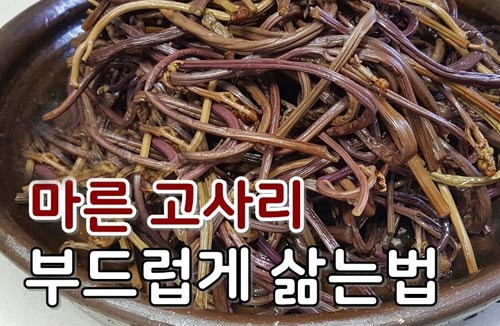
When you first prepare dried fernbrake, it can be confusing. Haha.
You might think you can just soak it in water and stir-fry it, but if you don't do it properly, it can end up tasting bitter and you might fail.
First, there's the soaking process in cold water. Rinse the dried fernbrake lightly under running water, then soak it in cold water.
It's best to soak it for at least 1 hour, or overnight if possible. This allows the fernbrake to absorb water thoroughly and start to soften.
If you're in a hurry, you can skip this step, but it will result in longer cooking times and a slightly less tender texture.
Now, onto the cooking process. Place the fernbrake in a pot, add enough water to completely submerge it, and bring it to a boil over high heat.
Once the water is boiling vigorously, reduce the heat and let it simmer for about 20 to 30 minutes. The key here is not to overcook it until it becomes mushy, but to ensure that when you press the thick stems with your hand, they yield easily.
After cooking, don't take it out immediately; cover the pot and let it sit for about 1 hour. During this time, moisture will slowly penetrate the fernbrake, making it much softer and juicier. If you skip this step, the outside may be soft, but the inside can remain tough.
Finally, there's the process of removing the bitterness. Rinse the cooked and rested fernbrake several times in cold water, then soak it again in clean water.
If you have at least 3 hours, it's good to let it sit for about half a day, changing the water in between. This process helps to remove the unique astringent taste and odor of the fernbrake. Using rice water can help eliminate any off-flavors and make the texture even softer.
Lastly, gently squeeze the soaked fernbrake to remove excess water, and cut away any hard parts you feel. Then, chop it into bite-sized pieces, about 5 to 6 cm long, and you're done. With this preparation, whether for stir-frying or soup, it will have a tender, meaty texture.
If you've prepared a large amount, dividing it into portions and freezing them is also a good idea. This way, you can easily take out what you need for your next cooking session.
The key is to soak it thoroughly, cook it properly, and let it rest to achieve complete tenderness.








 Seattle - Emerald City |
 self-evaluation |
 Sandiego Auntie |
 Karina's Blog |
 Texas Real Estate Blog |
 productionblog |
 U.S. Military Recruitment Information |
 fernando park |

 Valley Bang |
  Hajiwon Blog Hair Salon |
  hoosierdaddy |
  saffronroute |
  korvex93 |
  Mini Mee |
  Darnignac |
  vanilla |
  selvon |
  brownie |
  Star Blog |
  The Day the Sun Rises |
  sweetpop |
  California Kangaroo |
  zanero |
  station |
  Static |
  Star Way |
  American Blog Forge |
  MMORPG Games |
  Then you must be spring |