

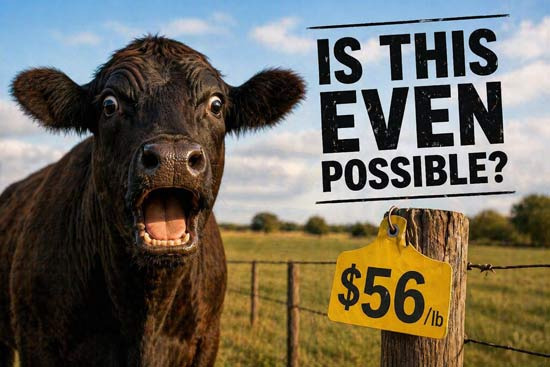
These days, when I stand in front of the beef section while grocery shopping, I can't help but sigh.
What used to be a simple grab now involves a second look at the price tag, and I often find myself thinking, "This is too expensive..." and turning away.
The atmosphere seems to be gradually shifting from 'everyday food' to 'food that requires some thought before eating.'
Industry experts predict that this price trend is unlikely to change easily until at least 2028.
So, waiting for prices to drop soon is not a viable option.
In fact, prices have skyrocketed. Ground beef has increased by nearly 50% to as much as 70% compared to 2020, and overall beef prices have risen by over 50%.
Steak prices have gone up by more than 40%, and ribs have reportedly increased by over 80%. It's really hard to enjoy ribs these days; they have become so expensive compared to the past.
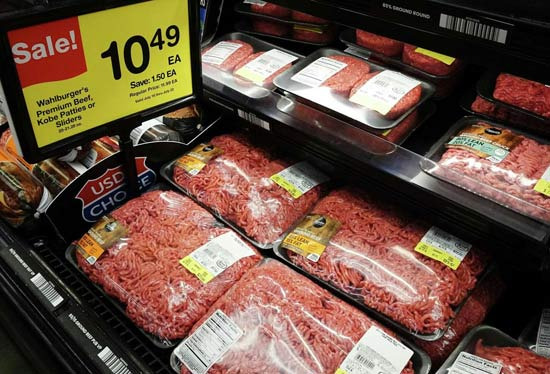
Previously, the average price for ground beef was in the $4 range per pound, but by 2026, it has risen to the high $6 range.
Steaks now typically start at over $12.
So, beef is slowly being pushed from "a protein we eat daily" to "an occasional choice."
Just looking at the current prices, it's something we can feel immediately when we go grocery shopping.
In places like Texas, this is the case, and other regions are likely even worse.
The reason for this is that there are currently fewer cattle in the U.S.
There are significantly fewer than before. The number of cattle raised in the U.S. has dropped to its lowest level in 75 years.
Since 2020, the number has decreased by over 8%, which translates to millions of cattle.
With supply down, it's only natural for prices to rise.
Adding fuel to the fire is the drought. The drought that has persisted since 2020 has devastated pastures.
To raise cattle, they need to be fed grass, but without that, farmers can't afford feed prices and end up selling their cattle early.
As a result, there are fewer "cattle ready for market" available now. On top of that, fuel, transportation, and labor costs have all risen.
With interest rates high, the burden of running a farm has increased as well. All of these factors combined have led to the current prices.
So, when you go to the market in San Antonio, the price structure is clear.
Ground beef is still somewhat manageable at around $6 to $7, and brisket is in the $5 to $6 range, making it popular for barbecues.
However, for ribeye and tenderloin, prices jump to $15 or $20 right away.
Buying in bulk at Costco may seem cheaper, but that's just a structure of "buying a lot to share"; it doesn't mean it's actually cheaper.
I understand why people are filling their freezers and waiting for sales these days.
It's no longer about "let's have steak today"; it's become "let's buy it when it's on sale and eat it later." The conclusion is that beef is now strangely transitioning into a luxury item with rising prices.
Industry experts believe that price stability is unlikely until at least 2028.
So, the way we shop has to change. The era of mindlessly tossing items into the cart is over; comparing prices, calculating costs, and timing purchases have become the norm.
If this is the case even in Texas, the saying "a country where meat is cheap and plentiful" may soon become a thing of the past.
Ultimately, our familiar way of life is gradually changing. Reflecting on why this has happened only deepens my disappointment and frustration.





 My Town My Way Blog |
 Arizona AZ Cowboy |
 Valley Hong |
 Mr Oh |
 ollege Mom |
 Helpful Life Stories |
 History Repeats Itself |
 Make My Day |
 My Antonio |
 TEXAS Fishing Boat |
  Con Cheese |
  softmoony |
  Breaking Bad Drama |
  New York Queens Native Blog |
  Shinbaram Dr. Blog |
  vivavida |
  Way to easy |
  limestone |
  oster |
  daddyyo |
  neapolis |
  seadoll |
  ansdal |
  Vivid U.S. Regional Information |
  Vasila's Newlywed Blog |
  Arizona Cowboy |
  merry merry |
  Hoorah Ooorah |
  Fragile Me |
  Rowland Mama |