

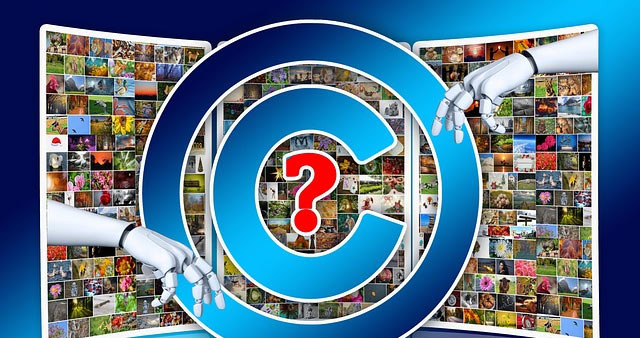
Working at a marketing company that promotes businesses and creates websites in the United States, I live every day amidst new projects and ideas.
However, even in this creative environment, the issue of 'intellectual property infringement' can become a headache.
On the surface, the American internet world seems like an ocean of infinite freedom, but beneath that ocean lie invisible intellectual property mines.
A recent incident involving one of our clients is a prime example. When posting a blog article, they found an image through Google Image Search. There was no watermark, and it was prominently displayed on the search screen, so they thought it was okay to use it. However, a letter arrived from a law firm representing an image copyright management company in the U.S.
They were told to either pay "$2,000 for illegal image use or prepare for a lawsuit."
The letter was filled with very polite yet sharp legal language, and the employee who posted the image and all their colleagues were reportedly frozen in shock.
In the U.S., copyrights for creations such as images, text, and videos are very strongly protected.
Unless it is 'public domain', you cannot use materials found on Google Search carelessly.
Even when writing a blog, simply copying and pasting a few paragraphs from another site can result in a copyright infringement warning email. Particularly in the U.S., there is a system called the 'Digital Millennium Copyright Act (DMCA)'.
This law allows copyright holders to demand the immediate removal of infringing content online. This is why YouTube videos can disappear overnight and WordPress blog posts can vanish.
The problem is that this often does not end with just "delete and move on." Companies that specialize in copyright management will confirm the infringement and immediately send a settlement demand letter using their legal team. As in our case, they can demand amounts starting from a few thousand dollars, and in some cases, tens of thousands of dollars.
The scary part is that if you do not pay the settlement, it leads to a lawsuit, and once a lawsuit starts, attorney fees can easily exceed several thousand dollars. Ultimately, most people choose to "just pay the settlement and be done with it."
In fact, such issues are common throughout the U.S. internet marketing industry. Under the pressure to create content quickly, the procedures for verifying sources or checking licenses are often skipped.
The complacent thought of "Isn't everyone using these images anyway?" ultimately leads to legal risks. I, too, did not realize how frightening the concept of copyright could be at first. When I operated a blog in Korea, it was not a significant issue, but in the U.S., the situation is different.
Here, copyright holders can file lawsuits directly, and there are many companies that specialize in catching infringements and making money from them.
So we established rules.
First, we never use Google Image Search results as they are.
Second, we only use royalty-free images or free image sites that allow commercial use (e.g., Unsplash, Pixabay).
Third, when writing, we strictly adhere to original content, and any referenced materials are only linked.
Fourth, clients must also receive training on copyright rules.
By adhering to these principles, I feel much more at ease.
Interestingly, as a result, our original content has increased, and the marketing effects have improved.
Ultimately, I realized that legally safe content has value beyond just being 'problem-free material.'
Working in marketing in the U.S., I feel every day how sharp the boundary between law and creation is.
The internet is an open space accessible to everyone, but not all materials within it are 'freely usable.'
A small oversight can lead to a bill for thousands of dollars. So today, I think once more before I hit the keyboard.
"Is this image, this YouTube background music... really okay to use?"
This habit protects me, protects the company, and maintains the trust of our clients.
Now I deeply understand that if I want to sail the seas of the internet for a long time, I must avoid the reefs of copyright.





 Toaster Pizza Magic Show |
 US Embassy |
 fortbliss |
 Folding Instructions |
 yentra |
 Peter Pan Pet |
 Sugar Cream Door Bulletproof Noodles |
 Nuchuhan Exploration BLOG |
 Moscow Kim |
 laro90 |
  MEDBIO American Doctor Blog |
  SWAT TEAM BLK |
  DREAM BIG |
  frostbite |
  330 Forever My Love |
  El Dorado |
  dralix58 |
  Gorama Round |
  Skydiving |
  dreamport |
  Yellow Snowman |
  velvetnom |
  Anytime Journey |
  Mrs. Duluth |
  jaxter |
  Atlanta Mama |
  Baguette Blog |
  Tan Sol |