

Here we go again.
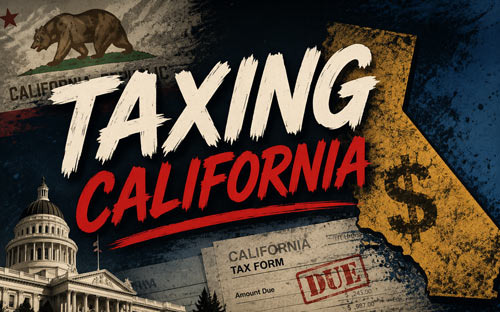
Recently, a tax increase proposal, considered the largest in the last decade, has passed through the California legislature.
While it still requires the governor's final approval, many expect it to pass given that the Democrats control both the legislature and the state government.
The core of this tax proposal consists of two main components.
One is a tax reform related to health insurance to secure funding for Medi-Cal, and the other is the application of sales tax to software subscription services.
First, let's discuss health insurance.
California has historically imposed taxes on health insurers to maximize federal funding for Medi-Cal operations.
However, changes in federal regulations have made the previous method unfeasible, leading to the introduction of a new tax structure.
The state government claims that this reform could secure approximately $2.3 billion annually.
However, just because the tax is levied on insurers doesn't mean the issue ends there.
What happens when companies face increased costs? Most raise their prices. The same goes for insurance.
It has been analyzed that private health insurance subscribers could face an additional burden of about $100 per year.
"$100 a year isn't a big deal," one might think.
But when rent goes up, car insurance increases, electricity bills rise, and grocery prices soar, adding insurance premiums will make people say, "Again?"
The more controversial issue is the software subscription tax.
These days, very few people buy software on CDs. Most subscribe to services like Microsoft Office, Slack, and QuickBooks monthly.
The proposal is to apply sales tax to these subscriptions.
When combining the basic sales tax with local taxes, the actual burden could rise to around 10% depending on the area.
For individuals, this might mean paying a few extra dollars each month.
However, for companies with dozens or hundreds of employees using the same software, the situation is different.
Many businesses incur thousands or tens of thousands of dollars in software costs each month, and adding sales tax will significantly increase their operating expenses.
The state government describes this as "modernizing the tax system to fit the digital age."
In the past, taxes were paid on boxed software purchases, but online subscription services were tax-exempt, so the logic is to create equity.
However, ultimately, the costs will likely be passed on to consumers.
If taxes start to apply to business-to-business transactions, there is a high possibility that prices for products and services will gradually increase.
The proposal also includes limiting corporate tax deductions.
While Democrats argue that large corporations should bear more taxes, the industry is pushing back, claiming it will worsen the investment climate.
In fact, the crux of this debate is simple: money is needed to maintain welfare.
However, if that money is continually sought through taxes, companies will consider relocating to other states, and residents will worry about the burden of living expenses.
Companies are steadily moving their headquarters and jobs to Texas and Florida.
California is one of the wealthiest states in the U.S., but it is also one of the most expensive places to live.
If this tax proposal is finalized, insurance premiums, corporate operating costs, and some software usage fees could be affected.
 BaguetteTank







 Investment Beginner Company Information Encyclopedia |
 Always Dreaming of Big Success |
 happy 9 |
 coloradoman |
 pintos |
 Exploring American Life Information |
 Conflite Teacher |
 Choco Choco Star |
 Soy Angelino |
 Yahoo LALA |
  Sammy Beach |
  Bliss O |
  blue ocean |
  greenlight |
  Watanaka Karametibaksa |
  castle |
  xelton52 |
  carefree |
  vrixen73 |
  AZ Road Master |
  Victory 1988 |
  summita |
  business lim |
  Colorado Lee |
  Make My Day |
  Fros Pro |
  lioness |
  La Bean |
  American History This and That |
  Monte Sori |