

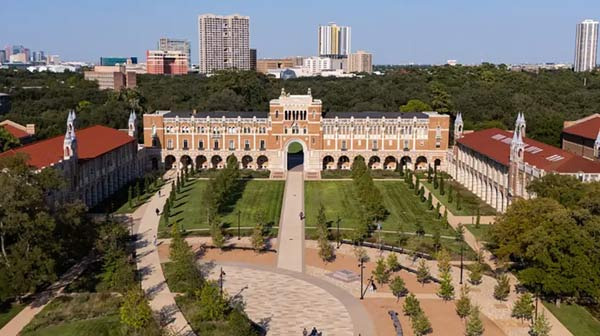
When it comes to prestigious universities representing Houston, Texas, Rice University is undoubtedly the first that comes to mind.
As one of the top research universities in the United States, it consistently ranks among the best in the national university rankings published annually by US News & World Report.
With an extremely high admission threshold, its acceptance rate is in the single digits, making it known for its rigorous selection process, and it is widely referred to as the 'Southern Ivy.' It is a dream school for elite students across the U.S., as well as for Korean international students and second-generation Koreans aspiring for a global stage.
Campus Location and Academic Features
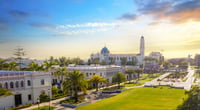
Rice University is located at 6100 Main St, Houston, TX 77005, in the heart of Houston. It is situated right next to the Texas Medical Center (TMC), the largest medical complex in the world, which enhances its connections to bio and medical research. Upon entering the campus, the first thing that catches the eye is the beautiful Spanish Romanesque architecture and the large, ancient trees. It feels like a lush green space in the city, akin to a vast garden.
Founded in 1912 as a legacy of businessman William Marsh Rice, Rice has provided world-class education across various fields, including engineering, natural sciences, social sciences, humanities, music, architecture, and business. With around 4,000 undergraduate students, it aims for a small, elite education, unlike large public universities. This results in a very low student-to-faculty ratio, allowing undergraduates to closely interact with professors and directly participate in top-level research projects.
Rice University is particularly highly regarded in the fields of Engineering, Computer Science, Economics, Architecture, and Music.
The George R. Brown School of Engineering: Given that Houston is the center of the global oil and energy industry, it boasts a world-renowned reputation in petroleum, chemical engineering, and nanotechnology.
The Jones Graduate School of Business: It operates an MBA program ranked among the top in the nation, nurturing the next generation of business leaders.
The Shepherd School of Music: It is one of the top music schools in the U.S., on par with prestigious institutions like Juilliard.
What makes Rice particularly special outside of academics is its residential college system. Mimicking the traditions of Oxford and Cambridge, it operates an 11-college residential system. All freshmen are randomly assigned to one college upon admission, which becomes their central community for living, socializing, and academics until graduation. This unique system fosters strong bonds among students without hierarchy and drives the distinctive campus culture of Rice.
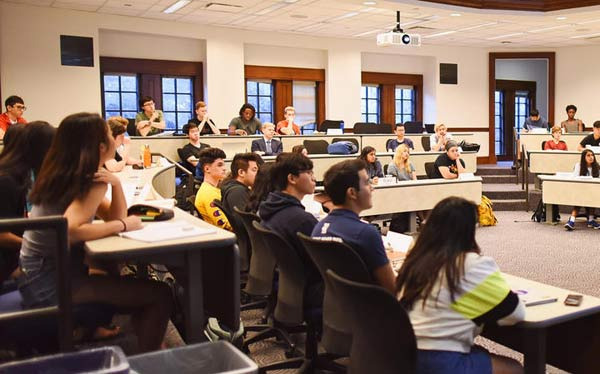
As a private university, the nominal tuition is relatively high, but Rice University is considered one of the most generous universities in the U.S. regarding financial aid. Based on a strong financial endowment, it operates a groundbreaking program called 'The Rice Investment.' Students from families with incomes below a certain level receive full tuition waivers or even full scholarships that cover room and board. This allows talented individuals to focus solely on their studies, regardless of their economic background.
The Korean community on campus is also quite active. The Korean Student Association (KSA) and organizations centered around international students operate very actively, helping Korean students starting their lives in a new environment to adapt quickly. They serve as a bridge connecting Korean-American students and Korean international students through academic information sharing, cultural events, and networking opportunities.
Despite being a small elite university, Rice has produced individuals who exert tremendous influence across academia, politics, business, the space industry, and the arts. The output relative to the school's size is astonishing, a testament to Rice's exceptional educational system.
One of the first to shine in academia and science is Professor Robert Curl. An alumnus of Rice University and a former chemistry professor there, he was awarded the Nobel Prize in Chemistry in 1996 for his discovery of fullerenes, a new form of carbon consisting of 60 atoms arranged in a soccer ball shape. His research is regarded as a groundbreaking achievement that opened the door to modern nanotechnology, playing a crucial role in establishing Rice as a hub for nanoscience and chemistry.
In politics and diplomacy, former U.S. Secretary of State James Baker is a notable figure. He served as White House Chief of Staff, Secretary of the Treasury, and Secretary of State during the Reagan and George H.W. Bush administrations, leading U.S. diplomacy during the end of the Cold War and the Gulf War. The 'Baker Institute for Public Policy' at Rice University, named after him, is currently considered one of the most influential think tanks in the U.S.
In the business and technology sectors, Rice alumni have made remarkable contributions. Howard Hughes, a legendary figure and billionaire in the global aviation and media industries, attended Rice University (though he dropped out), and Jeff Clarke, former Vice Chairman and COO of Dell Technologies, is also a graduate of Rice's engineering program. Reflecting the local characteristics of Houston, home to NASA's Johnson Space Center, many NASA astronauts, including Janice Voss and John Olivas, earned their Ph.D. and bachelor's degrees from Rice, contributing to humanity's exploration of space.
In the cultural and artistic fields, historian Blythe Brown is well-known as a Rice alum. Thus, Rice University continues to produce outstanding individuals who expand the horizons of humanity across various fields, solidifying its reputation.
 ChickenPhys
 BerryRocket
 ArizonaZang

 Magic Cabbage School of Martial Arts |
 Vacation on Hawaii |
 morvex37 |
 Ari Songhan American Immigration Life |
 Bearded Strawberry Smoothie |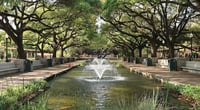
 U.S. Weather Bureau News |
 Things to know |
 Texas Real Estate Blog |
 Ready to dive |
 Ham and Cheese |
  novapixel |
  mortrix |
  ollege Mom |
  Esther 1983 |
  Arizona AZ Cowboy |
  fortbliss |
  Moscow Kim |
  My Two Way |
  toastyfox |
  FLORIDA Acus |
  tracker |
  TONTON COFFEE |
  sunrise |
  ultron78 |
  uplifted |
  Folding Instructions |
  same same life |
  USA Hyundai Kia |
  BOL SA RAM |