

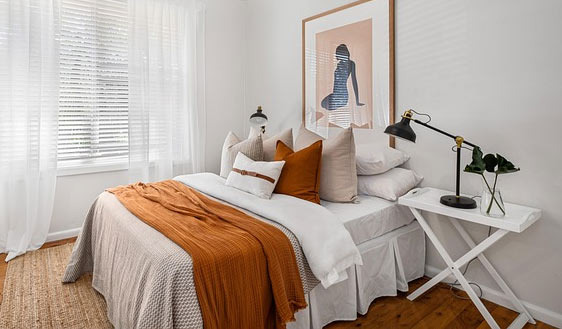
The average rent for a 1-bedroom apartment in Houston is between $1,200 and $1,300.
Having observed the real estate cycle in this city for many years, it seems that unlike the past when rents fluctuated with the ups and downs of the oil industry, Houston is currently showing a relatively stable trend supported by a balanced mix of the medical, energy, and aerospace industries.
There is a significant variation by area. In downtown, Midtown, and near the Galleria, it is common for rents to exceed $1,500, while conversely, in the southwestern or eastern outskirts, listings can be found in the low $1,000s. Houston has loose zoning regulations, which allows for a steady supply of new constructions, contributing to the stabilization of the overall average rent.
Looking at the trend over the past year, it appears to be a gentle movement close to flat. From decades of observation, Houston has a structural characteristic that allows for better elasticity in new construction supply compared to other Texas cities, resulting in less frequent sharp rent increases.
Compared to nearby cities, rent levels are similar to or slightly lower than Dallas, and significantly cheaper than Austin. Among the four major cities in Texas, it maintains a mid-range rent level.
Areas well-known for their Korean communities, such as Swahill, near West Bissonnet, and towards Katy, are found to have rents ranging from $1,300 to $1,600. With a concentration of Korean markets, churches, and educational institutions, the satisfaction of residents is high, but this also tends to come with a noticeable premium.
Studios are estimated to be in the $950 range, while 2-bedroom apartments are around $1,650. Based on long-term observations, Houston tends to have a relatively gentle increase in rent as the number of rooms increases compared to other major cities, making it a still reasonable option for families moving in.
In conclusion, Houston has maintained a long-term predictable rent market thanks to industrial diversification and a steady supply of new constructions. If prioritizing areas with a high concentration of Koreans, it is important to consider that the budget may increase somewhat, and it seems realistic to also explore outer areas even if it means extending commuting distances. The figures mentioned are estimates based on the first half of 2026.
 DineWithDol
 SilverSummit72






 |
| 
 Premium Gas Camp |
 CA Real Estate |
 cheesepup |
 breezem |
 4 Runner x100 |
 Texas Migration Story |
 action blog 101 |
 Texas Real Estate Blog |
  Granola |
  joyfull yang |
  Olivia's Blog |
  Living in America and Writing Essays |
  Piano Teacher Blog |
  bearcup |
  explorer |
  dictionary |
  Mr Bull Jung |
  radiant |
  Georgia 88 |
  Great TOWN NEWS |
  Open Flex Mind |
  Hartford Blog |
  unified |
  Generation X |
  ringwinds |
  American Food Information & Calories |
  Hawaii Maui Kahului |
  calvorn |