

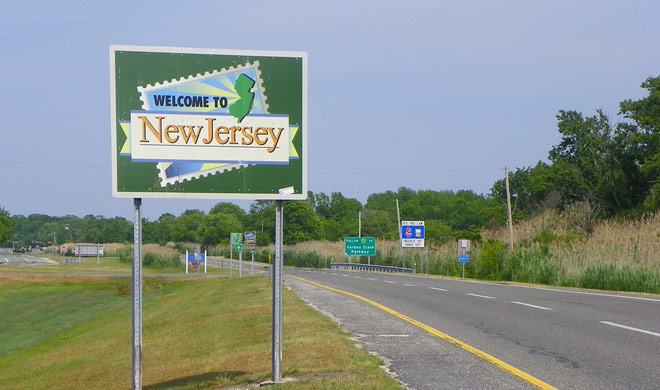
If I had to describe New Jersey in one word, I would say it is a state that quietly sits next to New York while clearly asserting its presence.
Although it may be small in size due to its proximity to New York, it is a place rich in wealth and history, bustling with people. Thinking of it merely as a bedroom community for those commuting to New York would be an underestimation; in reality, it is a prime area filled with pharmaceutical companies, research institutions, and the financial industry. There is a reason New Jersey consistently ranks high in economic power in the United States.
To start with the history, this area was not a quiet land from the beginning. Before Europeans arrived, Native Americans like the Delaware tribe lived peacefully by farming, hunting, and fishing in the rivers. In the 1620s, the Dutch came in and thought, "This place is nice," and began to establish colonies. However, they could not last long as the British quickly took over, turning New Jersey into British territory.
Then, this area was oddly divided into 12 pieces for management, leading to separate policies being implemented here and there, resulting in a region where various religions and cultures mixed. Thus, by the late 1600s, religious freedom was declared, and people from all walks of life began to gather, marking the beginning of what is now known as the "New Jersey multicultural style."
During the Revolutionary War, New Jersey was not quiet either. General Washington strategically moved through this area, engaging in significant battles in Trenton and Morristown. It also took the lead in quickly ratifying the U.S. Constitution. It's a small state, but it has a knack for being involved in major events. Later, during the Industrial Revolution, railroads and canals were built, leading to a boom in manufacturing cities, with industries like steel, textiles, chemicals, electronics, and automobiles growing rapidly. In short, it had the image of a "small but industrial kingdom."
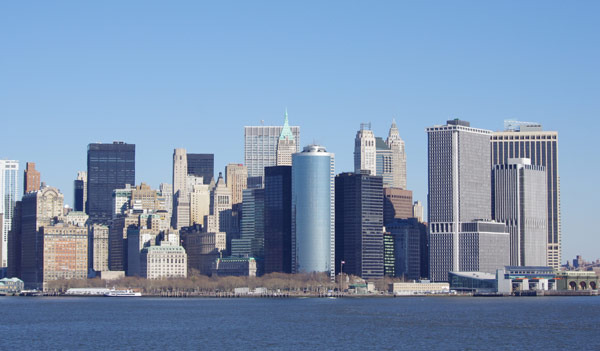
After World War II, high-value industries such as aerospace, pharmaceuticals, defense, life sciences, and IT took root, and now finance and biotechnology are at the core of New Jersey's economy.
The presence of pharmaceutical giants like Johnson & Johnson having their headquarters in this area is not without reason.
New Jersey has a population of about 9 million, making it extremely densely populated. It has one of the highest population densities relative to land area among the 50 states in the U.S.
In terms of racial composition, it is culturally diverse, with a mix of white, African American, Hispanic, and Asian populations. Notably, the proportion of Hispanic and Asian communities is continuously increasing, reflecting a strong global atmosphere. Just walking down the street, you can hear a mix of English, Spanish, Korean, and Hindi.
It would be remiss not to mention the financial aspect. The median household income in New Jersey is around $80,000 to $90,000, significantly higher than the national average.
This is not just a coincidence. High-income professions in pharmaceuticals, IT, finance, and biotechnology are abundant. However, the downside is the cost of living. Housing prices, taxes, and transportation costs are high, so even with good earnings, expenses can be substantial. Still, people manage to get by. The reason is simple: there are plenty of jobs, it's close to New York, there are good educational institutions, high-quality healthcare, and a lifestyle that feels like "money is circulating."
New Jersey is small but has a long history, a solid economy, and diverse people, which is why many continue to stay. Small but strong, that's exactly what I think New Jersey is.




 moo moo |
 ultron78 |
 garlic bread |
 Sugar Cream Door Bulletproof Noodles |
 urbanmint |
 Living in New Jersey blog |
 hoosierdaddy |


 Uptown |
  laro90 |
  MEDBIO American Doctor Blog |
  SWAT TEAM BLK |
  DREAM BIG |
  frostbite |
  330 Forever My Love |
  El Dorado |
  dralix58 |
  Gorama Round |
  Skydiving |
  dreamport |
  Yellow Snowman |
  Toaster Pizza Magic Show |
  velvetnom |
  Anytime Journey |
  Mrs. Duluth |
  jaxter |
  Atlanta Mama |
  Baguette Blog |
  Tan Sol |