

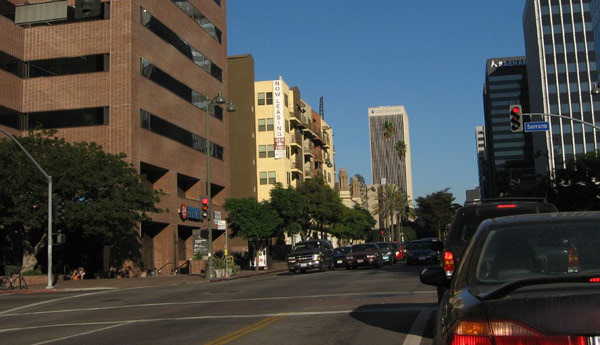
As you travel along Wilshire Boulevard in LA, you can feel that it is a map displaying the city's history in numbers.
The starting point is around the Wilshire 1 building in downtown, beginning with the number 1 and increasing to 500, 1000, and 2000 as you head west, eventually seeing addresses in the 3000 range as you enter Koreatown. Just by looking at the numbers, you can sense, "Ah, now we are in the Korean area."
This section may seem ordinary when passing by in a car, but when you get out and walk, a completely different landscape unfolds. The downtown area is a typical business district lined with financial firms and large offices, but as you enter Koreatown, the language on the signs suddenly changes, and Korean is everywhere. Dental clinics, orthopedic clinics, traditional medicine clinics, and immigration lawyers are all gathered in one building, and within a block, you find barbecue restaurants, travel agencies, and insurance offices side by side.
The transformation of this area has a historical background. Until the 1960s and 70s, Wilshire was a predominantly white office town, but in the 1980s, the Korean business community began to form gradually, and after the 1992 LA riots, the community became even stronger. Many who were affected did not leave but instead rebuilt, resulting in a rapid increase in Korean restaurants, markets, hospitals, travel agencies, and insurance and real estate offices, shaping the current landscape.
So even now, on Wilshire, it is natural to have a schedule that includes eating hangover soup in the morning, receiving immigration law consultations or having business meetings in nearby buildings for lunch, and enjoying drinks at a bar in the evening. It is a blend of Korean and American lifestyles.
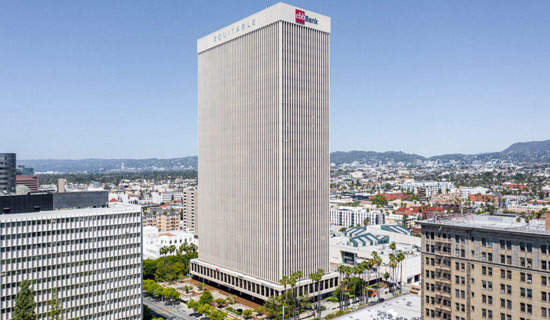
In the middle of this road stands the Equitable Building, a representative structure symbolizing Koreatown. The address is 3435 Wilshire.
Built in the late 1960s, it was a prominent office on the Wilshire line, but over time it became the center of Korean business, and even now, lawyers, accountants, dentists, insurance offices, and travel agencies occupy each floor. Every time the elevator opens, you see Korean signage, and during lunch hours, the lobby connecting to the City Center food court next door is filled with Koreans.
This building has served as a 'starting point for immigrant businesses' where many immigrants received their first business consultations, legal advice, and medical treatments.
However, this area faces practical issues such as parking shortages and high rents due to the old building structures. Many old buildings have only been remodeled on the outside, and the internal facilities may still be outdated, and with many tenants, parking is always insufficient, and valet costs continue to rise.
Nevertheless, Wilshire remains an attractive address. With subway extensions, transit-oriented development, and the development of upscale mixed-use buildings and hotels, the atmosphere is becoming increasingly multinational and modern.
Ultimately, the Koreatown section of Wilshire Boulevard is not just a place with many Korean restaurants, but a time layer where the history of Korean immigration is steadily built upon the economic axis of LA.
As you travel along Wilshire Boulevard, you encounter a living record of growth in the city that encompasses the challenges of Koreans, the reconstruction after the riots, development competition, and practical concerns like parking and rent.




 eatontown blog |
 Toaster Pizza Magic Show |
 US Embassy |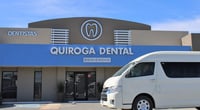
 fortbliss |
 Folding Instructions |
 Weekend Movie Blog |
 Beauty, Health, Lifestyle Blog |
 coloradoman |
 Superman Cat Blog |
 Noodle Noodle |
  Tonky |
  viroma |
  cookie |
  Live and that's it |
  Alright Twain |
  HAWAII Korean Church News |
  Amore |
  linex |
  Balancework |
  laro90 |
  MEDBIO American Doctor Blog |
  SWAT TEAM BLK |
  DREAM BIG |
  frostbite |
  330 Forever My Love |
  El Dorado |
  dralix58 |
  Gorama Round |
  Skydiving |