

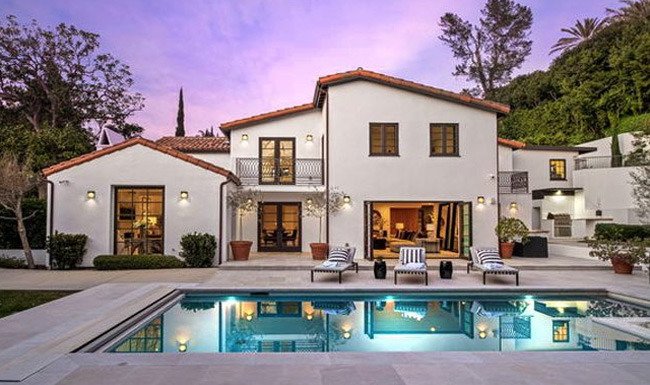
When working in real estate in Los Angeles, there's a common question that comes up.
"What is the most expensive neighborhood in LA?"
Many people think of Beverly Hills, but in reality, there is a market that exists even above that.
LA is not just an expensive city; it's more accurate to view it as a 'real estate market divided by class.'
First, let me explain the basic flow. The luxury neighborhoods in LA are primarily centered around the western coastline and the mountainous areas north of Beverly Hills.
Neighborhoods within this line can essentially be considered the "top 1% market."
One cannot discuss high-end homes in LA without mentioning the mansion tax, or Measure ULA.
Simply put, it's an additional transaction tax that applies when selling real estate above a certain amount.
As of now, selling a property for over $5 million incurs about 4%, and over $10 million incurs about 5.5% additional tax.
For example, selling a $10 million home would result in approximately $550,000 in taxes based on simple calculations.
The issue is that this tax burden falls on the seller, not the buyer. Therefore, in today's high-end market, this tax is directly reflected in price negotiations.
It is one of the reasons why inventory is decreasing and transactions are slowing down.
While it may appear to be a tax on the wealthy, in practice, it acts as a variable that changes the market flow itself.
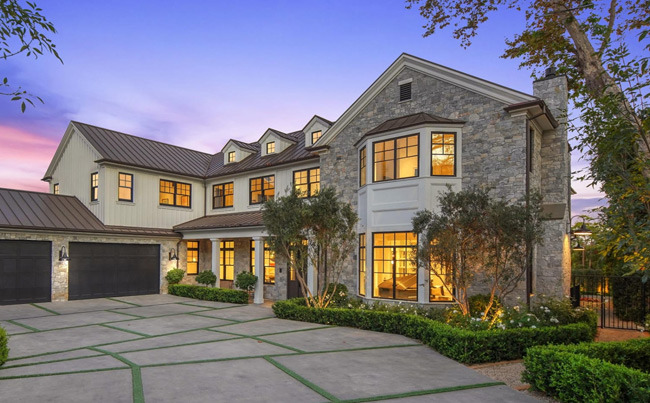
Now, the first luxury area I want to mention in LA is Bel Air.
Bel Air is not just an expensive neighborhood; it's a place where privacy is bought with money.
Unlike typical residential areas with open roads, it consists of winding private roads and large mansions on hills.
It's not easy for outsiders to just pass through. The current median price is around $4.27 million, but this is just an average.
In the actual market, $10 million is the baseline, and properties over $50 million are not uncommon.
In the past, properties exceeding $200 million have appeared, making it one of the top markets in LA.
Next is Beverly Hills, which many people are familiar with. It has the strongest symbolic presence.
With Rodeo Drive, luxury shopping streets, and a tourist image combined, it's the place that automatically comes to mind when thinking of "LA luxury neighborhoods."
The median price is about $3.65 million. However, a characteristic of this area is that there is more investment demand than actual residency.
Many overseas investors buy properties here as second homes or for asset diversification, so there are quite a few homes that remain dark at night.
The high prices and the surprisingly quiet neighborhood are due to this.
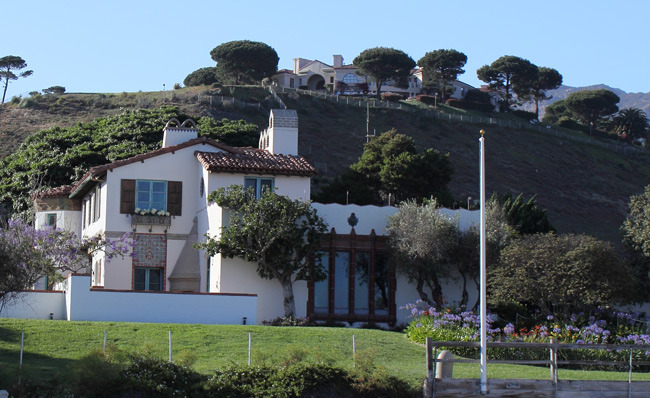
Malibu is a completely different type of luxury neighborhood. It's a coastal housing market formed along the beach line.
The oceanfront houses along the Pacific Coast Highway (PCH) are some of the most iconic luxury homes in LA.
Prices vary greatly depending on location, with properties directly on the water starting at over $10 million.
However, this area is a large Palisades region as of 2025, so issues like wildfires and coastal erosion must be considered when making transactions.
Currently, homeowners insurance costs are also quite high. I honestly wouldn't recommend this area as recovery work is still ongoing.Brentwood and Santa Monica have slightly different characteristics.
This area is a "lifestyle luxury neighborhood." Brentwood is located north of UCLA and has a quiet, stable atmosphere.
It's a region where many professionals, corporate executives, doctors, and lawyers reside.
Santa Monica has consistent demand due to its beachfront living appeal.
While prices are lower than in Bel Air or Beverly Hills, it's still a multi-million dollar market.
And while it's generally not well-known, there is a true upper market that exists separately.
Areas like Holmby Hills and Trousdale Estates often do not have many public transactions.
They frequently operate off-market, and the price range often starts at over $20 million.
In simple terms, you can think of it as the "market beyond the sky."
Looking at the overall average home price in LA, it's around $900,000 to $1 million.
However, the areas I just mentioned are three, five, or even ten times that average.
It's a structure where completely different markets exist simultaneously within the same city.
Therefore, judging LA real estate by simple averages can lead to missing the reality.
There are clear commonalities among these areas. They have good school districts, low crime rates, and pleasant living environments.
However, the costs are significant, including property taxes, maintenance costs, landscaping, security systems, and insurance premiums, leading to substantial annual upkeep expenses.
In particular, insurance premiums have risen significantly in recent years.
From an investment perspective, this market tends to be resilient even during downturns.
The demand base is limited, and the cash purchase rate is high.
However, the price increases do not move as quickly as in the general housing market. It's a stable market, but the entry barriers are very high.
Among Korean clients, there are consistently those looking in this area.
Some Korean entrepreneurs or investors, as well as celebrities, purchase properties for their stays in LA, while others approach it as a long-term investment.
However, this market carries significant risks if approached simply because it "looks good." Location, fire risks, insurance, and maintenance costs must all be considered.
In conclusion, LA luxury neighborhoods are not just expensive areas; they represent a completely different market dynamic.
Without clear budgets, purposes, and lifestyles, it's not easy to enter this realm.
Conversely, for those who meet the conditions, it can be a market that offers both long-term stability and symbolic value.



 garlic bread |
 Sugar Cream Door Bulletproof Noodles |
 urbanmint |
 |
| 
 Premium Gas Camp |
 Weekend Movie Blog |
 Beauty, Health, Lifestyle Blog |
 coloradoman |
 Superman Cat Blog |
 Anjollinya Blog |
  draxen |
  gallery |
  milkyotter |
  Zoom Zoom Zoom |
  Minnesota Lakes and Clouds |
  noraro |
  tervox95 |
  vale vale |
  yentra |
  Golden life |
  andrew park |
  Peter Pan Pet |
  Balan |
  Cali M Law Group |
  neroyo |
  Dreams Come True as Desired |
  Khan Film Blog Production |
  Living Economy Information Blog |
  rustley |