


Omaha is a mid-sized city in the Midwest, but it is also the city where Warren Buffett has lived for decades.
This city, home to the headquarters of Berkshire Hathaway, has developed upscale residential areas where corporate executives, doctors, lawyers, and financial professionals reside. While Omaha's affluent neighborhoods may appear quieter and more modest compared to those in New York or LA, they offer some of the best living environments in Omaha in terms of lot size, home size, school districts, and privacy. This article provides a detailed introduction to Omaha's representative affluent neighborhoods and the average home prices in each area.
The most iconic affluent neighborhoods in Omaha are Dundee and the Country Club area. Located west of downtown Omaha, the Dundee area is one of the oldest and most prestigious residential areas in Omaha.
Since the early 1900s, this area has been settled by Omaha's upper class and is characterized by tree-lined streets with large trees that are decades old and grand mansions in European architectural styles. Many homes range from 3,000 to over 6,000 square feet, with prices ranging from $500,000 to over $1.5 million.
Near the Country Club within the Dundee area, there are even more upscale homes available for over $2 million. Warren Buffett's home, which he purchased in 1958 for $31,500, is also located near Dundee on Farnam Street.
In the Elkhorn area of western Omaha, there are also upscale housing developments that are considered representative of Omaha's affluent neighborhoods. This area, which expands west of Omaha, features large newly constructed homes built on spacious lots.
In particular, the newly developed areas near 180th Street and 204th Street have large single-family homes ranging from 4,000 to 7,000 square feet, with prices between $600,000 and $1.2 million. Some premium developments even have homes priced over $1.5 million. The Elkhorn affluent neighborhoods are characterized by modern designs that incorporate the latest building technologies, spacious garages (for 3-4 cars), private pools, and extensive landscaping. Many families prefer this area due to its overlap with the Elkhorn South school district, which is known for its strong educational environment.

The western Millard area is also a highly sought-after upscale residential area in Omaha. The upscale housing development formed between 168th Street and 180th Street, centered around Pacific Street and Q Street, features homes with 3-4 bedrooms and sizes ranging from 2,500 to 4,500 square feet, trading in the $400,000 to $800,000 range.
This area overlaps with the highly rated Millard North and Millard West high school districts, attracting affluent families who prioritize school districts. The surrounding infrastructure is well-developed, providing convenient access to Costco, large shopping malls, hospitals, and restaurants.
Between downtown Omaha and Midtown, there are also traditional upscale residential areas like Cathedral Park and near Gold Road.
Some areas between Nebraska Avenue and California Street have preserved large historic homes built in the 1920s to 1940s, which have been renovated to maintain their status as upscale residences. Home prices in this area range from $400,000 to $1 million, and it is a classic neighborhood where Omaha's traditional upper class resides.
There are also upscale housing developments near the borders of Papillion and La Vista to the south of Omaha. The upscale homes in this area range from $450,000 to $900,000, which is slightly lower than in Elkhorn or Millard, but the proportion of newly constructed homes is high, and the excellent educational environment of the Papillion-La Vista school district is a strong point.
Since the city of Papillion is often selected as one of the best places to live in Nebraska, the upscale residences in this area are attractive to families who value a quiet and safe environment.

When comparing the characteristics of Omaha's affluent neighborhoods to those in major cities, several notable differences emerge.
First, Omaha's affluent neighborhoods tend to pursue a quiet and comfortable luxury rather than ostentatious displays of wealth. While there are some gated communities, the overall atmosphere in Omaha is not particularly closed off, allowing for a natural interaction with nearby neighbors.
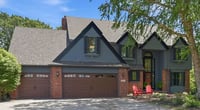
High-income professionals in Omaha are generally known for their modest lifestyles, which is often said to reflect the character of Warren Buffett's city. A typical image of Omaha's affluent neighborhoods includes spacious yards, garages, and quiet residential streets.
It is also good to be aware of some considerations when purchasing a home in Omaha's affluent neighborhoods. The more upscale the home, the more likely there are to be HOA (Homeowners Association) fees, which can range from $100 to $400 per month and should be included in your budget. Property taxes are generally high in Omaha, with annual property taxes exceeding $12,000 for homes valued over $500,000. Additionally, for newly constructed developments, it is important to verify the school district assignments, as they may not yet be confirmed.
In summary, Omaha's representative affluent neighborhoods can be broadly categorized into Dundee/Country Club area (traditional upscale residences, $500,000 to over $2 million), new developments in Elkhorn (modern large homes, $600,000 to $1.5 million), western Millard (excellent school districts, $400,000 to $800,000), and upscale developments in Papillion ($450,000 to $900,000).
Omaha's affluent neighborhoods offer spacious lots, excellent school districts, and a quiet environment, making them a great value for high-quality living compared to affluent neighborhoods in major U.S. cities.
 SteveRespect
 CandyHeartJoy
 HamstrCopter
 NoPayBeauty




 urbanmint |
 |
| 
 Premium Gas Camp |
 CA Real Estate |
 cheesepup |
 lunexa |
 Nebraska Center Director TOP |
 The Good Life |
  Doori Ark |
  Rainbow Bridge to the Sky |
  Sunny Fullerton |
  U.S. Weather Bureau News |
  GOGO SING |
  Gold Bar |
  Banana Style Life |
  Tesla X |
  Old English |
  forestcloud |
  forever young |
  Arlington house |
  liquid asset |
  Who's watching? |
  eclipse |
  quietwave |
  Hajiwon Blog Hair Salon |
  hoosierdaddy |
  saffronroute |