

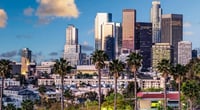
In rankings of the best cities to live in the U.S., LA is ranked 2nd, but 57th in the world.
At first, I was puzzled by how this could be. The Resonance Consultancy report named LA as the 2nd best city in the U.S. after New York by 2025, while the EIU (Economist Intelligence Unit) placed LA at 57th in the global livability rankings.
The stark difference in evaluations by these two organizations raises the question of what criteria define livability.
If cultural diversity, economic opportunity, and creative industries are the standards, LA is top tier. However, when it comes to safety, infrastructure, and stability, the rankings drop significantly.
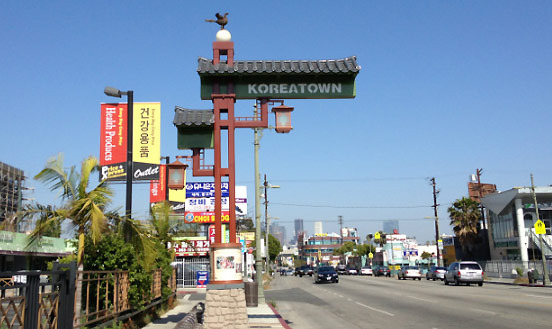
Los Angeles is home to a large Korean community, particularly in Koreatown. Just looking at Koreatown, 110,000 people live within a 2.9 square mile area. Considering the density of Gangnam in Seoul, you can get a sense of how packed it is.
Korean markets, restaurants, churches, Korean signs, and hair salons — standing here, it can honestly be hard to tell if you're in America or Korea. This is the strongest magnetic force that LA holds for Koreans. There are no language barriers, the community is tightly knit, and a network spans generations from the first to the second generation of immigrants. This density is unmatched anywhere else.
However, looking at the reality with a clear lens changes the narrative. The average rent in Koreatown is $2,203 as of 2025, while the median household income is $83,832, meaning nearly half of the income goes to rent alone. Even more shocking is the type of housing in this neighborhood.
The homeownership rate is only 11%, while the rental rate is 89%. It's a structure where people are renting to survive rather than owning homes. For someone in the real estate industry, this is not just a number — it signifies a loss of opportunity for asset formation.
Rent consumes living expenses, and equity does not accumulate. This leads to a situation where, even after living for ten years, nothing remains.
Transportation cannot be overlooked. LA is a city where you can't do anything without a car.
While public transportation does exist, it cannot compare to the practicality of systems in New York or Chicago. During rush hour, the 10 and 405 freeways are essentially parking lots. On top of that, there's the issue of homelessness. Although the number of homeless individuals in LA County decreased by 9.5% compared to the previous year in 2025, encampments still remain throughout Koreatown.
According to a UC Berkeley study, Koreatown is considered one of the most dangerous pedestrian environments in California. There are not enough streetlights, and the sidewalks are in disarray. It's hard to package this reality as a great place to live.
Recently, there has been a noticeable trend in the Korean community. Families are moving to Irvine or Cerritos for their children's education, and there's a movement towards quieter and safer areas like Garden Grove or Fullerton.
While the community power of LA is acknowledged, more people are seeking alternatives in terms of quality of life. I see this not as a bad sign, but as a natural diversification that occurs as the Korean community matures. Koreatown remains a hub, but actual residency is becoming more dispersed.
If you ask whether LA is a good place to live, my answer depends on who you ask.
For first-generation immigrants stepping onto American soil, LA is still the best soft landing zone. The language, food, and people are familiar. However, if you're already fluent in English, looking to build assets, and considering your children's educational environment, LA may not necessarily be the answer.
I believe what matters more than the ranking numbers is what stage of life you are currently in.
 SinbadInsure




 Another Eden Channel BLOG |
 Victory 1988 |
 Smile Face |
 Helpful Life Stories |
 Casa Mia |
 Anjollinya Blog |
 Weekend Movie Blog |
 Good News Good Thoughts |
 Superman Cat Blog |
  The Day the Sun Rises |
  sweetpop |
  California Kangaroo |
  zanero |
  station |
  Static |
  Star Way |
  American Blog Forge |
  MMORPG Games |
  Then you must be spring |
  Spicy Immigration Life |
  zenvor16 |
  The 2000 |
  toclick |
  wexlin84 |
  Hairy Poppins |
  daisypat |
  Taco Bell Candy Note Blog |
  MintO |
  My Town My Way Blog |