

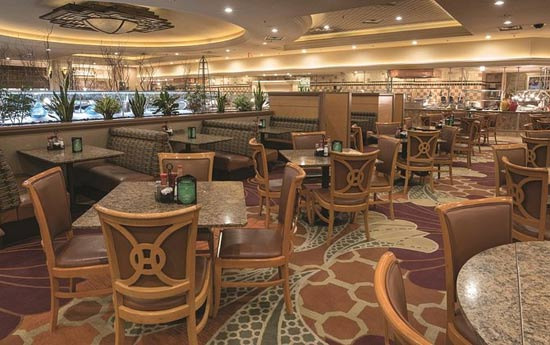
When people think of Las Vegas, one of the first images that comes to mind for many Koreans is the "buffet."
To be honest, it's harder to find someone who hasn't eaten at a buffet here in the last 30 years.
Whether coming on a tour package, a family trip, or just hanging out with friends, it was almost a given that "we have to go to a buffet at least once."
By that measure, hundreds of thousands of Koreans must have piled their plates high at places like the MGM Grand.
Honestly, the atmosphere was different on days when crab legs or oysters were served. It felt less like a meal and more like a battlefield.
Standing in line with a plate, waiting for the food to come out, and then diving in while subtly pushing and pulling with the Chinese people next to you—those memories are still vivid.
It was a race against time. In the midst of it all, stacking crab legs on your plate and feeling a sense of pride, then returning to your seat and saying, "I got my money's worth today"—that atmosphere, looking back, is a bit funny, but it was also the charm of the Vegas buffet.
However, the space where you could once pay around $35-45 for adults and eat to your heart's content is now disappearing.
It's hard to pinpoint the exact reason, but it could be due to a decline in customers or simply that it's no longer profitable; it's likely a combination of both.
In fact, looking at the current situation, it's not just one side's problem.
Originally, Las Vegas buffets weren't high-end restaurants. They were designed for quick, cheap meals so you could return to the casino.
The system prioritized turnover over food quality. But at some point, this completely flipped.
With unlimited lobster and drinks, prices have risen to $100, and in some cases, even $150.
A culture that started with "value for money" has transformed into "luxury."
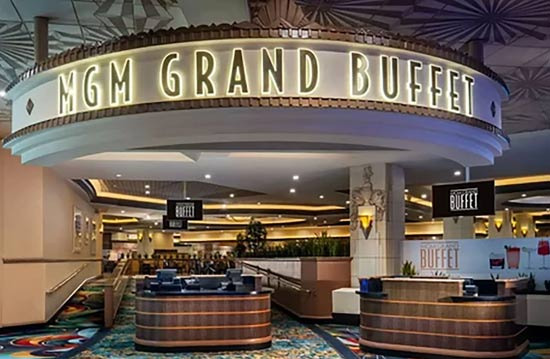
The final blow was, of course, COVID-19.
Many buffets closed and never reopened, and those that did realized there was no compelling reason to maintain a buffet.
It's much more profitable to replace them with food halls or chef restaurants in the same space.
Nowadays, food is presented beautifully and focuses on Instagram-friendly menu items. Meanwhile, prices have gone up.
Additionally, the number of tourists has decreased. Recent statistics show a significant drop in visitors.
As a result, the overall cost of living in the city continues to rise.
With hotel resort fees, parking fees, and food prices all increasing, the feeling of "just going out for a light visit" is gradually disappearing.
Ultimately, as middle-class tourists leave, the structure of buffets can no longer be sustained.
It used to be said that there were nearly 70 buffets in Las Vegas. Now, only a handful remain.
Watching them disappear one by one feels like more than just a restaurant closing; it feels like the end of an era.
Of course, many people are disappointed with the quality of buffet food these days. Some even say, "It's better that they close down."
However, it seems that the greater sense of loss comes not from the food itself, but from the realization that the "old Las Vegas" we remember is fading away.
 BananaButt
 NGTelecom






 Montgomery Mom |
 Anjollinya Blog |
 Taco Seattle |
 Mr Song Song |
 Living Economy Information Blog |
 vegas mom |
 Anova US Beauty Information |
 US Legal Consultation on Trials |

 celion78 |
  Cap Com |
  nixxon |
  kevin Kim |
  beerdreamer |
  Kims Spring |
  White bunny |
  Kansas City Representative Singer |
  shadow 007 |
  sun walker |
  Choco Choco Star |
  midnight blue |
  honeypot |
  summer |
  adventure77 |
  flexible |
  Shintongbangtong Shin Naerin James Park |
  truepixel |
  Kathy's Blog |
  Hae Naem |
  quatspace |