

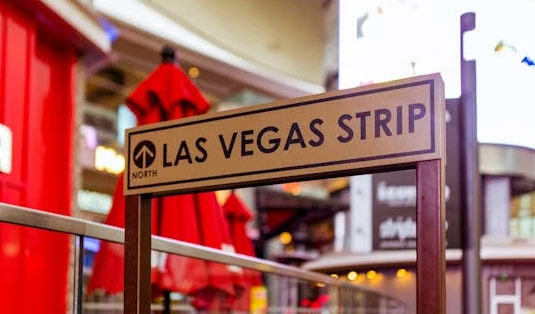
The Las Vegas Strip is a street famous worldwide for its concentration of casinos, hotels, restaurants, and shopping malls, located south of downtown Las Vegas. This strip has established itself as an iconic area representing Las Vegas, deeply connected to the city's development.
Early History: Early 1900s
Las Vegas was originally a small town founded in 1905. In its early days, it grew as a crucial intersection in the Mojave Desert, providing rail and water access, but remained relatively quiet until casinos and hotels became the main industries. In 1931, Nevada legalized gambling, and Las Vegas began to grow rapidly. However, at that time, Las Vegas was far from what we now know as the Strip, with gambling facilities scattered around.
1930s-40s: The Birth of the Strip
From the late 1930s to the early 1940s, Las Vegas developed into the first gambling hub. In 1941, early casinos like The Stratosphere opened, laying the foundation for the gambling industry. By the late 1940s, Las Vegas opened its first hotel casino, The Flamingo, a project led by Benjamin "Bugsy" Siegel. The opening of the Flamingo Hotel was a significant event that established Las Vegas's gambling industry as an internationally recognized destination.
1950s-60s: The Golden Age and Continued Growth
The 1950s and 1960s marked a period of significant growth for the Las Vegas Strip. During this time, famous entertainers like Frank Sinatra frequently visited, transforming Las Vegas from a mere gambling location into a center of entertainment. Major hotels and casinos such as Riviera Hotel, Sahara Hotel, and Tin Palace opened, rapidly expanding the Strip. In the 1950s and 1960s, as major cities in the U.S. banned gambling, Las Vegas gained a unique status as the only casino hub.
1970s-80s: Luxury and Major Leap
From the 1970s to the early 1980s, the Las Vegas Strip underwent significant changes with large-scale renovations and the opening of major hotels and casinos. During this period, glamorous buildings like Caesars Palace, Hard Rock Hotel, and the futuristic gambling mecca The Venetian emerged. Alongside this, Las Vegas's entertainment and culture gained global popularity, attracting millions of tourists to the Strip each year. Additionally, thanks to innovative marketing techniques and gambling strategies, Las Vegas became a world-renowned city.
1990s-2000s: Establishing as a Global Destination
The 1990s and 2000s marked a period of expansion and transformation for Las Vegas. The Las Vegas Strip evolved from a tourism spot focused solely on casinos and gambling to a complex resort that included various theme parks, shopping, restaurants, and shows to attract family tourists. Notable examples include The Venetian Resort, MGM Grand, and Bellagio Hotel, which played significant roles in transforming Las Vegas into a 'luxury vacation destination.' Additionally, upscale restaurants, large shopping malls, and extravagant shows and entertainment became central to the experience.
Present: Ongoing Development and Change
Today, the Las Vegas Strip continues to thrive, centered around gambling and entertainment, playing a vital role in the city's economy and culture. In recent years, modern buildings like Aria Resort, MGM Resort, and Crypto Casino have been constructed, and with the advent of 5G technology, the city is becoming increasingly smart and digital.
Symbolism of the Las Vegas Strip
The Las Vegas Strip has become an iconic place representing an era in itself. Countless movies, television shows, and advertisements feature scenes set against this street, reflecting what Las Vegas means globally.





 candytip |
 Gold Bar |
 Pirate Ship Popcorn Maker |
 Montgomery Mom |
 Anjollinya Blog |
 neroyo |
 Folding Instructions |
 Say IT Now |
 celion78 |
 US Legal Consultation on Trials |
  Tonky |
  viroma |
  cookie |
  Live and that's it |
  Alright Twain |
  eatontown blog |
  HAWAII Korean Church News |
  Amore |
  linex |
  Balancework |
  laro90 |
  MEDBIO American Doctor Blog |
  SWAT TEAM BLK |
  DREAM BIG |
  frostbite |
  330 Forever My Love |
  El Dorado |
  dralix58 |
  Gorama Round |
  Skydiving |