

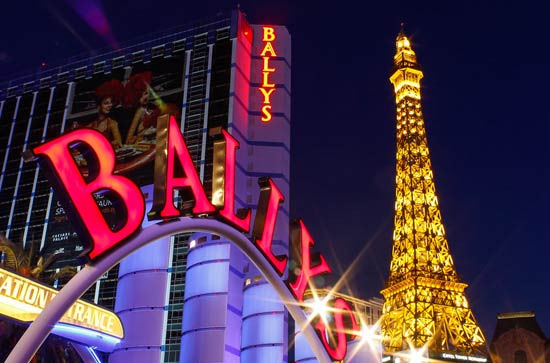
Although the number of tourists has decreased significantly, Las Vegas remains a dazzling city of gambling and entertainment.
However, since the Tropicana and Mirage have faded into history, a clear sorting process is underway to determine which casinos will survive and which will disappear. It seems to signal that the era of relying solely on sentiment or nostalgia is over.
The first place often mentioned is Bally's.
Looking at Bally's financial situation, things are not looking good. The massive debt burden is critically affecting the casino in a high-interest environment, and profitability is quickly being eroded by interest costs alone. Las Vegas is a city that gets pushed out of competition without constant renovations and new content, but Bally's is in a position where it struggles to afford such investments. If this continues, options like mergers or brand changes may become more realistic than independent survival.
The second places frequently mentioned are OYO Hotel & Casino and Circus Circus.
Both are cited as symbols of aging. Compared to the newly built mega-resorts that have recently opened on the Strip, the difference in facilities is too great. OYO has a somewhat awkward location, and while Circus Circus maintains a family-friendly concept, complaints about facility management are never-ending. As land prices continue to rise, but building efficiency declines, owners may have no choice but to consider redevelopment after demolition rather than remodeling. While they certainly have symbolic value, that meaning is unlikely to last without profitability backing it up.
Surprisingly, the Flamingo Las Vegas is also facing crisis talks.
Despite having the best location right in the middle of the Strip, it is directly affected by the rapid decline of the mid-range market. In recent years, Las Vegas has seen a stark polarization. Luxury hotels are still thriving, but the mid-range has become ambiguous. With accumulated complaints about facility management, it has reached a stage where maintaining competitiveness based solely on location is difficult. The year 2026 is likely to be a pivotal year for the Flamingo, deciding whether it will undergo a major transformation or remain a legend.
In summary, 2026 appears to be a year of significant reset for Las Vegas.
Events like F1 or large conventions will draw money to the city, but the benefits will only concentrate on those who are prepared. The days of simply opening the doors and having guests walk in are long gone. Now, it is difficult to survive without overwhelming luxury or a clear theme and differentiation. Small to medium-sized casinos that cannot withstand debt are likely to be absorbed by larger groups or transformed into entirely different types of properties.
From a traveler's perspective, there are clear points to be cautious about. It is necessary to check not just the price when choosing accommodations, but also the recent renovation status and operational stability. Otherwise, you might end up spending your vacation amidst construction noise or experiencing unexpected operational changes.
No matter how the economy fares, it seems that in Las Vegas, someone will always close their doors while someone else builds a bigger and taller structure in its place.




 Victory 1988 |
 El Dorado |
 lightyear |
 Moscow Kim |
 coloradoman |
 neroyo |
 Folding Instructions |
 Say IT Now |
 celion78 |
 US Legal Consultation on Trials |
  road98 |
  Churros Train Conductor |
  gleeful |
  Burbank Lee |
  Olivia's Blog |
  Bushing Around Life |
  Active |
  Cherokee Rose |
  Kor. Master |
  Holey Moley |
  Conflite Teacher |
  Hodong Prince Over Flex |
  Mist inn |
  citrus pop |
  Onion Ring |
  phoenixia |
  viewtop |
  loverun |
  Kim Do Sun |
  SEVEN SEVEN |