

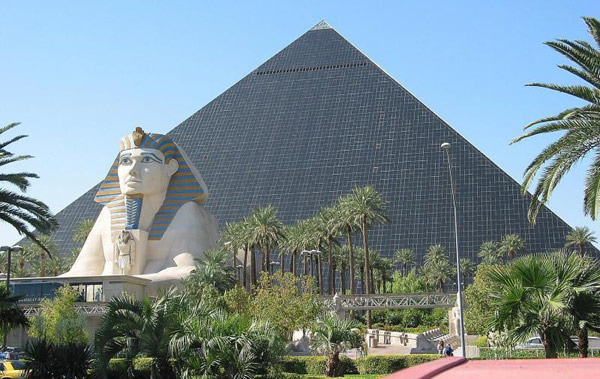
Living in Las Vegas, you get to see all kinds of hotels.
Every time a new flashy resort opens, people rave, saying it's the "ultimate" but after a while, their attention shifts to another place.
Among them, the hotel that has undergone dramatic changes is the Luxor Hotel. Once a cutting-edge, iconic hotel shaped like a pyramid, it has now become one of the oldest and most avoided places on the Las Vegas Strip.
Luxor opened in 1993. At the time, it was truly sensational.
The massive pyramid and the laser beams shooting from its peak in TV commercials left everyone in awe. The beams cutting through the night sky were said to be visible from space, and pilots even used them as reference points.
Back then, Luxor was not just a hotel; it was the future of Las Vegas itself.
However, while initially people were amazed, thinking, 'Wow, it feels like I'm in Egypt,' after a few years, it no longer seemed impressive.
Las Vegas is a city that always showcases new and glamorous attractions, but Luxor remained stuck in its old concept.
As hotels like Bellagio, Wynn, and Aria opened, Luxor's image of being 'cutting-edge' quickly fell to that of an 'outdated theme park.'
Facilities were also an issue. When it first opened, the interior was state-of-the-art, but over the years, no upgrades were made.
The rooms are old, the bathrooms clearly show a 90s vibe, and the casino floor is permeated with the smell of stale cigarettes.
When I visited, the elevator creaked so much that I felt a moment of anxiety, thinking, 'Is it going to stop in the middle?'
Other hotels on the Strip spend millions on renovations every year, but Luxor has seen almost no such investment.
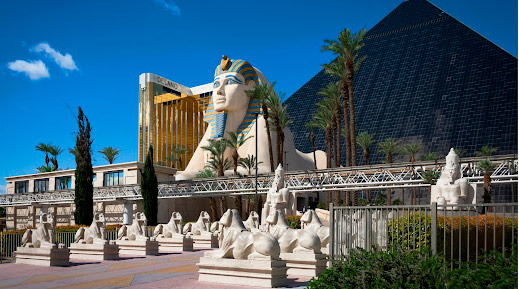
Interestingly, the unique pyramid structure of this hotel makes remodeling more difficult. The rooms are arranged along slanted walls, making structural changes tricky.
So, to renovate, costs multiply, but with the hotel's profitability already declining, significant investment is challenging. This leads to a vicious cycle where facilities become increasingly outdated, and guests inevitably dwindle.
People now joke about Luxor.
"If you want to time travel in Las Vegas, stay at Luxor. It's stuck in the 1990s."
In fact, Google reviews often mention, "It's great to stay cheaply, but the rooms feel like old motels."
Of course, the low price is an advantage. It's one of the large hotels with the lowest accommodation costs in Las Vegas. However, people are choosing newer and more stylish hotels even if it means spending a little more.
Personally, I can't forget the 'buzz' that Luxor once had.
The advertisements at its opening, the shining pyramid, the cheers of the crowd... that moment perfectly showcased Las Vegas's spirit of 'constantly seeking novelty.' Yet now, it remains a relic, having lost that spirit and fallen behind the times, which is bittersweet.
In fact, old hotels in Las Vegas have only two paths. They either constantly remodel and survive or fade into history. Luxor hasn't disappeared yet, but at its current state, I can't help but think that discussions about its demolition may arise someday.
For residents like me, Luxor serves as a kind of lesson. It reminds us that a glamorous start doesn't last forever, and that even the most celebrated facilities will become obsolete if they don't adapt to the times.
Isn't it ironic that a hotel that once attracted tourists worldwide with its dazzling advertisement of 'light visible from space' is now pointed at as the most dilapidated facility?
Perhaps that's why every time I pass by Luxor, I always mutter to myself.
"In Las Vegas, you must never stop. The moment you stop, you immediately become a museum."






 US Embassy |
 fortbliss |
 Folding Instructions |
 yentra |
 Cali M Law Group |
 neroyo |
 Say IT Now |
 celion78 |
 US Legal Consultation on Trials |
  Korean Mom |
  My NYC |
  moo moo |
  Mr Oh |
  forevergee |
  festival |
  manchester |
  constant |
  Leapfrog Move |
  vibranto |
  Tora Tora |
  yellowbutter |
  Dolly |
  NYC saladbar |
  Finding Superfoods |
  lightyear |
  song bang |
  vexomo |
  Indiana Jones |