

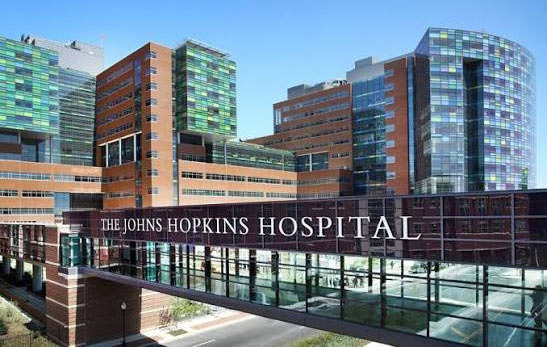
When talking about hospitals in the U.S., the name that always comes up is Johns Hopkins Hospital.
Whether in Korean medical dramas or among healthcare professionals, the name "Johns Hopkins" has become a sort of brand.
It's similar to how people in Korea think of Seoul National University Hospital or Severance Hospital, but in the U.S., it holds an even more symbolic status.
When I first came to the U.S., I honestly thought all hospitals were pretty much the same. However, as time passed and I learned more about the healthcare system, I realized, "Oh, Johns Hopkins is different." There's a reason why critically ill patients come from all over the country and even from abroad for treatment.
Johns Hopkins Hospital opened its doors in 1889 in Baltimore, Maryland.
Along with the hospital's establishment, the Johns Hopkins University School of Medicine was created, which was a very innovative approach at the time.
It is one of the first places in the U.S. to establish the "university hospital model" that integrates research, education, and clinical care.
The hospital is famous not just because of its long history. Its achievements in medical research are overwhelming.
Dozens of doctors and researchers who have won Nobel Prizes have worked here, and countless treatment methods and research findings published in medical textbooks originated from this institution.
It's not an exaggeration to say that a significant portion of what U.S. medical students learn comes from the work of Johns Hopkins researchers.
Particularly, its cancer treatment is regarded as world-class. Patients from all over the U.S. come here for complex cancer treatments, including brain tumors, pancreatic cancer, lung cancer, and breast cancer.
It's common for patients who are deemed difficult to treat at general hospitals to seek a second opinion at Johns Hopkins.
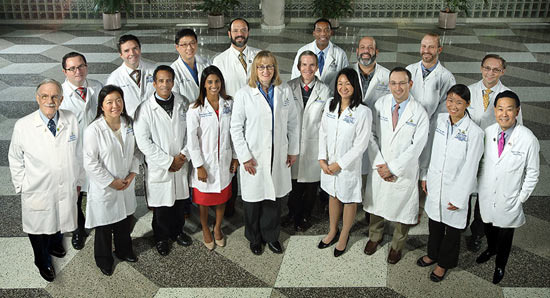
The neurology and neurosurgery departments are also very strong. In areas such as brain tumors, Parkinson's disease, epilepsy, and stroke, they consistently rank among the best in the U.S.
Even American doctors consider Johns Hopkins when a family member has a severe neurological condition.
The cardiology department is also noteworthy. Heart surgeries, heart failure treatments, and heart transplant programs are rated among the best in the country.
In the field of organ transplantation, it ranks among the top nationwide and has extensive experience with complex surgeries.
Another interesting point is the size of the hospital. When you first visit, you might imagine a small hospital, but you'll be surprised. It feels almost like a medical city.
The hospital buildings, research facilities, and educational institutions form a vast campus, and when you combine the number of doctors, nurses, researchers, and students, it's not an exaggeration to say it resembles a small city in terms of population.
Of course, there are downsides. Due to its fame, making appointments can be challenging. Some popular specialists may have wait times of several months, and scheduling can be quite difficult because patients come from all over the country. Additionally, as a top hospital in the U.S., it's essential to carefully check insurance coverage and costs.
Nevertheless, the reason Johns Hopkins is special is that it is not just a place for treating illnesses but an institution that advances medicine itself. It develops new treatment methods, educates future doctors, and conducts research that impacts the global healthcare community.
When discussing hospital rankings in the U.S., Johns Hopkins is always mentioned alongside names like Mayo Clinic, Cleveland Clinic, and Massachusetts General Hospital.
For those living in the Washington D.C. area or Maryland, it is especially a reassuring presence. While it's best not to have serious illnesses, knowing that "Johns Hopkins is there" provides psychological comfort if a challenging condition or complex surgery is needed.
Understanding why Johns Hopkins is one of the representative names in American healthcare becomes clear when you explore it directly.
 HoneyWalker
 GymForPhotos
 PanBlog
 blueforesttraveler2018
 midnightforestbuilder1948





 Enjoyable American Life Diary |
 California Dreamer |
 Best Frozen Yogurt |
 Burbank Lee |
 ANSLO NEWS |
 Holey Moley |
 El Dorado |


 My Love DS |
  Leapfrog Move |
  US Regional Information Local News |
  Finding Superfoods |
  COLO COLO |
  morixa |
  nero kim |
  USA Hyundai Kia |
  OC Real Estate Business Information |
  My Town My Way Blog |
  Splendid Mission |
  Yonori Nori |
  Unknown Dog Walk blog |
  Dingho and USA News |
  Nevada Vegas UNLV |
  Sammy Beach |
  Nanana Nanana Nanana |
  UNI Lover |
  Sunny's Travel in America |