

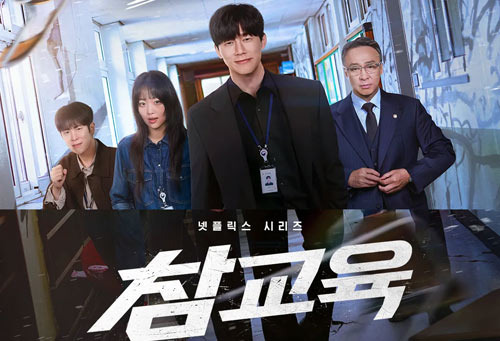
Honestly, I didn't want to watch it at first.
Since it was based on a webtoon, I thought it would just be another typical school drama.
But when I heard it reached No. 2 on Netflix globally, my curiosity was piqued, and I ended up binge-watching it over the weekend.
To cut to the chase, it's fun. Really fun. And that's exactly why I'm writing this.
As a parent raising kids in the U.S., I've observed the public education system here. I also keep up with Korean news.
So, throughout 'True Education', I felt uneasy.
It's exhilarating yet uncomfortable, that strange feeling. The root cause of school violence issues runs deeper.
This drama is a symptom. The cause lies elsewhere.
'A War on Crime in Schools'
Set against the backdrop of a crumbling education system in South Korea, a fictional agency called the 'Education Rights Protection Bureau' created by the Ministry of Education appears. The people affiliated with this bureau are not the teachers we know. They are a kind of 'special agents in education' with special forces backgrounds and the combat power of elite detectives, wielding extralegal authority.
The protagonist, Na Hwa-jin, doesn't resolve issues through dialogue. Whether it's a school violence perpetrator, a student dealing drugs, a juvenile delinquent, or an overstepping malicious parent, she confronts the villains head-on. So, this isn't an education drama; it's closer to an action story about taking down criminal organizations.
It's enjoyable to watch. The satisfaction it provides is the same as what dramas like 'Taxi Driver' and 'Vincenzo' offered.
The protagonist punishes the evildoers that the law can't touch. It's like drinking a refreshing soda after eating a hundred sweet potatoes.
The Real Villains Are Not the Students, But the Adults
This is the clever point of the drama. The villains are not just the 'bad kids'.
In fact, the parents are portrayed as even more frightening. They wield complaints as weapons, report teachers for child abuse at the slightest inconvenience, and lead witch hunts on social media.
The real problem is that this isn't fiction. Actual incidents of declining teacher authority in South Korea overlap perfectly. The reaction of "It's so realistic, it gives me chills" is completely understandable.
But do you think it's any different in America? Just attend a few parent-teacher meetings in American schools. The erosion of teacher authority, problematic parents, helicopter parenting—it's all the same.
The details may differ, but the structure is identical. That's why this drama resonates globally. The whole world is suffering from the same ailment.
That's why I find this drama even more uncomfortable.
The catharsis of 'true education' ultimately comes from the idea that 'since the law can't do it, the fist will'.
The Education Rights Protection Bureau is essentially an organization that reigns above the law. If you cross the line, they will punish you physically and mentally in a brutal manner.
It clears the viewer's mind. But if you take a step back, this is a frightening picture.
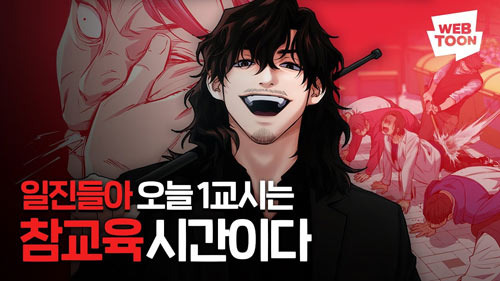
The fact that the public is enthusiastic about private retribution (vigilantism) is a warning sign in itself.
When people applaud a fictional violent agency, it means they have lost faith in the real system.
This is exactly the same position as the debate sparked by the movie 'Joker'. The diagnosis of the problem is brilliant, but the prescription is dangerous.
Once you get used to the feeling that "it's okay to punish the villains", the next question becomes, "So who decides who the villain is?"
The system that answers that question is the rule of law. The very law that we cheerfully want to throw away while watching the screen.
Juvenile Delinquents and What We Really Need to Fix
One of the key issues the drama touches on is the problem of juvenile delinquents.
This is a problem that South Korean society has neglected for too long. The punishment is so lenient that the perpetrators openly mock the system.
This shouldn't be resolved through fantasy but through legislation.
We need to convert the energy people pour into 'true education' into pressure to reform the system; that's what adults should do.
So, my thoughts are
If I were to rate it, I'd give it a generous score. It's worth binge-watching over the weekend.
But if you stop at "Ah, that was satisfying" after watching, then we have just consumed our anger.
The real question this drama poses isn't, "What villain will get a satisfying education next episode?" but rather, "Why has our society become so enthusiastic about virtual fists?"
If the system works, heroes are unnecessary. The more satisfying 'true education' is, the more it indicates that reality is that much broken.
 CrystalLake93
 LatteDreamer
 HamsterShire





 vegas mom |
 Agenda Center |
 HAWAII Korean Church News |
 Gorama Round |
 LIZ Legal Information Blog |
 Weekend Movie Blog |
 Superman Cat Blog |
 Valley Hong |
 Beauty, Health, Lifestyle Blog |
 prixon74 |
  Soft Feeling That Feeling |
  assa man |
  Yugo Girl I'm So Hot |
  nexaro |
  Experiences Living in America |
  arsnack |
  Nebraska Center Director TOP |
  Florida Gario |
  menmo |
  Arizona AZ Cowboy |
  springw |
  Woooooah |
  frostpup |
  chocopup |
  Angeles Choi |
  My Heart Popper |
  comova |
  vintago |
  Sky Way |
  Top Beaches |