
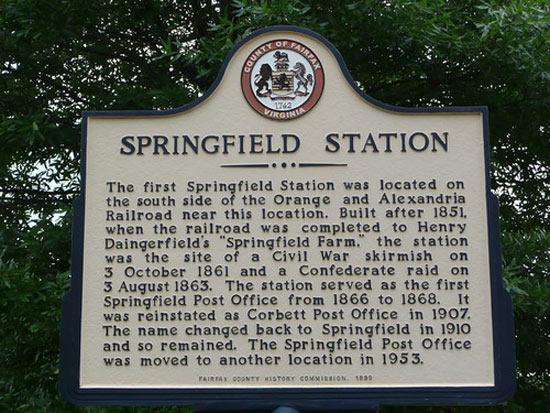
Virginia's Springfield is now known for its highways, large shopping malls, and transit stations, but the name and initial development of this area began with a very small train station. This is the story of Virginia's first Springfield Railroad Station, built in 1851.
The site of this station was originally part of a land called Springfield Farm. At that time, the land was owned by Henry Daingerfield, a businessman from Alexandria, who inadvertently changed the future of this area. He allowed the railroad to pass through his farmland, and as a result, a small station, postal service, and shops began to emerge, transforming the quiet farmland into a transportation hub.
In 1851, the Orange & Alexandria Railroad was completed, and the first Springfield station was established in the area. However, it was far from the station we might imagine. There were no stone buildings or grand platforms. There was just a small wooden shelter. Nevertheless, this stop began to transport agricultural products, passengers, and mail, creating a flow of people and goods. The name was also fixed at this time, as the area adopted the name 'Springfield' from the farm's name.
During the Civil War, the importance of this small station grew even more. The railroad was a lifeline for military supplies, and attempts to occupy or damage the tracks were made alternately by Confederate and Union forces near this station. It may seem like a small piece of land where a train could hardly fit today, but at that time, it was a crucial point that influenced the war.
After the war ended and train operations normalized, shops, post offices, and accommodations began to appear around the station, naturally forming the town's center. In other words, the saying "the railroad built the town" was proven right here. Today, Springfield's status as a transportation hub near Washington is not coincidental; it is the result of the seeds sown by the first railroad station expanding over decades.
Now, the original railroad station building no longer exists. Only traces remain, and the original structure has disappeared. Instead, a larger train station, wider roads, and a massive commercial area have taken its place. However, for the locals, this place is not just a simple transit station for commuting; it remains a symbolic location, the birthplace of the town.
Therefore, when describing Springfield, one cannot overlook the first railroad station. From this small wooden shelter, the city's name emerged, the town was born, and today's Springfield began. This station silently proves that the suburban city was not simply created through new town development, but rather formed slowly over time on the tracks.







 candytip |
 Gold Bar |
 Pirate Ship Popcorn Maker |
 Montgomery Mom |
 Anjollinya Blog |
 Tesla X |
 Next Year, Let's Become Rich |

 Kondae Garusong Blog |
 American Hardcore Band |
  laro90 |
  MEDBIO American Doctor Blog |
  SWAT TEAM BLK |
  DREAM BIG |
  frostbite |
  330 Forever My Love |
  El Dorado |
  dralix58 |
  Gorama Round |
  Skydiving |
  dreamport |
  Yellow Snowman |
  Toaster Pizza Magic Show |
  velvetnom |
  Anytime Journey |
  Mrs. Duluth |
  jaxter |
  Atlanta Mama |
  Baguette Blog |
  Tan Sol |