
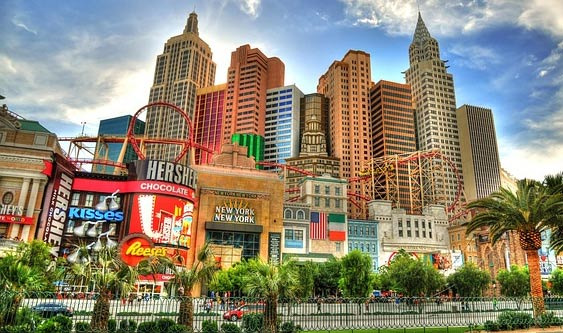
Las Vegas is a representative car-centric city in the western United States. The city's structure is designed with car travel in mind, and public transportation infrastructure is limited compared to other major cities in the U.S. However, various modes of transportation, including buses, monorails, and shuttles, operate mainly around The Strip and downtown areas. This provides useful transportation information for those visiting Las Vegas for the first time or planning to stay long-term.
The main road structure in Las Vegas is based on a grid system. North-south routes include Las Vegas Boulevard (The Strip), the I-15 freeway, and the 215 Beltway, which runs east-west through the Las Vegas Valley. Key east-west arterial roads include Tropicana Avenue, Flamingo Road, Spring Mountain Road, and Charleston Boulevard. The road network in the Las Vegas metropolitan area is managed by the Regional Transportation Commission of Southern Nevada (RTC).
Traffic congestion in Las Vegas has worsened with population growth. Particularly during rush hours from 7 to 9 AM and 4 to 7 PM, severe congestion occurs at the I-15 and 215 Beltway interchange and intersections around The Strip. During major conventions (such as CES and NAB Show) or sports events (like Las Vegas Raiders home games and the F1 Grand Prix), downtown traffic becomes extremely congested. During the inaugural Formula 1 Las Vegas Grand Prix in 2023, parts of The Strip were closed for several days, significantly impacting surrounding traffic. According to the TomTom Traffic Index, Las Vegas is ranked among the top cities in the U.S. for traffic congestion.
The RTC-operated bus system forms the backbone of public transportation in Las Vegas. RTC buses operate over 40 routes throughout Las Vegas, including routes connecting The Strip and downtown. The SDX (Strip & Downtown Express), a double-decker bus that runs along The Strip, is primarily used by tourists and operates 24 hours, connecting major hotels and casinos in Las Vegas. As of 2024, a single ride fare is approximately $2 to $6, while a 24-hour unlimited pass costs about $8. However, bus routes in residential areas outside The Strip have longer wait times and limited service, making them less practical for daily commuting for residents.
The Las Vegas Monorail is a light rail system connecting seven major casino hotels along The Strip, operating over a distance of about 6.5 km. It runs from Bally's/Paris to SLS Las Vegas (formerly Sahara), providing convenience for tourists traveling from the north to the south of The Strip. Operating hours are from 7 AM to midnight (until 2 AM on Fridays and Saturdays), with a single ride fare of about $5 and a 24-hour pass costing around $13. However, the monorail runs behind hotels on the east side of The Strip, which means there is no direct connection to hotels on the west side, such as Bellagio and Caesars Palace, which can be inconvenient.
Rideshare services like Uber and Lyft are widely used in Las Vegas. Both tourists and residents frequently utilize rideshare services for airport pickups, casino transfers, and late-night returns. In the Strip area, fares can surge during early morning hours and immediately after events, so it can be cost-effective to walk a short distance or wait a bit before hailing a ride during these times. Taxis are available at Las Vegas Airport and major hotels, but fares are often higher compared to rideshare services.
Micro-mobility options such as bicycles and scooters (electric kickboards) have also been introduced in Las Vegas. Electric scooters from companies like Bird and Lime operate in some areas of The Strip and downtown, useful for short-distance travel. However, due to extreme summer heat and a lack of bicycle infrastructure (bike lanes), commuting by bicycle is still not common. Living in Las Vegas without a car can be challenging, so if you plan to stay long-term, it is practical to plan for car ownership.
 foxriverdreamer1982
 Cool Whip
 LimeMoon







 Another Eden Channel BLOG |
 Victory 1988 |
 Smile Face |
 Helpful Life Stories |
 Casa Mia |
 Anova US Beauty Information |
 US Legal Consultation on Trials |
 vegas mom |
 celion78 |
  brownie |
  Star Blog |
  The Day the Sun Rises |
  sweetpop |
  California Kangaroo |
  zanero |
  station |
  Static |
  Star Way |
  American Blog Forge |
  MMORPG Games |
  Then you must be spring |
  Spicy Immigration Life |
  zenvor16 |
  The 2000 |
  toclick |
  wexlin84 |
  Hairy Poppins |
  daisypat |
  Taco Bell Candy Note Blog |