

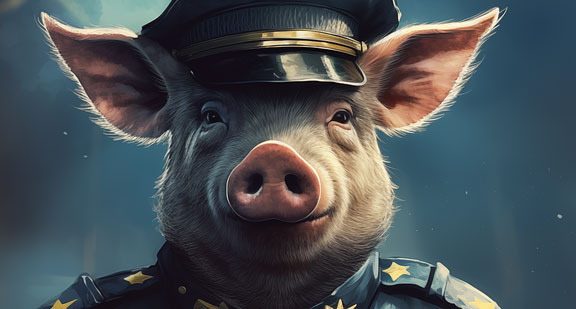
In movies or dramas set in 1970s America, there are often scenes where hippies shout "Pig!" at the police.
At first, I thought it was just a nickname for the police at that time, but it turns out it encapsulated the anger, resistance, and distrust of the system of that era.
To conclude, the reason hippies called the police "Pig" was out of contempt. The 1960s and 70s in America were not just an era of hippie style or rock music. It was a tumultuous time mixed with racial discrimination, anti-Vietnam War protests, women's movements, and the cultural symbolism of marijuana.
Many young people at that time had a deep distrust of the government and authority. The police were seen as the agents of the system. The sight of armed police firing tear gas and wielding batons to arrest students was reported daily in the media, solidifying the perception among hippies and dissidents that "the police are not protectors of citizens, but tools to oppress them for the government." This is where the term "Pig" originated.
This expression became widely popular during the intense anti-war protests in Chicago at the 1968 Democratic National Convention. As the police violently suppressed peaceful protesters, young demonstrators shouted "Pig!" and this scene was featured in news and newspapers across the nation.
Even radical black organizations like the Black Panther Party referred to the police as 'Pigs' and openly wrote it on posters and flyers.
It was not just a simple insult, but a message of that era.
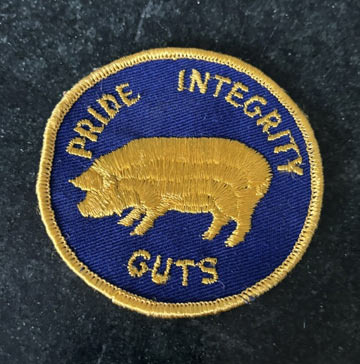
Interestingly, there was also a counter to this term.
Some police officers responded by saying "PIG = Pride, Integrity, Guts."
Of course, such attempts would not have resonated with the hippies, as they viewed power itself as the problem.
To them, the police were always "entities that monitor and oppress someone," and the term "PIG" was a condensed expression of that sentiment.
While such expressions have gradually faded with changing times, they still remain in popular culture. In the 1990s hip-hop, "Pig" was often used as a derogatory term for the police, and it occasionally appears in some radical protests today.
However, nowadays it is often used more as a symbol of nostalgia or in a playful tone rather than carrying a social message. The term still exists, but in popular media, it is used cautiously, often as satire or a symbol of the past.
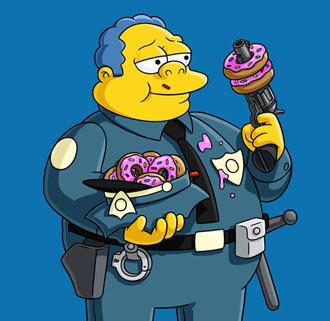
Another interesting point is the relationship between American police and 'donuts.' The question "Why do American cops always eat donuts?" is something anyone familiar with American culture has probably asked at least once.
In the 1970s, police officers on night patrol often found that the few stores open all night were donut shops. Moreover, since donut shops also sold coffee, they were perfect for police to take a break. As a result, the sight of police at donut shops became common, and this repetition solidified the image that "cops are always eating donuts." In the 70s and 80s, many Korean Americans in LA, the Valley, Santa Monica, and Orange County operated donut shops, and it was said that when police frequently visited, they provided free donuts and coffee to ensure safety from robbery targets.
Just look at Chief Wiggum from The Simpsons, who is always seen with a donut in his mouth. This is not just a humorous element but a cliché that Americans associate with police. Of course, some police take this seriously and have even launched campaigns to change their image, but once an image is ingrained in popular culture, it is not easily erased.
In summary, the term "Pig" remains a symbol of resistance or satire against American police, while donuts stem from the stereotype of police's long night shifts and coffee breaks. Both expressions continue to exist today as satire, parody, and cinematic devices. Personally, I find these symbols interesting as they provide a glimpse into the emotions and society of that era.







 HAWAII Korean Church News |
 Gorama Round |
 LIZ Legal Information Blog |
 Egg Steamed Pot |
 novapixel |
 Weekend Movie Blog |
 Beauty, Health, Lifestyle Blog |
 coloradoman |
 Superman Cat Blog |
 Noodle Noodle |
  round1 |
  Way to easy |
  musicque |
  road98 |
  Churros Train Conductor |
  gleeful |
  Burbank Lee |
  Olivia's Blog |
  Bushing Around Life |
  Active |
  Cherokee Rose |
  Kor. Master |
  Holey Moley |
  Conflite Teacher |
  Hodong Prince Over Flex |
  Mist inn |
  citrus pop |
  Onion Ring |
  phoenixia |
  viewtop |