
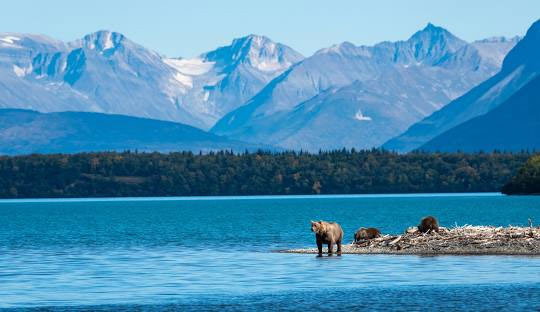
Alaska is a region rich in natural resources and unique ecosystems, making its protection and management a significant aspect of U.S. environmental policy. Alaska's conservation policies are implemented through various laws and regulations under the cooperation of state and federal governments.
1. Major Protected Areas and Laws
Arctic National Wildlife Refuge (ANWR): Located in northeastern Alaska, ANWR is known as a habitat for various wildlife, including polar bears, caribou, and numerous bird species. The development of oil and gas in this area has sparked ongoing debates over environmental protection and the preservation of indigenous cultures. In September 2023, President Joe Biden announced the cancellation of oil and gas drilling leases in ANWR that were approved by former President Trump.
National Petroleum Reserve-Alaska (NPR-A): Situated in northern Alaska, NPR-A is rich in oil and gas resources but is also an important wildlife habitat. In September 2023, the Biden administration announced measures to protect approximately 13 million acres of NPR-A.
2. Key Policies and Actions
Restrictions on Oil and Gas Development: To protect Alaska's environment, the federal government has implemented policies to limit oil and gas development. In September 2023, President Biden announced the cancellation of oil and gas drilling leases in ANWR and NPR-A.
Climate Change Response: Alaska is directly affected by climate change, making response efforts crucial. In September 2023, the Biden administration announced measures to address climate change in the Arctic region.
3. Collaboration with Indigenous Communities
Alaska's indigenous communities have a deep interest in conservation and cultural preservation. They actively participate in the establishment of environmental protection policies and strive for sustainable development and cultural protection.
4. Recent Controversies and Responses
In March 2023, President Biden approved the Willow Project, a large-scale oil development project in the National Petroleum Reserve-Alaska (NPR-A). This decision faced backlash from environmental groups and indigenous communities, sparking controversy over the balance between fossil fuel development and climate change response.
5. Future Outlook
Alaska's conservation policies are influenced by various factors, including climate change, energy demand, economic development, and indigenous rights. Efforts to balance environmental protection and economic development are expected to continue in the future.
Alaska's conservation policies aim for sustainable development and environmental preservation, achieved through the collaboration of various stakeholders.





 Information on Area Codes in the Americas |
 Sunny's Travel in America |
 AL ALASKA |
 Omelet Rice for Strength |

 Finding Superfoods |
  lightyear |
  song bang |
  vexomo |
  Indiana Jones |
  meloncat |
  novapixel |
  mortrix |
  Esther 1983 |
  fortbliss |
  Moscow Kim |
  My Two Way |
  toastyfox |
  FLORIDA Acus |
  tracker |
  TONTON COFFEE |
  sunrise |
  ultron78 |
  uplifted |
  Folding Instructions |