

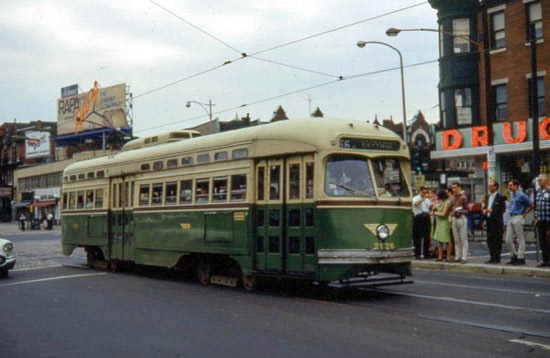
To talk about the trolleys that ran on the streets of Philadelphia until the 1960s, we must first learn about the company that made them.
The representative manufacturer that led the trolley era in this city was the J. G. Brill Company. Founded in Philadelphia in the late 1800s, this company thrived by producing trolleys and various railway vehicles, and at one time was one of the largest trolley manufacturers in the United States.
A significant number of trolleys in Philadelphia were also products of this company. However, after losing in technological competition and the last trolley model they released not gaining the expected popularity, trolley production ultimately ceased in the mid-1950s. Although it was a symbol of trolley manufacturing, it failed to keep up with the changing times.
So why did trolleys begin to disappear in the 1960s?
Firstly, as automobiles became more widespread, roads gradually transformed to be more car-centric, and buses emerged as a flexible alternative. Buses did not require tracks, which meant lower maintenance costs, and routes could be changed immediately if desired. In contrast, trolleys incurred separate costs for track construction, maintenance, and repairs, and often operations would be paralyzed due to road construction. In an era of mobility, a 'transportation mode stuck on the road' became increasingly disadvantaged.
Another significant change was the urban structure itself. In the past, the proximity of downtown to residential areas made trolley travel natural, but as life shifted to the suburbs, people began to drive outwards. The narrow roads where trolleys used to run gradually saw increased vehicle traffic, and the trolleys, which only ran on tracks, began to feel inconvenient and slow. It is accurate to say that 'as the city changed, the role of trolleys diminished.'
Changes in the operating entities also played a role. Several trolley companies merged, and as public transportation policies were restructured, budgets began to focus on buses and other systems instead of trolleys. The transportation modes that required less immediate funding and were more efficient were favored. Despite having historical significance, trolleys began to be pushed aside starting in the 1970s.
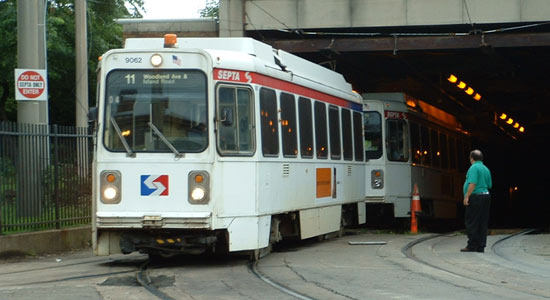
However, even today, some areas of Philadelphia still have modern trolley vehicles operating on certain routes.
Many people are surprised to learn that trolleys still run in Philadelphia, but they are still actively running throughout the city. This is not for tourism; it is a practical public transportation system that residents use daily for commuting and school, with notable routes connecting Center City and West Philadelphia, as well as trolleys running along Girard Avenue. The unique structure allows them to run underground in the city and then come above ground when crossing to the west, giving a feel that is somewhere between a subway and a trolley.
Who rides these trolleys? The user demographic is more diverse than one might think. Commuters traveling between Center City and University City, students from the University of Pennsylvania and Drexel University, residents commuting from western neighborhoods, and seniors living without cars are all mixed together. Many people live in the west and work or study in the city, so these trolleys serve as their 'daily feet.'
The fare is the same as the subway or bus, with a single ride costing about $2.90 using a card or mobile payment method. Since using a transportation card or smartphone tap is more convenient than cash, students and workers tend to use cards almost exclusively. Children under 12 ride for free when accompanied by a guardian, and seniors over 65 can also ride for free, so you can often see a fair number of elderly passengers during the day.
The operating interval is usually about 10 to 15 minutes, with more frequent service during rush hours and a bit more relaxed schedule during the day. The first train usually starts around 5 to 6 AM, and many run until around midnight, making it convenient for those with evening plans. However, the Girard Avenue route may have construction or detours, so checking real-time information apps before departure is advisable.
Looking at the route structure, most trolleys start near 13th Street underground in the city and continue westward through 30th Street Station. This reflects the Philadelphia lifestyle of "the city is the workplace, and the west is home." The Girard Avenue trolley runs long in the east-west direction, connecting northern residential areas with various local commercial districts.
Interestingly, instead of disappearing like a relic of the past, Philadelphia's trolleys are expected to be replaced with new models in the future. Plans are underway to introduce low-floor new vehicles equipped with facilities for the disabled, so trolleys are likely to survive as 'a somewhat unique modern public transport' rather than a remnant of a slower era.
Philadelphia's trolleys are not just simple tourist souvenirs; they are actual transportation used daily by residents, students, and workers in the western areas. The coexistence of the past and present is what makes the Philadelphia trolley appealing today.
 LuluLalaLA


 Moscow Kim |
 coloradoman |
 Montgomery Mom |
 GOGO SING |
 Hajiwon Blog Hair Salon |
 Northeastern |
 Nationally Certified Lightning Charcoal Review |
 American Grape Shine Muscat |
 sparkling |
 U.S. Weather Bureau News |
  Korean Mom |
  My NYC |
  moo moo |
  Mr Oh |
  forevergee |
  festival |
  manchester |
  constant |
  Leapfrog Move |
  vibranto |
  Tora Tora |
  yellowbutter |
  Dolly |
  US Embassy |
  NYC saladbar |
  Finding Superfoods |
  lightyear |
  song bang |
  vexomo |
  Indiana Jones |